

Commercial Kitchen Equipment Repair: When to Call a Pro (and What It Costs)
.jpg)
Key Takeaways
- The most common failures are refrigeration, ovens and ranges, dishwashers, and ice machines.
- Refrigeration failures are urgent — move product to a working unit and call fast.
- Know which failures are true emergencies versus next-day fixes.
- Preventive maintenance turns most emergencies into scheduled, lower-cost repairs.
- The commercial diagnostic is $149, waived with the repair; fixed-price, never hourly.
When commercial kitchen equipment fails, every minute costs money. A down refrigerator, oven, or dishwasher during a dinner rush means lost sales, spoiled inventory, and unhappy guests — and in the case of refrigeration, a real food-safety risk. This in-depth guide covers the breakdowns commercial kitchens see most, the quick checks a manager can safely make, when to call for emergency service, what commercial appliance repair costs, and how preventive maintenance keeps your kitchen running through the rush.
A+ Appliance Repair & Maintenance is a family-owned commercial and residential appliance repair company that has served Chicago and the surrounding suburbs since 2015. We hold a 4.9-star rating across more than 1,200 reviews, we've helped over 10,000 homes and businesses, and we're licensed, insured, and factory-approved on commercial and foodservice brands — with same-day and next-day service seven days a week.
What are the most common commercial kitchen equipment failures?
The most common commercial kitchen failures are refrigeration that won't hold temperature, ovens and ranges that heat unevenly or won't ignite, dishwashers that don't clean or sanitize, and ice machines that stop producing. Refrigeration failures are the most urgent because of food-safety and spoilage risk. Most issues can be diagnosed in a single service visit.
What sets commercial equipment apart from home appliances is the sheer intensity of use. Units run long hours in hot kitchens, often seven days a week, so small problems escalate fast. The managers who avoid mid-service emergencies are the ones who catch the early warning signs — unusual noises, temperature drift, and slow performance — and act before a part fails completely.
The breakdowns we see most — and the early warning signs
- Commercial refrigeration not cooling. Walk-ins and reach-ins that drift warm risk your inventory and your health-code compliance. Watch for ice buildup, a compressor that runs constantly but stays warm, or temperatures creeping up overnight.
- Ovens and ranges heating unevenly. Uneven bakes, burners that won't light, or a thermostat that's off by 50 degrees point to igniters, thermostats, or heating elements.
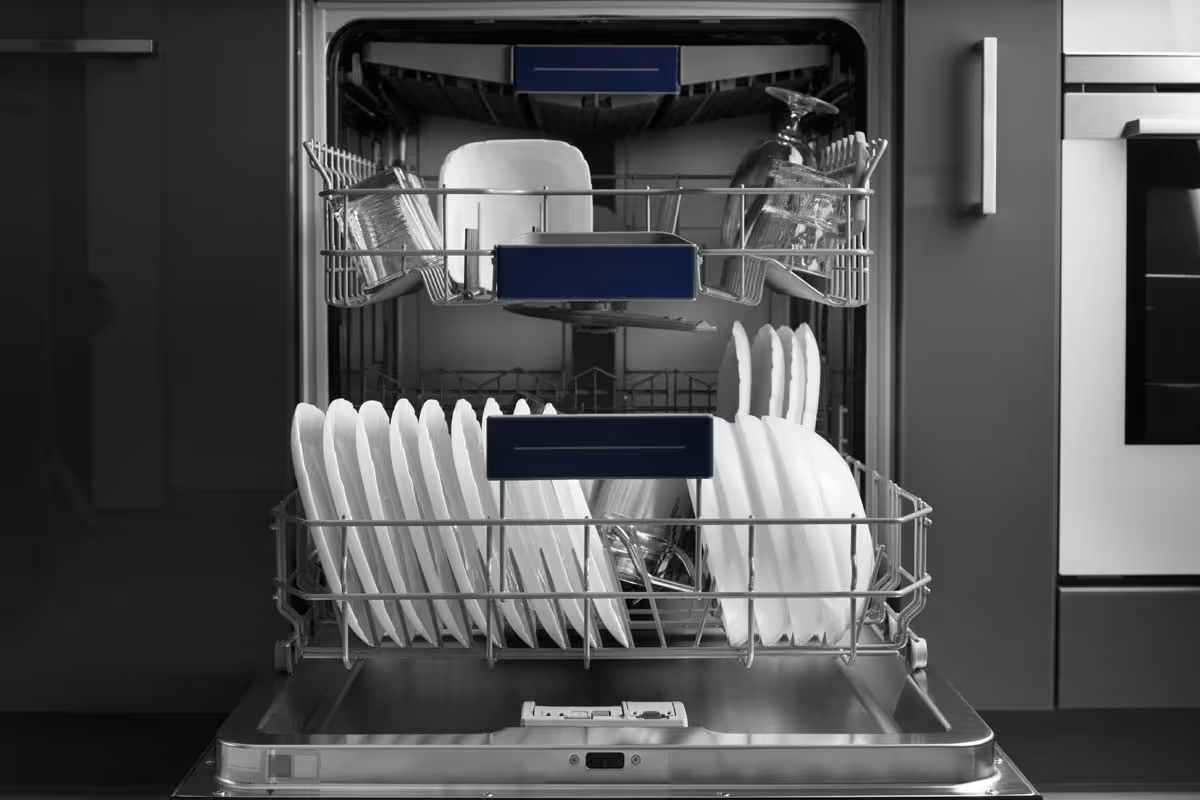
- Dishwashers not cleaning or sanitizing. Cloudy glassware or dishes that come out dirty usually trace to spray arms, the circulation pump, or a heating element that isn't reaching sanitizing temperature — a compliance issue as well as a quality one.
- Ice machines not producing. Low or no ice often comes from water-supply problems, a clogged filter, or scale buildup, which is common in hard-water areas.
- Fryers not holding temperature. A fryer that won't reach or maintain temperature points to thermostats, igniters, or heating elements and slows your whole line.
- Electrical and control faults. Tripping breakers, error codes, or dead control panels can affect any unit and should be checked promptly before they cascade.
What a manager can safely check before calling for service
A few quick, safe checks can rule out the obvious — but never dismantle equipment during service hours:
- Confirm power and gas. Check the breaker, plug, and gas supply valve before assuming the worst.
- Check refrigeration temps and airflow. Make sure condenser areas aren't blocked and nothing is stacked against vents.
- Clean what you safely can. Wipe down door gaskets, clear drains, and clean or replace filters where it's safe to do so.
- Note the symptoms. Write down error codes, sounds, and exactly when the problem started — it speeds up diagnosis and shortens downtime.
- Protect the inventory. If a cooler is failing, move perishables to a working unit immediately while you wait for service.
When the issue affects food safety, poses a safety risk to staff, or stops a core piece of equipment mid-service, skip the DIY and call a professional right away.
Food safety and compliance: why refrigeration comes first
Commercial refrigeration isn't just about keeping product fresh — it's a health-code requirement. Cold-holding equipment has to keep food out of the temperature danger zone, and a failing cooler can put an entire inventory at risk within hours, along with your compliance standing. That's why we prioritize commercial refrigeration calls and treat them as time-sensitive. If a walk-in or reach-in is drifting warm, the safest move is to relocate perishables to a working unit and get a technician out fast.
Emergency vs. scheduled repair: knowing the difference
Not every problem is an emergency, and knowing the difference saves money. Call for immediate service when a refrigeration unit is failing with product inside, when equipment poses a hazard to staff, or when a core appliance goes down during service. For non-urgent issues — a backup unit, a cosmetic fault, or a problem you can work around — next-day service is usually fine, easier to schedule, and less disruptive. A good repair partner will help you triage honestly rather than upselling every call to an emergency.
How much does commercial appliance repair cost?
At A+ Appliance Repair & Maintenance, the commercial diagnostic fee is $149, and it's waived and applied to your repair when you proceed. We quote a flat, fixed price per repair before any work begins — never hourly — using the industry-standard Appliance Repair Blue Book, so there are no surprises on the invoice. every completed repair is backed by our full repair warranty.
Because commercial downtime is so costly, fast and correct beats cheap and uncertain. A licensed technician who diagnoses the problem right the first time gets your kitchen back online and protects your inventory — which almost always saves more than the repair itself.
Preventive maintenance keeps your kitchen running
The most reliable kitchens treat maintenance as part of operations, not an afterthought. Routine care prevents the majority of mid-service emergencies:
- Clean condenser coils and fans regularly so refrigeration runs efficiently.
- Inspect and replace worn door gaskets before they leak warm air.
- Descale ice machines and dishwashers on a schedule, especially in hard-water areas.
- Clear drains and replace filters before they clog.
- Calibrate ovens and fryers so temperatures stay accurate.
- Build a relationship with a commercial repair company before you need one, so help is one call away.
Which commercial brands do we service?
We're factory-approved on a wide range of foodservice and refrigeration brands, including True, Turbo Air, Traulsen, Beverage-Air, Continental, Hobart, Vulcan, Garland, Southbend, Montague, Blodgett, Rational, Alto-Shaam, Hoshizaki, Scotsman, Manitowoc, and Ice-O-Matic, among many others. Whether it's a walk-in cooler, a six-burner range, a high-temp dishwasher, or an ice machine, our technicians have the brand-specific knowledge to fix it fast.
Commercial appliance repair near you
A+ Appliance Repair & Maintenance is headquartered in Chicago and serves restaurants, cafes, bars, and foodservice businesses across the metro and surrounding suburbs, plus the Los Angeles metro, Washington D.C., Northern Virginia, and Houston, Texas. Learn more about our home and commercial appliance repair, our commercial refrigeration brands, or get in touch to set up service.
Equipment down? Book online in seconds or call (800) 819-4195 for fast commercial kitchen equipment repair.
Frequently asked questions
Do you repair commercial refrigeration and walk-in coolers?
Yes. We service commercial reach-in and walk-in refrigeration from major foodservice brands, and we prioritize these calls because of the food-safety and spoilage risk.
How fast can you get a technician out?
A+ offers same-day and next-day appointments, seven days a week, from 6 AM to 9 PM, across our Chicago and suburban service area and our other markets.
What's the difference between commercial and residential repair pricing?
The diagnostic fee is $149 for commercial and $79 for residential, and in both cases it's waived when you proceed with the repair. All repairs are priced at a flat, fixed rate per job rather than hourly.
Which commercial brands do you service?
We're factory-approved on a wide range of foodservice and refrigeration brands, including True, Turbo Air, Traulsen, Hobart, Vulcan, Garland, Rational, Hoshizaki, Scotsman, and Manitowoc, among many others.
Can regular maintenance really prevent breakdowns?
Yes. Routine cleaning and inspection of coils, gaskets, filters, and drains catches small problems before they become mid-service emergencies and extends equipment life.
What should I do first if my walk-in cooler is warming up?
Move perishables to a working unit right away to protect your inventory, note the temperature trend and any error codes, and call for fast service — refrigeration failures are time-sensitive.
Do you offer maintenance plans for restaurants?
Reach out and we'll tailor a maintenance approach to your kitchen's equipment and volume so you can prevent the most costly emergencies.





.svg)








.avif)


.svg.avif)

.avif)
.avif)








.avif)







.avif)



.avif)



.avif)



.avif)


.avif)

.avif)





.avif)
.avif)
.avif)
.avif)
.avif)
.avif)
.avif)
.avif)
.avif)