

Sub-Zero Refrigerator Not Cooling? Common Causes and How to Fix It
Key Takeaways
- Most Sub-Zero no-cooling problems come from dirty condenser coils, a failing fan, a worn door seal, or a defrost fault.
- Clean the condenser every 3–6 months — it prevents the most cooling issues.
- Sub-Zero's dual refrigeration means one compartment can fail while the other stays cold.
- Sealed-system and control-board repairs need a factory-trained specialist.
- Repairs start at $249, and the $79 diagnostic is waived with the repair.
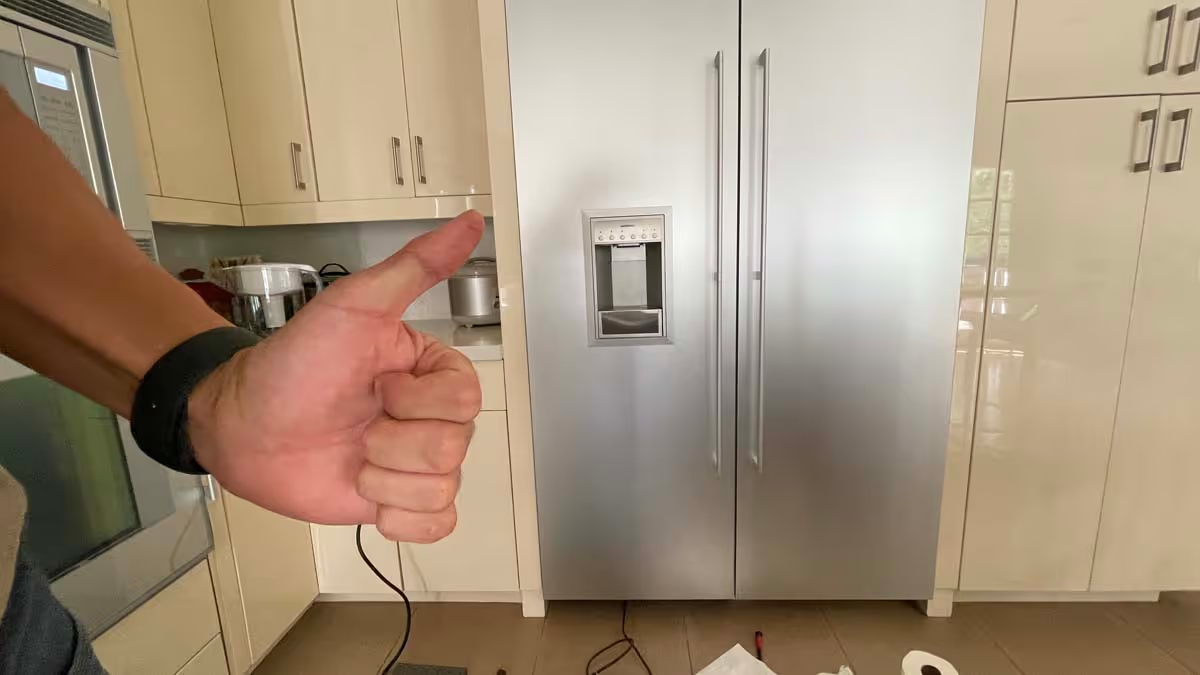
Is your Sub-Zero refrigerator not cooling? A warm Sub-Zero is stressful — these are premium, built-in refrigerators, and the food inside often isn't cheap to replace. The good news is that most Sub-Zero cooling problems trace back to a handful of causes, and several are simple enough to check before you ever pick up the phone. This in-depth guide walks through every common reason a Sub-Zero refrigerator stops cooling, the safe checks you can do yourself, what professional Sub-Zero refrigerator repair costs, and how to keep it from happening again.
A+ Appliance Repair & Maintenance is a family-owned appliance repair company that has served Chicago and the surrounding suburbs since 2015. We hold a 4.9-star rating across more than 1,200 customer reviews, we've helped over 10,000 homes and businesses, and our factory-trained technicians repair Sub-Zero, Wolf, Thermador, Viking, and Miele appliances every day. So when we say a no-cooling Sub-Zero is usually fixable, that comes from thousands of real service calls — not guesswork.
Why is my Sub-Zero refrigerator not cooling?
A Sub-Zero refrigerator usually stops cooling because of dirty condenser coils, a failing evaporator or condenser fan, a worn door gasket, a defrost-system fault, or a problem in its sealed refrigeration system. Dirty condenser coils are the single most common cause and the easiest to overlook. Most no-cooling issues can be diagnosed in one professional visit.
What makes Sub-Zero different from a standard refrigerator is its dual refrigeration system. Most Sub-Zero models use two completely separate sealed systems — one for the fresh-food compartment and one for the freezer — each with its own compressor and evaporator. This design keeps food fresher by preventing dry freezer air from mixing with humid fridge air. It also means one compartment can fail while the other keeps working perfectly. That single detail tells an experienced technician a great deal about where the problem lives, which is exactly why Sub-Zero diagnosis benefits from brand-specific expertise.
The most common reasons a Sub-Zero stops cooling
Over thousands of Sub-Zero service calls, the same causes come up again and again. Here are the ones worth understanding:
- Dirty condenser coils. Sub-Zero recommends cleaning the condenser roughly every 3 to 6 months. When the coils clog with dust, lint, and pet hair, the refrigerator can't release heat efficiently, so it runs constantly and still drifts warm. This is the most common cause we see and often the cheapest to resolve.
- Failing condenser or evaporator fan. Sub-Zero relies on fans to move air across the coils. When a fan motor slows or seizes, cooling drops fast. Telltale signs include buzzing, clicking, rattling, or an unusual silence from a unit that should be humming.
- Worn or dirty door gasket. The magnetic door seal keeps cold air in and warm air out. A cracked, sticky, or deformed gasket lets warm, humid air leak in, so the compartment never reaches temperature and frost builds up around the interior.
- Blocked interior vents. Sub-Zero refrigerators circulate cold air through specific vents. Overpacking the shelves — especially right against those vents — stops air from reaching every corner, creating warm spots even when the system works.
- Defrost-system failure. A faulty defrost heater, defrost thermostat, or control can let ice build up on the evaporator coil. Once the coil is encased in frost, airflow is choked and cooling collapses, often in just one compartment.
- Control board faults. Sub-Zero units use electronic control boards to manage temperature, fans, and defrost cycles. A failed board can cause erratic cooling, incorrect temperatures, or a compartment that won't cool at all.
- Condenser or compressor issues. A struggling compressor or a dirty, failing condenser can leave the unit running without producing cold. This is more serious and requires professional diagnosis.
- Sealed-system refrigerant leak. Less common, but a leak in the sealed refrigeration system will stop cooling entirely. Sealed-system work requires EPA-certified handling and specialized tools — it is never a DIY repair.
Sub-Zero cooling but the freezer isn't (or vice versa)?
Because Sub-Zero uses two independent sealed systems, it's common for one compartment to fail while the other stays cold. If your fresh-food section is warm but the freezer is still frozen solid, the problem is almost always on the refrigerator side — think evaporator fan, defrost components, or the fresh-food sealed system. If the freezer is warm but the fridge is fine, the opposite system is at fault.
This split-failure behavior is one of the biggest reasons we recommend a Sub-Zero specialist rather than a general handyman. Diagnosing which of the two systems has failed — and why — takes brand-specific knowledge and the right diagnostic equipment. Replacing the wrong part on an appliance this valuable is an expensive mistake.
Safe checks you can do before calling a technician
You can rule out the easy, no-risk causes in a few minutes. None of these steps require tools or opening the sealed system:
- Clean the condenser. On most Sub-Zero models the condenser sits behind the upper grille. Turn the unit off, then gently vacuum and brush away dust from the coils and grille, and restore power. This alone resolves a surprising number of "not cooling" calls.
- Check the door seal. Close the door on a slip of paper or a dollar bill. If it slides out with no resistance, the gasket isn't sealing and should be replaced.
- Give the unit room to breathe. Make sure nothing blocks the grille and there's adequate clearance for airflow around the refrigerator.
- Don't overpack. Pull food away from interior vents so cold air can circulate to every shelf.
- Confirm the temperature settings. Set the fresh-food compartment near 38°F and the freezer near 0°F, and make sure no one accidentally changed the controls or triggered a showroom/demo mode.
- Wait 24 hours after a cleaning. A refrigerator needs time to recover after coils are cleaned or a door is left open. Give it a full day before judging the result.
If your Sub-Zero is still warm after a thorough condenser cleaning and a 24-hour wait, it's time for a professional diagnosis. Continuing to run a struggling unit can turn a small repair into a much larger one — and put your food at risk.
How to clean Sub-Zero condenser coils (step by step)
Because dirty coils cause so many cooling problems, here's the maintenance step that prevents the most service calls:
- Locate the condenser — on most built-in models it's behind the grille at the top of the unit.
- Turn off the refrigerator or unplug it for safety.
- Remove the grille (it usually lifts or unclips).
- Use a soft brush and a vacuum with a brush attachment to clear dust from the coils and surrounding area. Brush gently so you don't bend the fins.
- Replace the grille, restore power, and let the unit run.
- Repeat every 3 to 6 months — more often in homes with pets or higher dust levels.
If you'd rather not handle it yourself, we include condenser cleaning as part of routine Sub-Zero maintenance.
Which Sub-Zero refrigerators do we repair?
Our factory-trained technicians service the full Sub-Zero lineup, including built-in and integrated column refrigerators and freezers, Classic side-by-side and over-and-under models, PRO series units, undercounter refrigerator drawers, and Sub-Zero wine storage. Built-in and integrated units in particular need careful handling because they're fitted into cabinetry — our team works cleanly and protects your surrounding finishes, in keeping with our "no mess left behind" promise.
How much does Sub-Zero refrigerator repair cost?
At A+ Appliance Repair & Maintenance, Sub-Zero refrigerator repairs start at $249, and every repair is quoted as a flat, fixed price per repair before any work begins — never hourly. We set our rates using the industry-standard Appliance Repair Blue Book, so pricing is transparent and consistent rather than made up on the spot.
Our residential diagnostic fee is $79, and it's waived and applied to your repair when you choose to proceed — so the service call is effectively free with any repair. There are no hidden fees, and you'll always know the price before we start. every completed repair is backed by our full repair warranty, so the work is backed after we leave.
For a premium refrigerator built to run 20 years or more, a correct repair is almost always far more cost-effective than replacement — and getting the diagnosis right the first time protects both your appliance and your budget.
Why choose a Sub-Zero specialist for the repair?
Sub-Zero refrigerators use proprietary parts, sealed dual-refrigeration systems, and brand-specific electronics. A misdiagnosis on an appliance this valuable can mean repeated visits, the wrong parts, or further damage. Here's what makes A+ the right call for Sub-Zero owners across our service area:
- Experience since 2015. We're a family-owned company that has completed thousands of luxury-appliance repairs and served more than 10,000 homes and businesses.
- Factory-trained expertise. Our technicians are factory-trained and certified on Sub-Zero and other high-end brands, so they know the dual-refrigeration system inside and out.
- Proven track record. We hold a 4.9-star rating across more than 1,200 reviews, we're a BBB Accredited Business, and we've earned the Angi Super Service Award in both 2024 and 2025, plus recognition from Thumbtack.
- Licensed, insured, and background-checked. Every technician who enters your home is vetted, insured, and trained — something a general handyman often can't offer.
- Transparent, guaranteed work. Fixed, upfront pricing, a repair warranty, and our satisfaction guarantee mean there are no surprises.
- Fast, local service. Same-day and next-day appointments, seven days a week, from 6 AM to 9 PM.
How to prevent Sub-Zero cooling problems
A few simple habits keep a Sub-Zero running reliably for decades:
- Clean the condenser every 3 to 6 months — the single best thing you can do.
- Inspect and wipe down the door gaskets so they stay flexible and seal tightly.
- Avoid overpacking, and keep food away from interior air vents.
- Don't set the temperature colder than needed; it strains the system without improving food safety.
- Schedule periodic professional maintenance to catch small issues before they become breakdowns.
Sub-Zero refrigerator repair near you
A+ Appliance Repair & Maintenance is headquartered in Chicago and serves the entire metro and surrounding Illinois suburbs, plus the Los Angeles metro in California, Washington D.C., Northern Virginia, and Houston, Texas. Whether you need Sub-Zero repair in Chicago or service in one of our other markets, our factory-trained team is ready to help.
Explore our refrigerator repair service, our dedicated Sub-Zero appliance repair page, or our Illinois service area for more on where we work.
Ready to get your Sub-Zero cooling again? Book online in seconds or call (800) 819-4195 for same-day Sub-Zero refrigerator repair from a team that treats your home and your appliance with care.
Frequently asked questions
How often should I clean my Sub-Zero condenser?
About every 3 to 6 months. Homes with pets or higher dust levels may need it more often. A clean condenser is the easiest way to prevent cooling problems and extend the life of the unit — it's the maintenance step that prevents the most service calls.
Why is my Sub-Zero freezer cold but the refrigerator is warm?
Sub-Zero's dual refrigeration system runs separate sealed systems for each compartment, so one can fail while the other works perfectly. A warm fridge with a cold freezer usually points to the fresh-food evaporator, fan, or defrost components. It should be professionally diagnosed.
Is it worth repairing an older Sub-Zero refrigerator?
Usually, yes. Sub-Zero units are engineered to run 20 years or more, so a targeted repair is typically far more cost-effective than replacing a premium refrigerator that can cost many thousands of dollars. Our technician can tell you quickly whether a repair makes financial sense.
How long does Sub-Zero refrigerator repair take?
Many common repairs — fans, gaskets, defrost components — are completed in a single visit once the right part is on hand. Sealed-system repairs can take longer. We diagnose first, then give you a clear, fixed price and timeline before starting.
Can a regular appliance technician fix a Sub-Zero?
It's risky. Sub-Zero uses proprietary parts and a dual sealed-refrigeration design that require factory training and specialized tools. A specialist avoids misdiagnosis, protects any remaining warranty, and gets the repair right the first time.
What temperature should a Sub-Zero refrigerator be set to?
Set the fresh-food compartment to about 38°F and the freezer to about 0°F. Setting it colder than necessary strains the system without improving food safety.
Do you offer same-day Sub-Zero repair?
Yes. We offer same-day and next-day appointments, seven days a week, from 6 AM to 9 PM, across our Chicago and suburban service area and our other markets.
How much does Sub-Zero refrigerator repair cost?
Sub-Zero refrigerator repairs start at $249, quoted as a flat, fixed price before work begins. The $79 residential diagnostic fee is waived when you proceed with the repair, and every completed repair is backed by our full repair warranty.

.avif)






.svg)













.avif)



.svg.avif)

.avif)
.avif)










.avif)








.avif)



.avif)



.avif)



.avif)



.avif)

.avif)





.avif)
.avif)
.avif)
.avif)
.avif)
.avif)
.avif)
.avif)
.avif)