

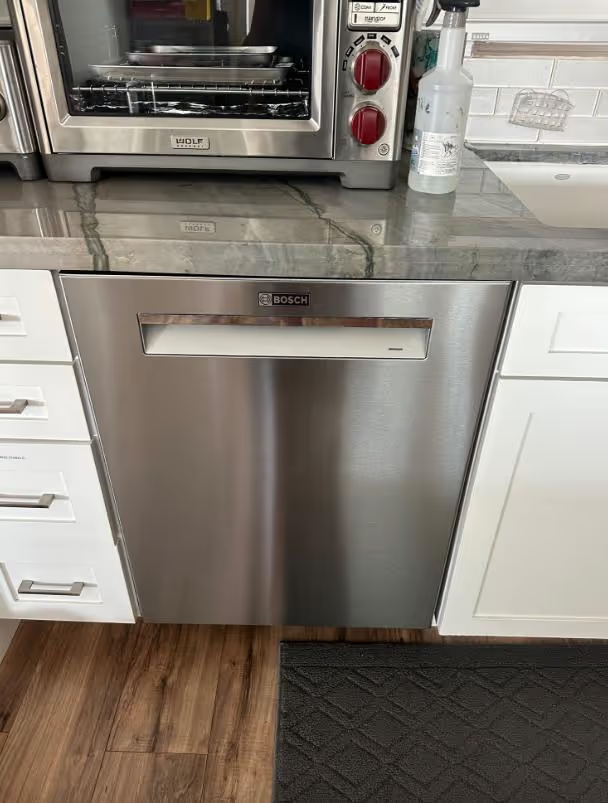
Bosch Dishwasher Not Drying? Why It Happens and How to Fix It
Key Takeaways
- Bosch dries by condensation, so wet dishes are often a settings or rinse-aid issue, not a fault.
- Keep rinse aid full and set high — it's essential for drying.
- Use Auto with Extra Dry, and unload the bottom rack first.
- Plastics staying damp is normal with condensation drying.
- If every load is soaked or it won't drain, a repair may be needed; repairs start at $249.
Is your Bosch dishwasher not drying the dishes? If you're opening the door to damp glasses and puddled plastics, you're not necessarily looking at a breakdown. Most Bosch dishwashers dry by condensation rather than a hot heating element, so results depend heavily on rinse aid, loading, the cycle you choose, and how you unload. This in-depth guide explains exactly why a Bosch dishwasher leaves dishes wet, the simple fixes that solve most cases, when wet dishes actually signal a repair, what Bosch repair costs, and how to get spotless, dry results every time.
A+ Appliance Repair & Maintenance is a family-owned appliance repair company that has served Chicago and the surrounding suburbs since 2015. We hold a 4.9-star rating across more than 1,200 customer reviews, we've helped over 10,000 homes and businesses, and our technicians are factory-approved on Bosch and other major brands. So we can usually tell within minutes whether you have a settings problem or a true fault.
Why is my Bosch dishwasher not drying?
A Bosch dishwasher usually leaves dishes wet because it dries by condensation and the rinse aid is low, the load includes plastics that don't shed water, the wrong cycle was selected, or the dishes were unloaded top-rack first. A drainage clog or, on some models, a failed heating element can also reduce drying. Many of these fixes are simple and free.
Understanding how Bosch drying works is the key. Instead of baking dishes with a hot element — which wastes energy and can melt plastics — most Bosch models use the residual heat of the final rinse so moisture condenses on the cooler stainless-steel tub walls and runs off. Higher-end models add technologies like AutoAir, which pops the door open at the end of the cycle to release steam, and CrystalDry, which uses a natural mineral (zeolite) to convert moisture into heat for noticeably drier dishes. This efficient design is excellent — but it relies on the right conditions to work well.
Common reasons a Bosch dishwasher leaves dishes wet
These are the causes we see most, from simplest to most involved:
- Low or empty rinse aid. Condensation drying depends on rinse aid to sheet water off dishes so it can run down the tub walls. Running low is the single most common reason for wet dishes.
- Plastic items. Plastic holds very little heat, so it stays wet even when the cycle works perfectly — this is normal for condensation drying.
- Unloading order. Emptying the top rack first lets water pooled on upper items drip onto the dry dishes below. Always unload the bottom rack first.
- Wrong or eco cycle. Eco and quick cycles use less heat and dry less. Auto or a cycle with the Extra Dry / Sanitize option dries far better.
- Overloading or poor stacking. Items that nest together or block airflow trap water. Angle bowls and cups so water can run off.
- Door opened too soon — or too late. On non-AutoAir models, cracking the door open for a few minutes after the cycle helps steam escape.
- Drainage problems. If the dishwasher isn't draining fully, leftover water shows up as wetness. A clogged filter is the usual culprit.
- Failed heating element (some models). Bosch models that do use a heating element can leave every load wet if that element fails — this one needs a technician.
The simple fixes that solve most cases
Before assuming a repair, work through these in order:
- Refill the rinse-aid dispenser and turn the setting up to its higher levels.
- Run an Auto cycle and add the Extra Dry or Sanitize option.
- Unload the bottom rack before the top rack.
- Clean the bottom filter so the machine drains completely.
- Re-think loading: angle cups and bowls, and avoid stacking items that trap water.
- On models without AutoAir, crack the door open for 10–15 minutes after the cycle ends.
If dishes still come out soaked across every load after these steps, it's time to have the drainage system and (on applicable models) the heating element checked.
When is wet-dish trouble an actual repair?
Wet plastics or a little moisture on a quick cycle is normal. A genuine repair is more likely when every load comes out soaked despite good rinse aid and correct loading, when the dishwasher isn't draining and leaves standing water, or when a fault code appears. In those cases the drain pump, filter assembly, or heating element (on models that have one) may need professional service. A technician can confirm quickly whether it's a part or just settings — and we'll tell you honestly if no repair is needed.
How much does Bosch dishwasher repair cost?
At A+ Appliance Repair & Maintenance, dishwasher repairs start at $249, and every repair is quoted as a flat, fixed price per repair before any work begins — never hourly. We set our rates using the industry-standard Appliance Repair Blue Book, so pricing is transparent and consistent.
Our residential diagnostic fee is $79, and it's waived and applied to your repair when you proceed — so the service call is effectively free with any repair. You'll always know the price before we start, with no hidden fees. every completed repair is backed by our full repair warranty, so the work is backed after we leave.
Why choose A+ for Bosch dishwasher repair?
Bosch dishwashers use brand-specific drying technology and electronics that reward proper training. Here's why Bosch owners across our service area choose A+:
- Experience since 2015. A family-owned company that has served more than 10,000 homes and businesses.
- Factory-approved expertise. Technicians trained and certified on Bosch and other major brands.
- Proven track record. A 4.9-star rating across more than 1,200 reviews, BBB Accredited Business status, the Angi Super Service Award in 2024 and 2025, and Thumbtack recognition.
- Licensed, insured, and background-checked. Every technician who enters your home is vetted, insured, and trained.
- Honest, guaranteed work. Fixed, upfront pricing, a repair warranty, and a satisfaction guarantee — and we'll tell you when it's a settings fix, not a repair.
- Fast, local service. Same-day and next-day appointments, seven days a week, from 6 AM to 9 PM.
How to keep your Bosch drying well
- Keep the rinse-aid dispenser filled and set to a higher level — it's essential for condensation drying.
- Default to the Auto cycle with Extra Dry rather than eco or quick when you want dry dishes.
- Clean the filter regularly so the unit drains fully.
- Load thoughtfully so water can run off, not pool.
- Unload bottom-first every time.
Bosch dishwasher repair near you
A+ Appliance Repair & Maintenance is headquartered in Chicago and serves the entire metro and surrounding Illinois suburbs, plus the Los Angeles metro, Washington D.C., Northern Virginia, and Houston, Texas. Explore our dishwasher repair service, our Bosch appliance repair page, or our Illinois service area.
Wet dishes every cycle? Book online in seconds or call (800) 819-4195 for same-day Bosch dishwasher repair.
Frequently asked questions
Why does my Bosch dishwasher leave plastics wet?
Plastic doesn't retain heat, so condensation drying struggles with it. This is normal. Rinse aid and an Extra Dry option help, but some dampness on plastic items is expected with this efficient drying method.
Does rinse aid really help Bosch drying?
Yes — a lot. Bosch condensation drying depends on rinse aid to sheet water off dishes so it can run off the tub walls. A low or empty dispenser is the most common reason for wet dishes.
What is Bosch CrystalDry and AutoAir?
AutoAir automatically pops the door open at the end of the cycle to let steam out and improve drying. CrystalDry uses a natural mineral to turn moisture into heat for drier dishes, including plastics, on models that have it.
Why is my Bosch dishwasher not drying at all suddenly?
If drying suddenly stops across every load, check rinse aid first, then drainage. On models with a heating element, a failed element can stop drying entirely and needs a technician.
Which cycle dries best on a Bosch?
Auto with the Extra Dry or Sanitize option dries best. Eco and quick cycles use less heat and leave more moisture behind.
Is it worth repairing a Bosch dishwasher?
Often the issue is settings, not a fault — so it may cost nothing to fix. When a real repair is needed, Bosch dishwashers are well-built, so repair is usually more economical than replacement.
Do you offer same-day Bosch repair?
Yes. We offer same-day and next-day appointments, seven days a week, from 6 AM to 9 PM, across our service area.
How much does Bosch dishwasher repair cost?
Dishwasher repairs start at $249, quoted as a flat, fixed price before work begins. The $79 residential diagnostic fee is waived when you proceed, and every completed repair is backed by our full repair warranty.










.svg)













.avif)



.svg.avif)

.avif)
.avif)










.avif)








.avif)



.avif)



.avif)




.avif)



.avif)

.avif)





.avif)
.avif)
.avif)
.avif)
.avif)
.avif)
.avif)
.avif)
.avif)