

Why Is My Washing Machine Not Draining?

Why Won't My Washer Drain?
There are few household mishaps more frustrating than a washing machine that refuses to finish its job. You load your laundry, pour in the detergent, and press start, expecting fresh, clean clothes in an hour. Instead, you return to find a heavy, soggy mess sitting in a drum full of gray water.
A washing machine that won't drain stops your household routine in its tracks. You are stuck with wet clothes that can quickly develop a mildew smell, and you certainly cannot wash another load until the issue is resolved. It is messy, inconvenient, and leads many homeowners to frantically search: "Why won't my washer drain?"
At A+ Appliance Repair and Maintenance, we have helped thousands of families across the Chicago Metro area, Northern Virginia/D.C., Houston, and Los Angeles County solve this exact problem. While the issue might seem catastrophic, it is often caused by a specific, fixable mechanical failure. In this detailed guide, we will explore why you are seeing your machine not draining, how to troubleshoot the spin cycle, and how our expert team gets your appliance back to peak performance.
The 7 Most Common Reasons Your Washing Machine Won’t Drain
Modern appliances are complex machines that rely on a series of sensors, pumps, and electrical signals to work correctly. When one link in that chain breaks, the water stays put. Here are the most frequent culprits.
1. A Clogged or Kinked Drain Hose
Before you assume a major part has broken, look at the plumbing. The drain hose is the tube that carries water from the back of your washing machine to your home’s drain pipe or laundry sink.
- The Kink Issue: If the machine was pushed back too hard against the wall, the rubber hose might be kinked or pinched, cutting off the water flow like a bent garden hose.
- The Clog Issue: Over time, lint, hair, paper tissues left in pockets, and small debris can build up inside the hose. Eventually, this blockage prevents the pump from pushing water out, which often stops the spin cycle from starting effectively.
- How We Fix It: Our technicians detach the hose, clear any obstructions using specialized tools, and ensure the hose is installed with the proper "high loop" to prevent backflow.
2. A Faulty Drain Pump
The drain pump is the heart of the drainage system. Its job is to mechanically force water out of the drum and into the drain hose. If you can hear the motor humming but the water level isn't going down during the drain cycle, this is a classic sign of a pump failure.
- Mechanical Failure: Sometimes, a small sock, a coin, or a baby garment slips past the filter and gets jammed in the pump’s impeller blades, causing the plastic to snap.
- Electrical Failure: The pump motor itself can burn out after years of use.
- The Result: A broken pump is a leading cause of a machine not draining, requiring a full component replacement.
3. The Lid Switch Assembly (Top-Loaders)
If you own a top-loading washing machine, safety features play a huge role. The lid switch is a small sensor that detects whether the lid is closed. As a safety precaution, most washers will not enter the high-speed spin cycle if they "think" the lid is open.
- The Symptom: If the little plastic tab on the lid is broken, or if the electrical sensor inside the cabinet has failed, the machine will pause mid-cycle. It might wash and rinse, but it will refuse to initiate the drain cycle and spin.
- The Fix: We test the electrical continuity of the switch and replace the assembly if necessary to restore communication with the control board.
4. Worn or Broken Drive Belt
Many washers use a rubber drive belt to connect the motor to the transmission and pump. It functions similarly to a fan belt in a car.
- Slipping Belts: Over time, rubber stretches and wears out. If the belt becomes loose, it may slip on the pulleys. The motor will spin, but the pump won't generate enough force to move the water.
- Broken Belts: If the belt snaps entirely, the drum won't rotate during the spin cycle, and the pump won't activate at all.
- Our Approach: We inspect the belt for glazing, cracks, or slack and replace it to ensure the proper tension is applied to the pump system.
5. Control Board and Timer Issues
In modern digital appliances, the main control board is the brain of the operation. It sends voltage to the pump when it is time to empty the water.
- The Glitch: If there is a short circuit, a loose wire, or a failed relay on the board, the signal to start the drain cycle never gets sent. The pump might be perfectly fine, but it never receives the instruction to turn on.
- The Complexity: Diagnosing electrical issues requires a multimeter and a deep knowledge of wiring diagrams. This is not a DIY job. A professional technician can determine if the board needs to be reprogrammed or replaced.
6. Clogged Coin Trap or Drain Filter
Most front-loading washers (and some top-loaders) are equipped with a debris filter, often called a "coin trap." It is designed to catch loose change, buttons, and lint before they damage the pump.
- The Problem: If you haven't cleaned this filter in months (or years), it can become completely packed with debris. Water simply cannot pass through the blockage, resulting in a machine not draining efficiently or at all.
- Maintenance Tip: We recommend checking your owner's manual to locate this filter and cleaning it out every three months.
7. The "Suds Lock" Error
Did you know using too much soap can break your cycle? If you use regular detergent in a High-Efficiency (HE) washing machine, or simply use too much HE detergent, the drum can fill with excessive suds.
- The Sensor Issue: The machine detects the excess foam and may assume there is a mechanical issue or struggle to pump the thick suds out. This often triggers an error code and prevents the spin cycle from reaching full speed, leaving water and bubbles behind.
What To Do While You Wait: How to Manually Drain Your Washer
If your washer is full of water, you might be worried about your clothes sitting in that dirty water while you wait for a repair. If you are comfortable doing so, you can manually drain the water to salvage your laundry.
Warning: This process can be messy. You will need towels and a shallow bucket or baking tray.
- Power Down: Unplug the washing machine from the wall to ensure safety.
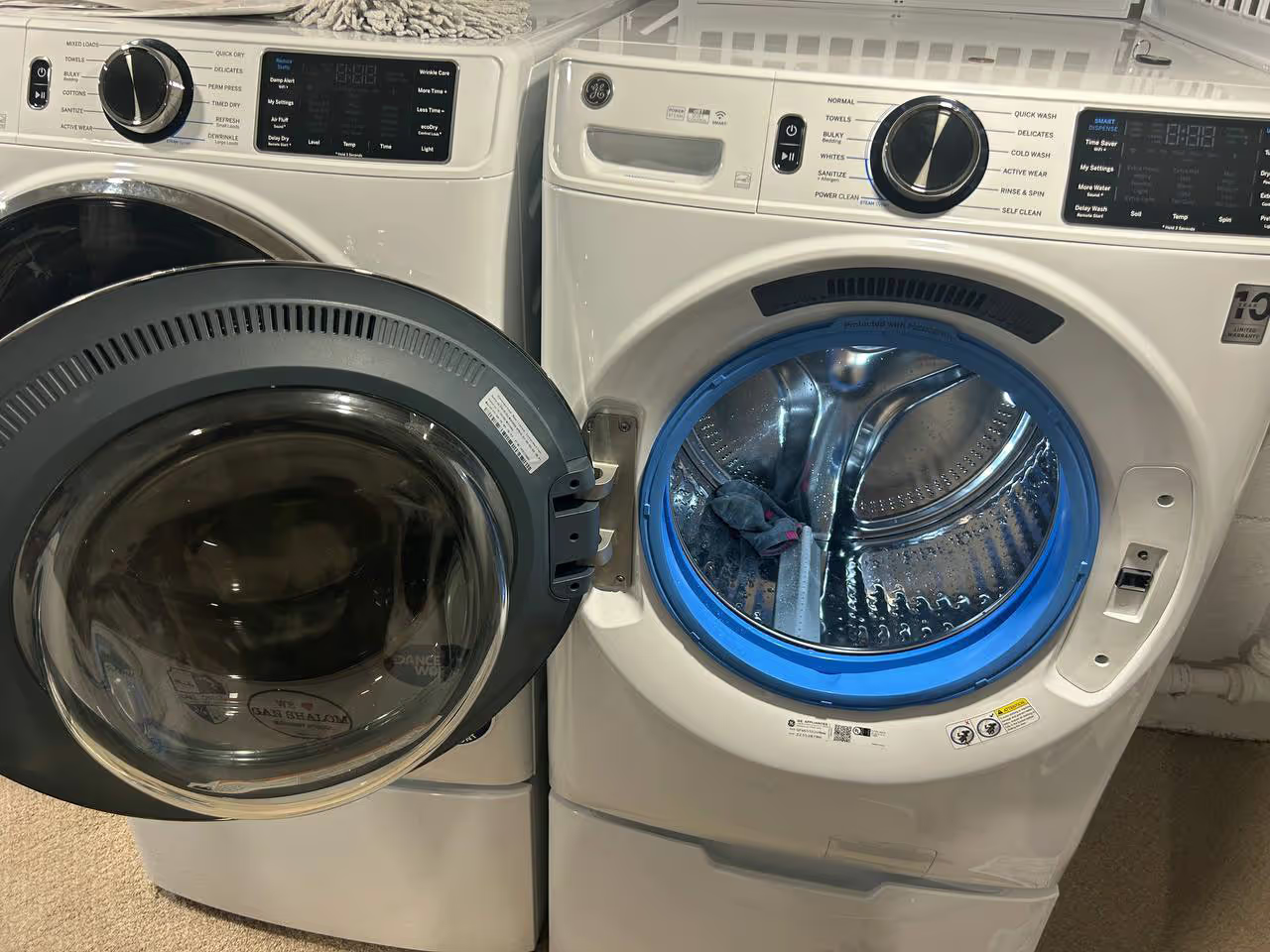
- Locate the Filter: On front-loaders, there is usually a small door on the bottom front of the machine.
- Use the Emergency Tube: Many models have a small, retractable black rubber tube next to the filter. Pull this out, place the end over your shallow container, and uncork it.
- Drain Slowly: Let the water flow into the container. Cap the tube when the container is full, empty the container into a sink, and repeat.
- Alternative Method: If you do not have a front drain access, you may have to pull the machine away from the wall, disconnect the main gray drain hose from the wall pipe, and lower it into a large bucket. Gravity will help you manually drain the tub.
Note: If this sounds too difficult or heavy, do not risk injury or water damage to your floors. It is perfectly okay to leave the water and let our technicians handle the mess when they arrive.
Why You Should Not Ignore a Machine Not Draining
It is tempting to wring out clothes by hand and hope the problem goes away on the next load, but this is rarely the case. Ignoring a machine not draining can lead to significantly worse problems:
- Mold and Mildew: Standing water is a breeding ground for bacteria. If water sits in the internal hoses or the outer tub for days, your washer will develop a foul, musty odor that is nearly impossible to remove.
- Motor Strain: If the pump is jammed but trying to run, it can overheat. What started as a simple clog could turn into a burnt-out motor, doubling the cost of repairs.
- Structural Damage: The weight of a full tub of water puts immense strain on the suspension springs and shock absorbers of the unit.
The A+ Appliance Repair Difference
When you are dealing with a breakdown, you need a team that is fast, honest, and reliable. Here is why homeowners in Pasadena, Houston, Chicago, and D.C. trust A+ Appliance Repair and Maintenance.
- Comprehensive Diagnostics: We don't just guess. We troubleshoot the entire drain system—from the lid switch to the wall plumbing—to ensure we find the root cause.
- Transparent Pricing: You will never be hit with hidden fees. We provide a clear quote for the repair before we lift a screwdriver.
- Warranty Protection: We stand behind our craftsmanship. Every repair is backed by our full repair warranty, so you can rest easy knowing the fix will last.
- All Major Brands: Whether you need Samsung washing machine repair, Whirlpool service, or help with a high-end Miele or Bosch unit, our factory-trained technicians have the expertise to handle it.
Schedule Your Repair Today
Don't let a washing machine full of water ruin your week. Whether you need to manually drain the unit or need a full pump replacement, we have the tools and talent to get the job done right.
If you are asking yourself, "Why won't my washer drain?" and are tired of wet clothes, contact A+ Appliance Repair and Maintenance today. We offer flexible scheduling and same-day service in many areas to get your household back on track.






.svg)













.avif)



.svg.avif)

.avif)
.avif)










.avif)








.avif)



.avif)



.avif)



.avif)



.avif)

.avif)





.avif)
.avif)
.avif)
.avif)
.avif)
.avif)
.avif)
.avif)
.avif)