

Wine Cooler Not Cooling? Causes and When to Call a Pro
Key Takeaways
- Common causes: a dirty condenser, a blocked or failed fan, a worn seal, or a room that's too warm.
- Thermoelectric units struggle in warm rooms; compressor units handle heat better.
- Clean the condenser, check the fan and seal, and don't overpack.
- Persistent warmth may mean a fan, thermostat, control, or sealed-system fault.
- Wine cooler repairs start at $299, and the $79 diagnostic is waived with the repair.
Is your wine cooler not cooling? A wine refrigerator that drifts warm puts your collection at risk — wine is sensitive to temperature swings, and a unit that can't hold its setting needs attention. The good news is that the most common causes are straightforward: a dirty condenser, a blocked fan, a worn door seal, or simply a room that's too warm for the unit. This guide explains every common reason a wine cooler stops cooling, the safe checks to try, what repair costs, and when to call a technician.
A+ Appliance Repair & Maintenance is a family-owned appliance repair company that has served Chicago and the surrounding suburbs since 2015. We hold a 4.9-star rating across more than 1,200 customer reviews, we've helped over 10,000 homes and businesses, and our technicians repair wine coolers, refrigerators, and built-in cooling units of every kind.
Why is my wine cooler not cooling?
A wine cooler usually stops cooling because of a dirty condenser, a blocked or failed fan, a worn door seal, an ambient room that's too warm, or a fault in its cooling system. The two main cooling types — thermoelectric and compressor-based — fail in slightly different ways. Most issues can be diagnosed in a single visit.
It helps to know which type you have. Smaller wine coolers often use thermoelectric cooling, which is quiet but sensitive to a warm room and reliant on a working fan. Larger and dual-zone units typically use compressor-based cooling, much like a refrigerator, which is more powerful but has more parts that can wear. Either way, the cooler depends on clean airflow, a good door seal, and a reasonable room temperature to hold its setting.
Common causes and what to look for
- Dirty condenser or vents. Dust on the condenser or blocked vents stops the unit from releasing heat, so it can't cool. This is one of the most common and easily fixed causes.
- Blocked or failed fan. Wine coolers rely on fans to move air. A fan that's obstructed or has failed will leave the cabinet warm, especially on thermoelectric units.
- Worn door seal. A cracked or loose gasket lets warm air in, so the cooler runs constantly and never reaches temperature. Glass doors are especially sensitive to seal problems.
- Room too warm. Many wine coolers can only cool to a set number of degrees below room temperature. In a hot room or garage, a thermoelectric unit may simply not keep up.
- Overpacking or poor airflow. Cramming in too many bottles blocks internal air circulation and creates warm spots.
- Thermostat or control fault. A failed thermostat or control board can stop the unit from cooling correctly.
- Compressor or sealed-system issue. On compressor units, a failing compressor or a refrigerant problem needs a professional.
Thermoelectric vs. compressor wine coolers
Understanding your cooling type helps you troubleshoot. Thermoelectric coolers have no compressor; they use a solid-state system and fans, run very quietly, and are common in smaller units — but they struggle in warm rooms and depend heavily on clean, working fans. Compressor coolers work like a standard refrigerator, handle warm rooms and large capacities better, and are standard in dual-zone and larger units — but they have more mechanical parts. If a thermoelectric unit won't cool, start with the room temperature and the fan; if a compressor unit won't cool, the condenser, fan, and sealed system are the usual suspects.
Safe checks you can do before calling a technician
- Vacuum or brush dust off the condenser and make sure the vents aren't blocked.
- Confirm the room isn't too warm for the unit, and move it away from heat sources or direct sun.
- Check the door seal for cracks or gaps, and make sure the door closes flush.
- Listen for the fan running; a silent fan on a thermoelectric unit points to the problem.
- Don't overpack — leave room for air to circulate around the bottles.
- Give it 24 hours after any change before judging whether it's cooling.
If the cooler still won't hold temperature after these checks, the fan, thermostat, control, or sealed system may need a technician.
How much does wine cooler repair cost?
At A+ Appliance Repair & Maintenance, wine cooler repairs start at $299, and every repair is quoted as a flat, fixed price per repair before any work begins — never hourly. We set our rates using the industry-standard Appliance Repair Blue Book, so pricing is transparent and consistent.
Our residential diagnostic fee is $79, and it's waived and applied to your repair when you proceed — so the service call is effectively free with any repair. You'll always know the price before we start, with no hidden fees. every completed repair is backed by our full repair warranty. For a quality wine cooler protecting a valuable collection, a repair is almost always more sensible than replacement.
Why choose A+ for wine cooler repair?
- Experience since 2015. A family-owned company that has served more than 10,000 homes and businesses.
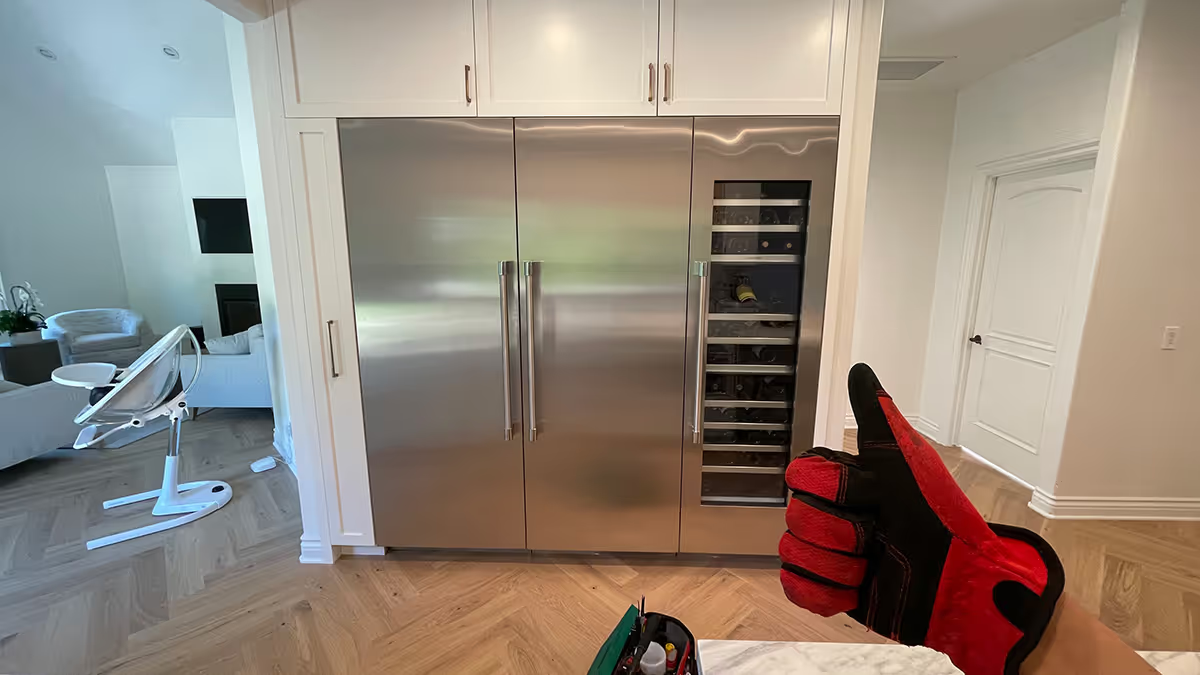
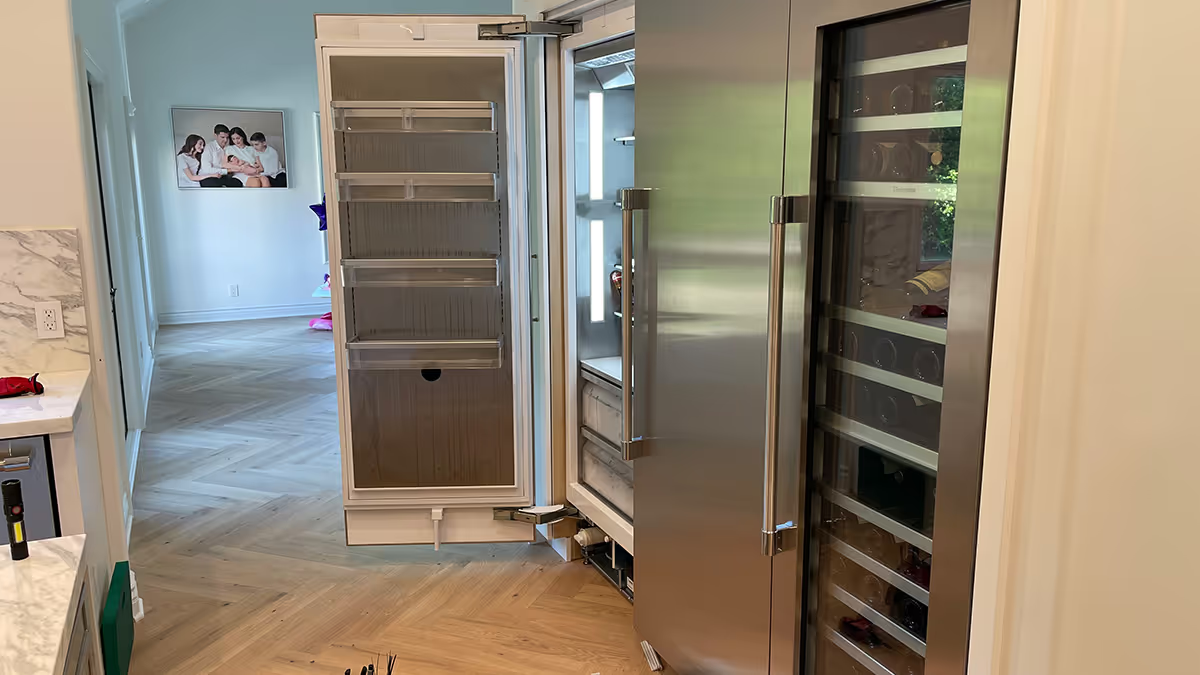
- Expertise across cooling appliances. Wine coolers, built-in refrigeration, and luxury units including Sub-Zero wine storage.
- Proven track record. A 4.9-star rating across 1,200+ reviews, BBB Accredited, Angi Super Service Award in 2024 and 2025, and Thumbtack recognition.
- Licensed, insured, and background-checked. Every technician who enters your home is vetted.
- Transparent, guaranteed work. Fixed, upfront pricing and a repair warranty.
- Fast, local service. Same-day and next-day appointments, seven days a week, from 6 AM to 9 PM.
How to prevent wine cooler cooling problems
- Keep the condenser and vents clean and dust-free.
- Place the unit in a temperature-stable spot, away from heat and direct sun.
- Inspect the door seal and keep the glass door fully closed.
- Don't overpack — leave space for air to circulate.
- Avoid frequent door openings, which let warm air in.
Wine cooler repair near you
A+ Appliance Repair & Maintenance is headquartered in Chicago and serves the entire metro and surrounding Illinois suburbs, plus the Los Angeles metro, Washington D.C., Northern Virginia, and Houston, Texas. Explore our wine cooler repair service, our refrigerator repair page, or our Illinois service area.
Collection at risk? Book online in seconds or call (800) 819-4195 for same-day wine cooler repair.
Frequently asked questions
Why is my wine cooler not getting cold?
The most common causes are a dirty condenser, a blocked or failed fan, a worn door seal, or a room that's too warm for the unit. Cleaning the condenser and checking the fan and seal resolves many cases.
What's the difference between thermoelectric and compressor wine coolers?
Thermoelectric units are quiet and fan-based but struggle in warm rooms; compressor units work like a refrigerator, handle heat and large capacities better, and are standard in dual-zone models.
Why is my wine cooler running but still warm?
A unit that runs but stays warm often has a dirty condenser, a failed fan, a leaking seal, or — on compressor models — a sealed-system issue. A technician can pinpoint the cause.
Can a warm room stop my wine cooler from cooling?
Yes, especially with thermoelectric units, which can only cool so far below room temperature. Moving the cooler to a cooler, stable location often solves it.
Is wine cooler repair worth it?
Usually yes, particularly for a quality unit protecting a valuable collection. Most repairs cost far less than a replacement cooler.
Do you offer same-day wine cooler repair?
Yes. We offer same-day and next-day appointments, seven days a week, from 6 AM to 9 PM, across our service area.
How much does wine cooler repair cost?
Wine cooler repairs start at $299, quoted as a flat, fixed price before work begins. The $79 residential diagnostic fee is waived when you proceed, and every completed repair is backed by our full repair warranty.

.avif)
.avif)








.svg)















.avif)



.svg.avif)

.avif)
.avif)










.avif)








.avif)



.avif)



.avif)




.avif)



.avif)

.avif)





.avif)
.avif)
.avif)
.avif)
.avif)
.avif)
.avif)
.avif)
.avif)