
Common Oven Problems: What Goes Wrong and How to Prevent It
Key Takeaways
- The most common oven problems are no heat, uneven heat, a wrong temperature, a gas oven that will not light, door seal wear, self-clean lockouts, and control or error code trouble.
- If your gas oven will not light but the stove burners work, a weak or failed igniter is the usual cause.
- An inexpensive oven thermometer can tell you in 30 minutes whether your thermostat or sensor is off.
- If you smell gas, leave the kitchen and call your gas company before anything else.
- A little cleaning and gentle use prevent many of these repairs.
The most common oven problem is that it does not heat the way it should. That can mean no heat, weak heat, or heat that is uneven or off by more than 15 degrees. Behind it are usually a bad igniter, a worn heating element, or a failing temperature sensor. Here is each problem, what to check, and how to prevent it.
1. Oven not heating or heating too slowly
This is the call we get most. The oven turns on, the display lights up, but the inside never gets hot enough. Food comes out pale in the middle.
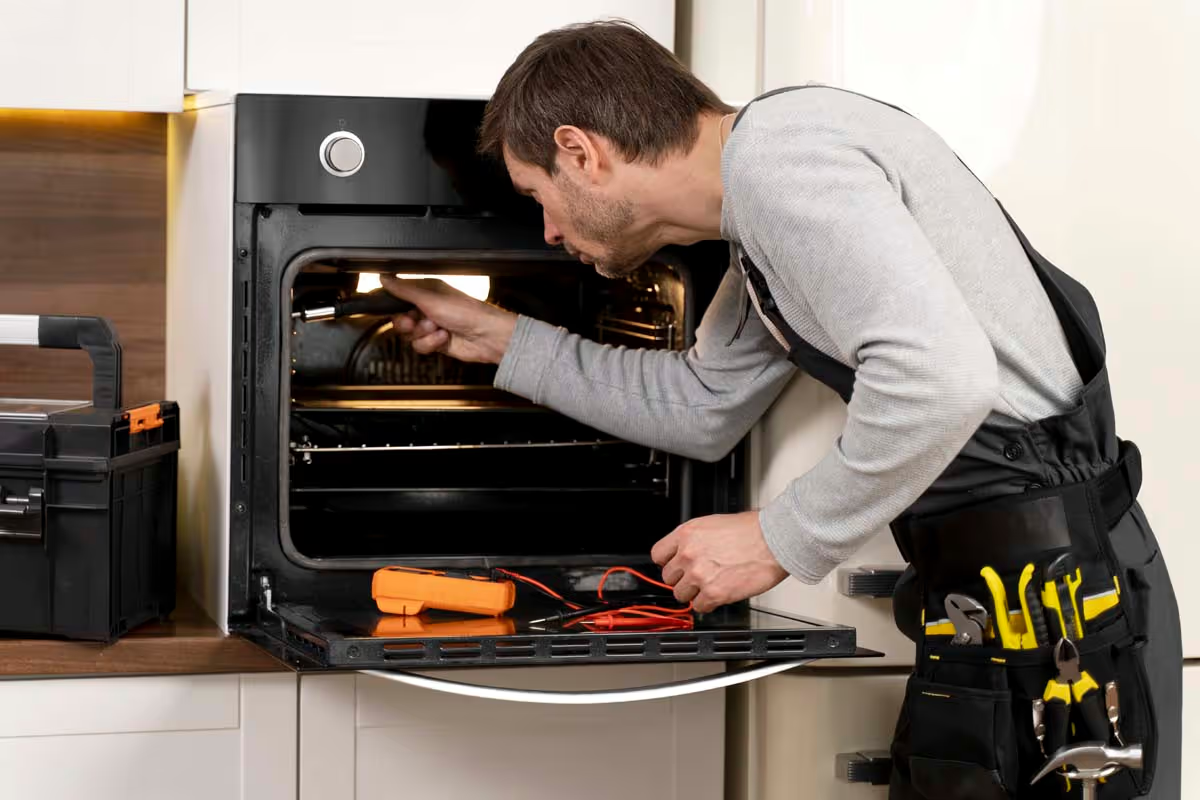
In an electric oven, the cause is often a burned-out bake element (the heavy coil along the bottom). Look at it with the oven off and cool. A blister, a gap, or a broken spot means it has failed. In a gas oven, the cause is usually the igniter, which we cover in the next section.
What you can check:
- Make sure the oven is not in a timer or "sabbath" mode.
- Check your home breaker panel. Electric ovens use a double breaker, and one half can trip alone.
- Look at the bake element for visible damage.
How to prevent it: Do not slam the door, and do not pour water on a hot oven. Wipe up spills before they bake onto the element. For more on heat trouble, see our guide to oven temperature problems.
2. Gas oven won't light but the stove works
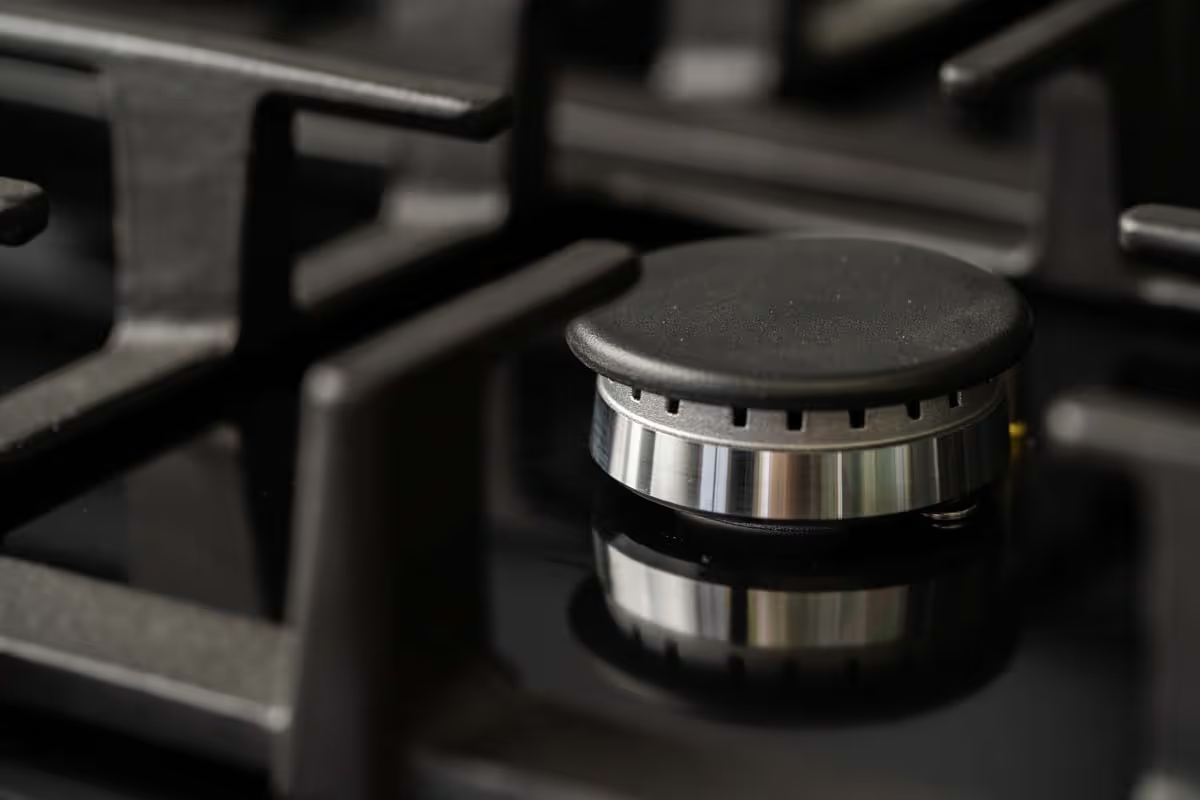
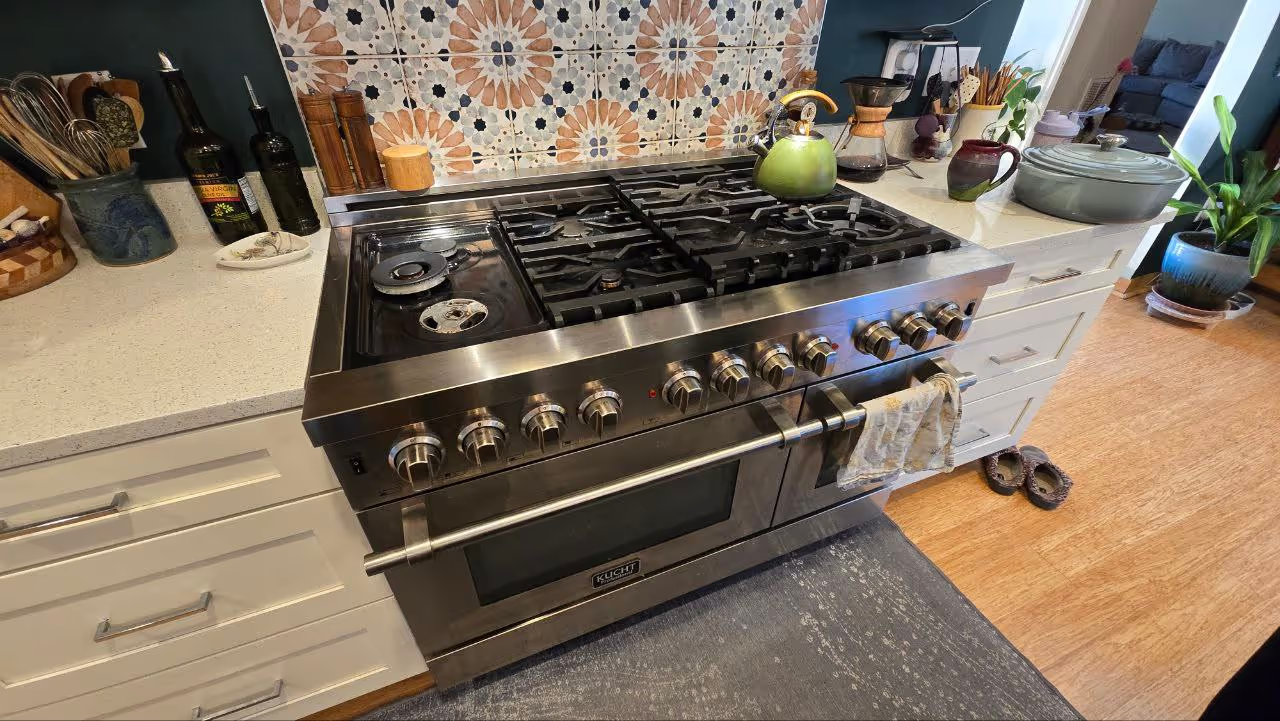
Many people search for this exact problem: the stove burners click and light, but the gas oven stays cold. This points to the oven igniter, a small part that glows hot to light the gas. It is a separate part from the burner sparkers. That is why the cooktop can work while the oven does not.
Igniters wear out slowly. An old one may glow orange but too weakly to open the gas valve. So the oven never lights, even though the igniter looks fine. Wait 5 to 7 minutes after you set the oven to bake. If the igniter glows and the oven stays cold, the igniter is likely weak.
We see this often. In Evanston, we repaired a Whirlpool oven that would not light while the cooktop still worked. If you smell gas at any point, stop. Open a window, leave the kitchen, and call your gas company. Then call us.
How to prevent it: Keep the oven floor clean so food does not coat the igniter. Do not bump or scrub the igniter itself, because it cracks easily. Our post on gas stove ignition trouble covers the cooktop side.
3. Oven won't turn on but the stove works
Here the stove burners work, but the oven is dead. The display may be blank, or nothing happens when you press Bake.
Start with the simple things. Check that the control lock is off, because many ovens lock the panel after a long press on one key. Then look at the breaker. On an electric range, the oven and the cooktop often use the same power. But a failed oven control board or a bad door lock switch can stop only the oven.
If the clock lights up but the oven will not start, a bad control board or a worn relay on that board is likely. These are repairs for a trained technician.
How to prevent it: Plug the range into a good outlet or circuit, and avoid pressing buttons hard. A surge protector on a gas range outlet helps protect the control board.
4. Uneven heat: burnt on one side, raw on the other
If one side of the pan browns faster, the heat is not spreading evenly. Common causes are a weak bake or broil element, a worn door seal, a blocked vent, or a failed convection fan (the small fan in the back wall that moves hot air).
What you can check:
- Turn the convection fan on and listen for it. It should spin freely and without a rattle.
- Make sure foil is not covering the oven floor or racks. It can block heat and airflow.
- Rotate your pan halfway through baking to see if the pattern changes.
If a luxury range is the problem, our post on a Thermador oven not heating evenly walks through the causes that are specific to that brand.
How to prevent it: Wipe out grease and crumbs so air can move. Leave space between pans and the oven walls.
5. Temperature is off or the oven overheats
An oven set to 350 that runs at 300 or 400 is a thermostat or sensor problem. Most modern ovens use a temperature sensor, a thin metal probe in the back wall. It tells the control board how hot the oven is. If it reads wrong, the board heats too little or too much.
We repaired this kind of problem in Pasadena, where a JennAir oven was reporting the wrong temperature. Food is the first clue. Cakes sink, cookies burn, and roasts take much longer than the recipe says.
How to prevent it: Keep the sensor probe clean and do not bend it when you wipe the oven. Test your oven once or twice a year using the steps below.
6. Oven door won't close or the seal is worn
If the door sits crooked or the gasket (the soft rope seal around the door) is frayed, heat leaks out. The oven then runs longer and cooks unevenly. Broken hinges or springs can also keep the door from shutting tight.
What you can check: Close the door on a thin piece of paper. If the paper slides out easily at several points around the door, the seal may not be tight. Look for gaps, flat spots, or torn gasket material.
How to prevent it: Do not lean on the door or set heavy pans on it while it is open. Do not clean the gasket with harsh scrubbers.
7. Self-clean cycle won't start or the door stays locked
The self-clean cycle heats the oven far above normal and locks the door for safety. When it stops working, the cause is often the door lock motor or latch, a bad temperature sensor, or a control board that thinks something is wrong. The door can also stay locked after the cycle ends if the lock does not release.
What you can check: Wait. The door stays locked until the oven cools, which can take an hour or more. If it is still locked after that, power the oven off at the breaker for a minute and turn it back on.
How to prevent it: Wipe out heavy spills before you start a cycle. A lot of grease can smoke and trip the oven's safety checks. Follow your manual for how often to run it.
8. Control panel and error code trouble
Blank displays, buttons that do not respond, and codes such as F1, F3, F9 or F11 all point to the electronics. Some codes mean a sensor is out of range. Others mean the oven cannot light or the board has lost contact with a part. Codes differ by brand, so check your manual for what yours means.
We have seen this in homes across Chicago. For example, we worked on an LG oven with an F11 error and no heat in Chicago.
What you can check: Turn the power off at the breaker for one minute, then restore it. This resets some temporary faults. If the same code comes back, write it down for the technician.
How to prevent it: Keep the panel clean and dry. Use a damp cloth, not a spray bottle aimed at the buttons.
How to tell if your oven thermostat or temperature sensor is bad
You do not need tools to find out. You need an oven thermometer, which costs a few dollars at most hardware or grocery stores. Use this test:
- Place the thermometer on the center rack, near the middle of the oven.
- Set the oven to 350 degrees and let it preheat.
- Wait 15 to 20 minutes after the oven beeps. The beep often comes before the air inside is fully hot.
- Read the thermometer without leaving the door open long.
- Compare it to the oven display.
Many ovens cycle on and off, so the number moves up and down a little. Maytag's guidance flags a problem when the readings differ by more than 15 degrees. Run the test two or three times to be sure. If the oven is always too hot or too cold, the thermostat or sensor may be failing. Some ovens have an offset setting that lets you adjust the temperature by a few degrees. Look in your manual. An offset is a small correction. It does not fix a part that is failing.
Other clues that point to a bad sensor: the oven overheats and smokes, the oven shuts off in the middle of a cook, or it shows a temperature error code.
If your oven is a Wolf, the same thermometer test works. If it will not hold heat, read our guide to a Wolf oven that won't heat up.
When to call a technician
Call when the oven will not light after the checks above, when you see the same error code twice, or when the temperature stays off by more than 15 degrees. Also call if you smell gas, see sparks, or smell burning plastic. Do not keep using an oven that does any of these things.
Our oven repair page explains what we repair. If the repair costs more than you want to spend, our post on whether to repair or replace an oven or range can help you decide.
Book an oven repair
Our trained technicians fix gas and electric ovens in the Chicago area, the Los Angeles area, the Houston area, and Northern Virginia. The service call is $79 for a residential unit and $119 for a stacked or double unit, and it is free if you proceed with the repair. You get the price before any work starts, and every repair comes with a 30-day repair warranty. Book online or call us. Our phones are answered from 6am to 9pm, seven days a week.