

How Hard Water Destroys Your Washing Machine and Water Heater
Is hard water silently destroying your home appliances? In this post, A+ Appliance Repair explains the chemistry behind limescale buildup and how it ruins your water heater's efficiency, clogs your dishwasher's spray jets, and leaves your laundry feeling stiff. Learn exactly how these minerals wreak havoc on your machines and what you can do to stop it.
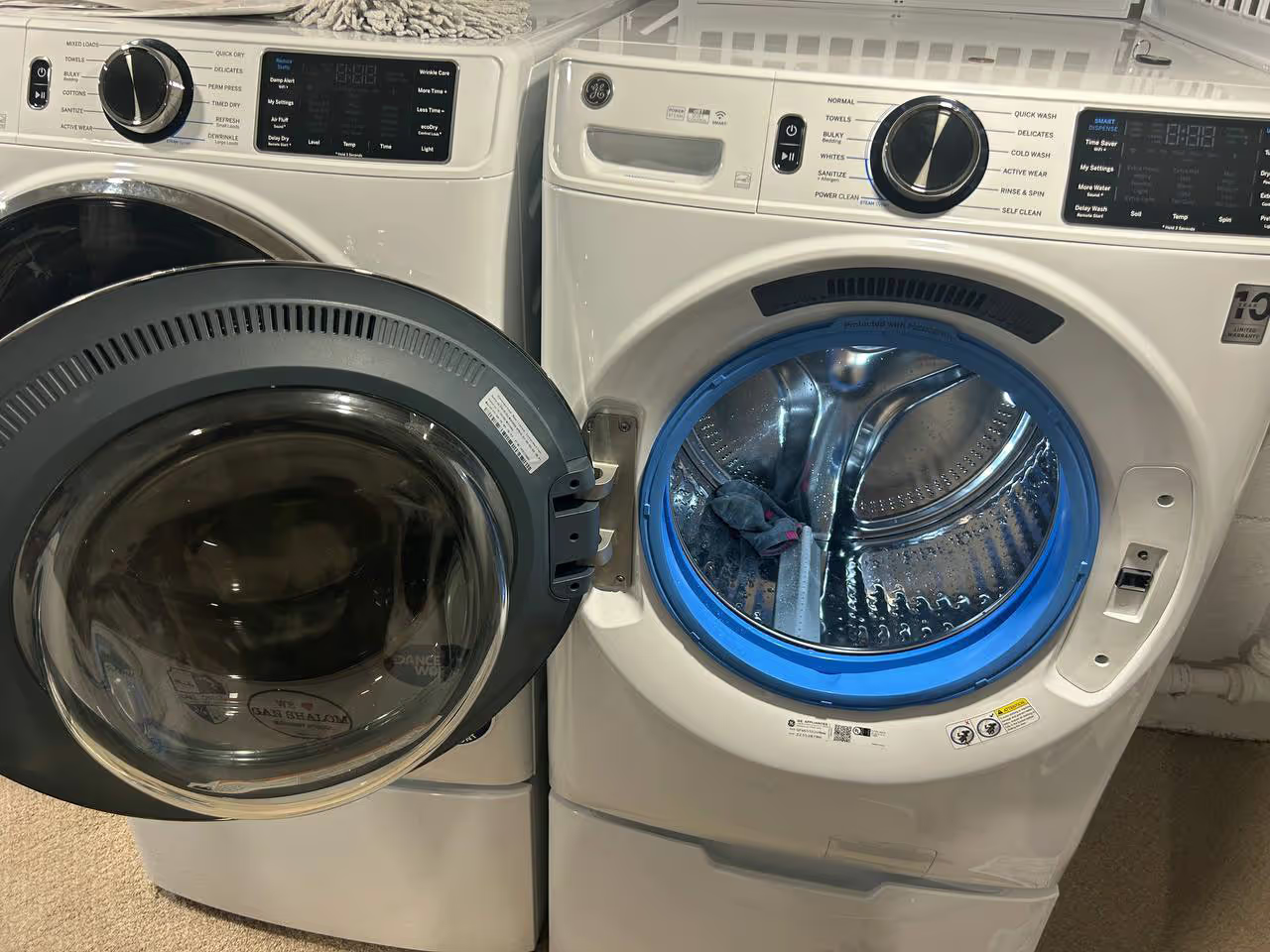
When you invest in a new washing machine or water heater, you expect it to run smoothly for years. But depending on where you live, there might be a silent problem flowing right through your pipes that wears your machines down before their time: hard water.
At A+ Appliance Repair, we constantly see the damage hard water causes. It isn't just a minor annoyance that leaves spots on your glasses. Over time, it actively destroys the internal parts of your home appliances.
Here is a look at what hard water actually is and how it damages your water heater, washing machine, and dishwasher.
The Simple Chemistry of Hard Water and Limescale
"Hard water" just means your water supply contains high levels of dissolved minerals, specifically calcium and magnesium. These minerals are picked up naturally as groundwater moves through rock and soil.
While hard water is safe to drink, it behaves poorly when it gets hot. When you heat water containing calcium and magnesium, a chemical reaction occurs. The heat causes the minerals to separate from the water and attach to surrounding surfaces. As it cools and reheats over time, these minerals harden into a thick, white, chalky crust.
This crust is called limescale, and it is the enemy of any machine that uses hot water.
Why Your Water Heater Consumes More Energy
Your water heater takes the biggest hit from hard water. Inside the tank, water is constantly being heated. This means limescale is constantly forming.
Over time, this thick layer of rock coats the heating elements at the bottom of the tank. This creates a major problem:
- The Rock Barrier: The machine now has to heat up a thick layer of stone before that heat can even reach the water.
- Wasted Electricity: Because the heating element is insulated by the limescale, it has to run much longer and work much harder to get your water to the right temperature. This forces the unit to consume significantly more energy, driving up your utility bill.
- Early Failure: The trapped heat often causes the heating elements to burn out completely, resulting in cold showers and an emergency repair call.
Stiff Clothes and Struggling Washing Machines
Hard water doesn't just leave a crust on metal parts; it actually changes how your cleaning products work.
Calcium and magnesium have a strong chemical reaction with the active ingredients in laundry detergent. Instead of creating a soapy lather that washes away dirt, the minerals bind with the soap to create a sticky, insoluble substance known as soap scum.
- Stiff, Scratchy Laundry: This sticky scum doesn't rinse down the drain. Instead, it clings to the fabric of your clothes. When it dries, it leaves your towels and shirts feeling stiff, scratchy, and looking dull or faded.
- Machine Buildup: Just like in the water heater, limescale builds up on the washing machine's heating element, drum, and internal rubber hoses. This makes the rubber brittle and prone to leaking, while overworking the machine's motor.
Clogged Dishwasher Spray Jets
Your dishwasher relies on high water pressure to clean your plates. At the bottom and top of the tub, spinning plastic arms shoot hot water through tiny holes (spray jets).
Because dishwashers use very hot water, limescale forms quickly inside the machine. The chalky scale easily builds up inside those tiny spray jets, clogging them completely. When the jets are blocked, the water pressure drops, the arms stop spinning properly, and your dishes come out covered in baked-on food and white mineral spots.
What You Can Do
If you have hard water, the most permanent solution is installing a whole-home water softening system to remove the calcium and magnesium before it ever reaches your appliances. If that isn't an option, running regular descaling treatments through your dishwasher and washing machine can help keep the buildup under control.
If your machines are already struggling to keep up, give A+ Appliance Repair a call. We can replace burnt-out heating elements, clean out clogged lines, and get your appliances running the way they were meant to.







.svg)









.avif)



.svg.avif)

.avif)
.avif)








.avif)







.avif)



.avif)



.avif)



.avif)


.avif)

.avif)





.avif)
.avif)
.avif)
.avif)
.avif)
.avif)
.avif)
.avif)
.avif)