

Easy Fixes for Common Home Appliance Problems
Household appliances often require simple fixes rather than expensive repairs. This guide walks you through safe troubleshooting for cooling issues, drainage failures, and heating problems. Learn what tools you need, how to maintain your units, and when to call A+ Appliance Repair and Maintenance for expert help.

There is never a convenient time for an appliance to break. Whether it is a refrigerator that stops cooling on a hot day or a washing machine that refuses to drain, these malfunctions disrupt your life. The good news is that not every issue requires a professional technician or a replacement unit. Many common problems stem from minor maintenance oversights or simple part failures that a handy homeowner can resolve. By following a few troubleshooting steps, you can often get your Samsung or Whirlpool unit back up and running with minimal cost.
Identifying and Fixing Common Appliance Problems
The first step in any repair is accurate identification. Panic often leads to assuming the worst, but the solution is frequently simple. For example, if your appliance won't turn on, the issue might be as basic as a tripped circuit breaker or a loose plug. Before taking anything apart, always check the power source. For gas appliances, ensure the gas valve is fully open. These basic checks save homeowners from unnecessary service fees every day.
Troubleshooting Refrigerator Cooling Issues
If your refrigerator is running but not cooling, dirty condenser coils are the most likely culprit. These coils release heat, and when they get coated in dust and pet hair, the system overheats and shuts down the cooling process. Vacuuming these coils, located at the back or bottom of the unit, often restores function immediately. Another common issue is a blocked air vent in the freezer. If you pack food too tightly, air cannot circulate to the fridge compartment. Rearranging your groceries might be the only "repair" you need.
Why Your Dishwasher Won't Drain
A dishwasher that leaves a pool of water at the bottom is usually suffering from a clog rather than a broken pump. Check the filter located at the bottom of the tub. In Bosch and other European models, this filter captures food particles and needs regular cleaning. If the filter is clean, check the connection to your garbage disposal. If the disposal was recently installed, the "knockout plug" might still be in place, blocking the water flow. Removing this plug solves the drainage issue instantly.
Step-by-Step Troubleshooting for Quick Repairs
Effective troubleshooting requires a logical approach. Start with the simplest possibilities—power, water, and settings—before moving to internal components. If an appliance is making a strange noise, try to identify if it is a mechanical grinding or an electrical buzzing. This distinction helps you know where to look.
What Are the Essential Steps in Diagnosing Washing Machine Malfunctions?
Diagnosing a washer starts with observing the cycle. If the machine fills with water but won't agitate, the issue might be a broken lid switch. On top-loading Maytag units, use a multimeter to check if the switch has continuity. If the washer won't drain, unplug the machine and inspect the drain pump filter, often found behind a small door on the front of front-loaders. Coins, socks, and lint frequently get stuck here. Clearing the debris usually fixes the problem without needing new parts.
Using Simple Tools for Dryer and Oven Repairs
For dryers that tumble but won't heat, the thermal fuse is a common point of failure. This small safety device blows if the dryer gets too hot, usually due to a clogged vent. You can check this fuse with a basic multimeter; if it has no continuity, replacing it is a cheap and easy fix. For ovens, if the temperature is inaccurate, you might just need to recalibrate the settings using the keypad. Refer to your user manual for the specific button combination to adjust the temperature offset.
Easy DIY Repairs for Kitchen Units
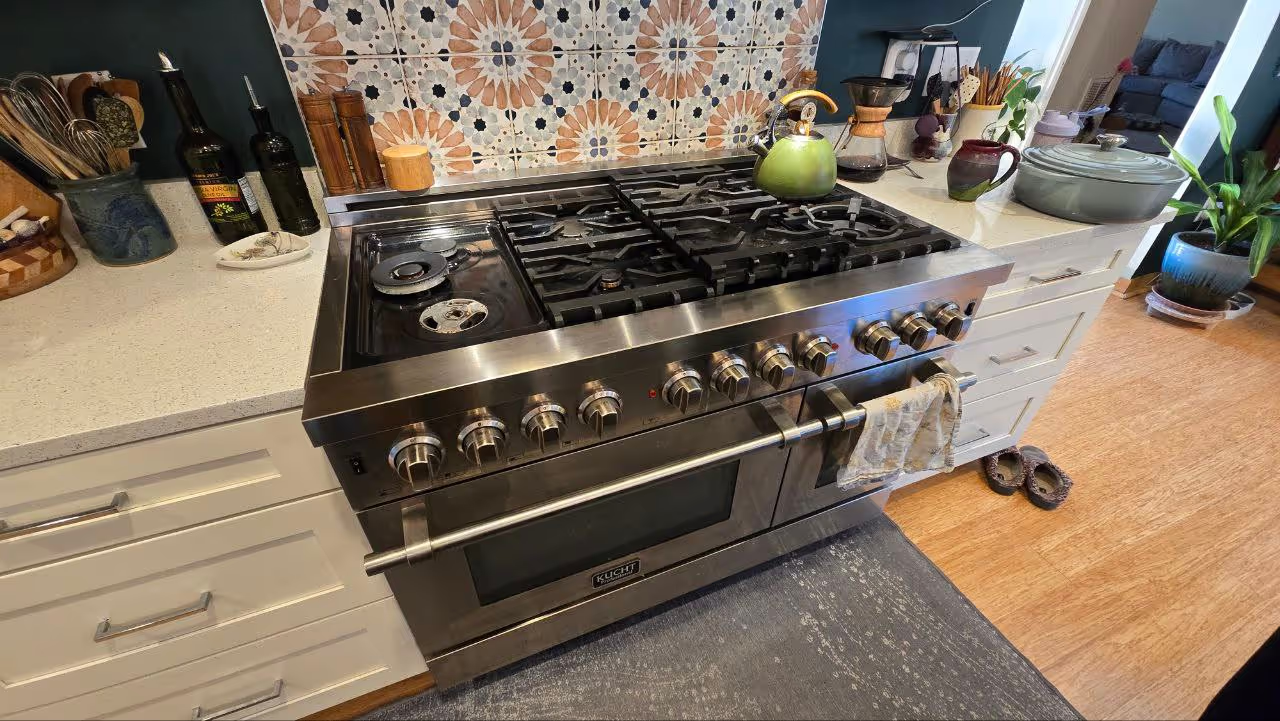
The kitchen is full of moving parts, but many repairs are accessible to beginners. For example, if your oven door doesn't close tightly, heat escapes and ruins your baking. Replacing the door gasket is a straightforward task that requires no tools other than your hands to peel the old rubber out and press the new one in.
Cleaning and Replacing Drain Components
If clearing the filter doesn't fix your dishwasher drainage, you may need to check the drain hose. Look for kinks or bends in the hose under the sink that restrict flow. Straightening the hose is an instant fix. If the hose is cracked, replacing it is a simple matter of loosening a clamp and swapping the part. Just be sure to have a bucket and towels ready to catch any water remaining in the line.
Quick Fixes for Microwaves and Ovens
Microwaves are dangerous to open due to high-voltage capacitors, but you can fix external issues. If the turntable isn't spinning, check the plastic coupler underneath the glass tray. If it is cracked or stripped, a replacement part is inexpensive and drops right in. For ovens, replacing a burned-out light bulb seems obvious, but it is a repair many people ignore. A working light helps you monitor food without opening the door, keeping the temperature stable.
Preventing Costly Repairs Through Maintenance
The best repair is the one you never have to make. Routine maintenance prevents the buildup of dirt and stress that causes parts to fail.
Tips to Extend Appliance Lifespan
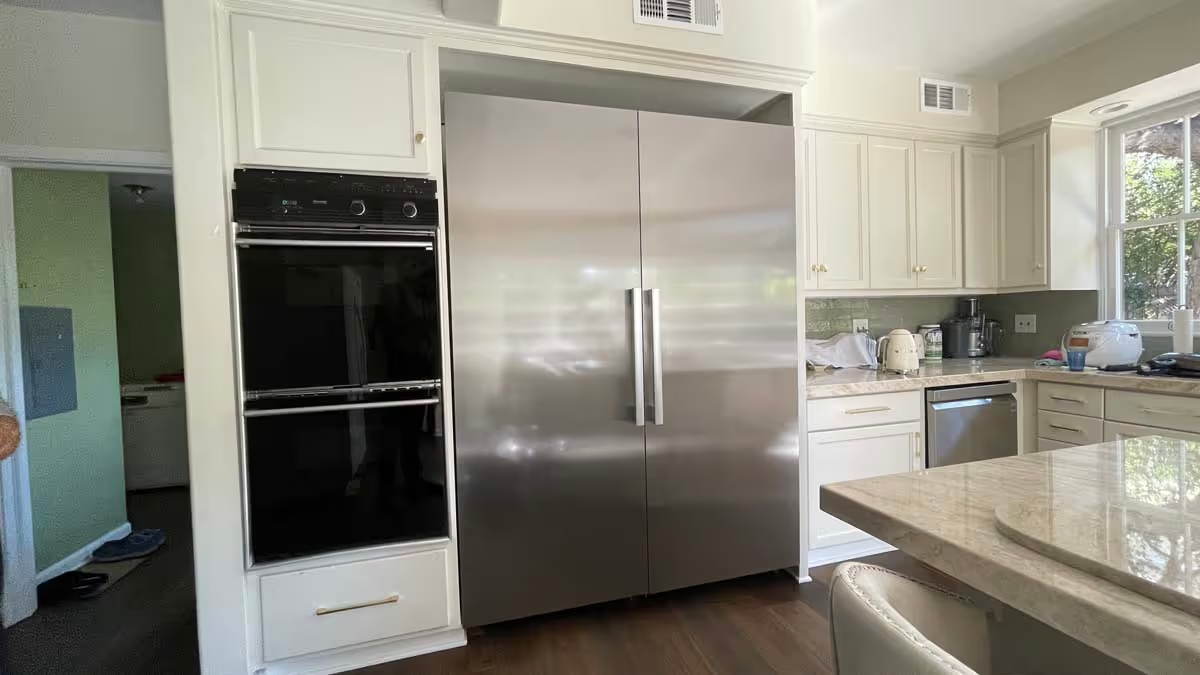
To keep your Sub-Zero or Wolf appliances running like new, focus on airflow and cleanliness. Clean your dryer lint trap after every single load. Wipe down the door seal of your front-loading washer to prevent mold. Run a cleaning cycle on your dishwasher with vinegar to remove hard water deposits. These small actions reduce the workload on motors and pumps, extending their operational life by years.
How Often Should You Perform Basic Appliance Checks and Cleaning?
You should perform a visual inspection of your major appliances once a month. Look for cracking hoses behind the washer, listen for new noises from the fridge, and clean the dishwasher filter. Deep cleaning, such as vacuuming refrigerator coils or cleaning the dryer vent duct, should happen every six months. This schedule catches small problems before they turn into emergencies.
Finding Video Tutorials and Community Support
You are not alone in your repair journey. The internet is a vast resource of knowledge for DIY enthusiasts.
Utilizing Step-by-Step Video Guides
Video tutorials are invaluable for visual learners. When searching for a guide, always include your specific model number. A video showing how to replace a belt on a GE dryer might look different than one for an LG dryer. Watch the entire video first to ensure you have the skills and tools required before you start taking screws out.
Solving Challenges Through Community Forums
If you are stumped, online forums can help. Many experienced technicians and handy homeowners share their knowledge on repair message boards. Specific details about your problem, such as "loud banging during spin cycle on Whirlpool washer," will help you get accurate advice. Often, someone else has faced the exact same issue and found a solution.
Essential Tools for DIY Repair
You don't need a professional workshop to fix most appliances, but having the right tools makes the job safer and easier.
What Tools and Supplies Do You Need for Easy Home Appliance Fixes?
At a minimum, you need a high-quality screwdriver set with both Phillips and flat-head tips. A pair of needle-nose pliers is essential for grabbing small wires or springs. A nut driver set is also very helpful, as many appliance panels are held on by hex-head screws. Finally, a putty knife is surprisingly useful for releasing clips on washer and dryer consoles without damaging the finish.
Selecting the Right Repair Supplies
When buying parts, try to stick to OEM (Original Equipment Manufacturer) parts whenever possible. While generic parts are cheaper, they often don't last as long or fit as perfectly as the genuine article. A multimeter is the one specialized tool you should buy. It allows you to test electrical continuity, which is the only way to know for sure if a fuse, switch, or heating element is truly broken.
If you have tried these easy fixes and your appliance still isn't working, or if the repair feels out of your depth, don't hesitate to call A+ Appliance Repair and Maintenance. Our licensed technicians can handle the complex jobs safely, ensuring your home gets back to normal quickly.






.svg)












.avif)



.svg.avif)

.avif)
.avif)









.avif)








.avif)



.avif)



.avif)



.avif)


.avif)

.avif)





.avif)
.avif)
.avif)
.avif)
.avif)
.avif)
.avif)
.avif)
.avif)