
Wolf Range Burner Won't Light? Here's What to Check
Key Takeaways
- A burner that clicks but won't light usually has a dirty or wet igniter, a misaligned cap, or clogged ports.
- Clean the igniter and ports, dry fully, and reseat the cap squarely.
- If you smell gas, stop, ventilate, and contact your gas utility.
- Igniter, switch, and spark-module repairs need a gas-safe technician.
- Range repairs start at $199, and the $79 diagnostic is waived with the repair.
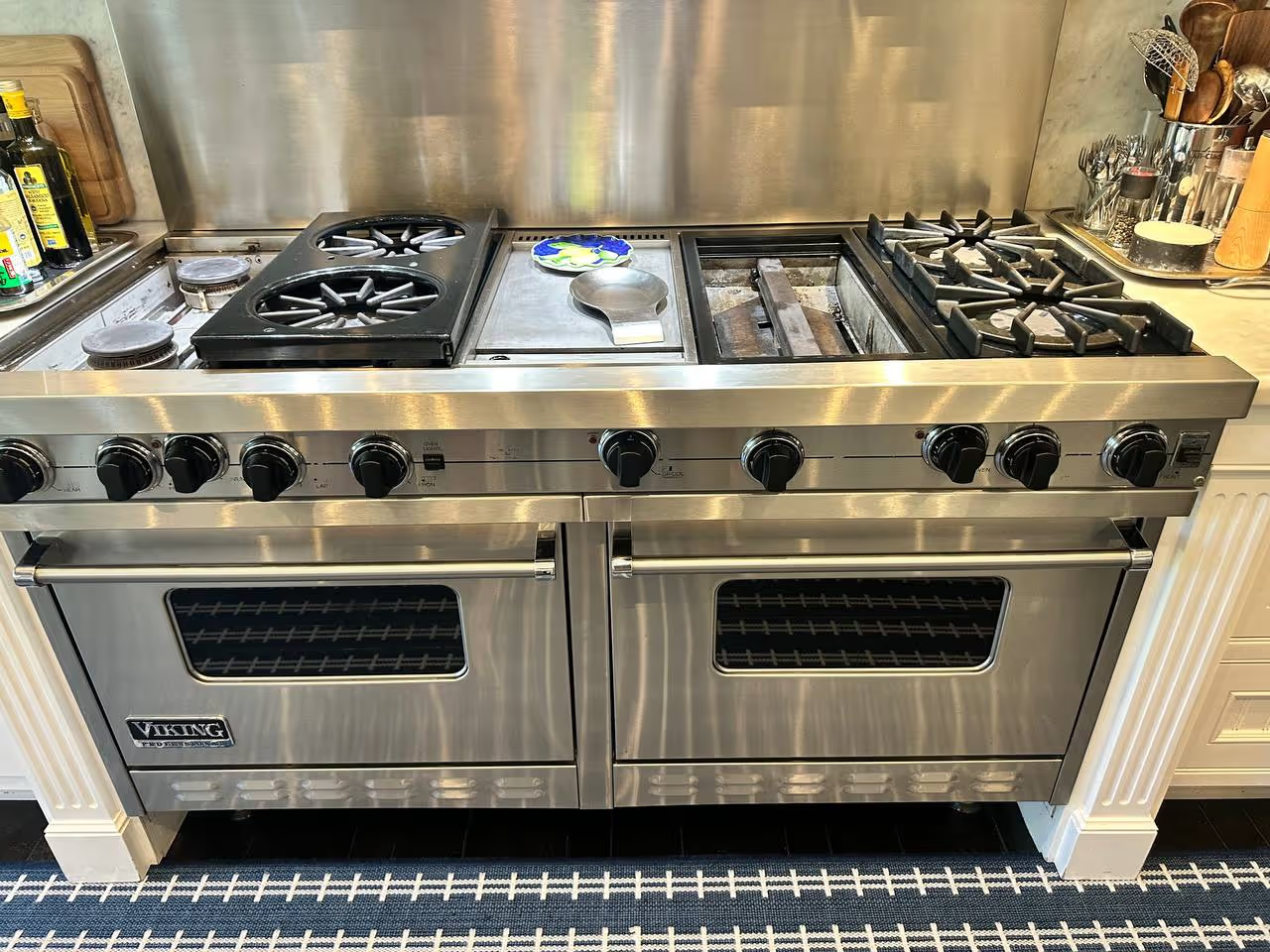
Is your Wolf range burner clicking but won't light? A Wolf range is the heart of a serious kitchen, so a burner that sparks and sparks without catching — or won't spark at all — brings cooking to a halt. The reassuring news is that the most common causes are simple and safe to check: a dirty or wet igniter, a misaligned burner cap, or a clogged burner port. This in-depth guide walks through every reason a Wolf burner won't light, the safe steps to try, the gas-safety rules that matter, what Wolf range repair costs, and how to keep your burners lighting on the first click.
A+ Appliance Repair & Maintenance is a family-owned appliance repair company that has served Chicago and the surrounding suburbs since 2015. We hold a 4.9-star rating across more than 1,200 customer reviews, we've helped over 10,000 homes and businesses, and our factory-trained technicians repair Wolf, Sub-Zero, and Thermador appliances every day. Because these are gas appliances, that brand-specific training matters for both quality and safety.
Why won't my Wolf range burner light?
A Wolf range burner usually won't light because the igniter or burner cap is dirty or wet, the burner ports are clogged with food and grease, or the cap is seated incorrectly. A burner that clicks but won't catch points to the igniter or gas flow; a burner that won't click at all points to power or the spark module. Most causes are cleaning-related and quick to fix.
Wolf ranges use dual-stacked sealed burners that deliver both high-output searing and very low simmer settings. That precision design depends on clean, properly seated components and a strong spark. When grease bridges a port or moisture sits under a cap, the spark can't ignite the gas — even though everything else is working.
Common causes and what to look for
- Dirty or wet igniter. Spills, boil-overs, and cleaning moisture stop the spark. After any cleaning, everything must dry fully before the burner will light.
- Misaligned burner cap. If the cap isn't seated squarely on its base, the spark gap is wrong and the burner won't catch. Caps can shift during cleaning.
- Clogged burner ports. Food and grease block the small holes the flame travels through, causing weak, uneven, or no flame.
- Continuous clicking. A burner that keeps clicking even after lighting (or with no flame) usually has moisture under the cap or a failing igniter switch.
- One burner vs. all burners. If only one burner is affected, it's almost always that burner's cap, port, or igniter. If no burners light, suspect the gas supply or the spark module.
- Weak or yellow flame. A lazy yellow flame instead of crisp blue suggests clogged ports or an air-to-gas mixture issue that should be checked.
- Gas supply issue. Rare, but confirm the range's gas valve is open and that other gas appliances work.
Safe checks you can do
These steps are safe with the burner off and the cooktop cool:
- Turn the affected burner off, let the cooktop cool completely, and remove the burner cap and grate.
- Gently clean the igniter and clear the burner ports with a non-metal tool such as a toothpick or a soft brush — avoid anything that could damage the igniter.
- Wipe up any moisture and let all parts dry completely; dampness is a very common reason a burner won't light after cleaning.
- Reseat the burner cap squarely on its base.
- Confirm the other burners light to rule out a gas-supply problem.
- Try the burner again. If it lights, you're done; if it still clicks without catching, it needs service.
If a burner still won't light or clicks nonstop after a thorough cleaning and drying, the igniter, igniter switch, or spark module likely needs a technician with the right parts.
Gas safety: when to stop and call a professional
Because a Wolf range runs on natural gas or propane, safety comes first. If you smell gas, stop immediately: shut the burner off, don't operate any electrical switches or ignition sources, ventilate the room, and if the odor persists, leave the home and contact your gas utility before calling for repair. Never attempt internal gas-valve or orifice work yourself — that's strictly a job for a trained, licensed technician. Our team is licensed, insured, and factory-trained specifically for safe work on high-end gas appliances.
Which Wolf cooking appliances do we repair?
Our factory-trained technicians service the full Wolf cooking lineup, including gas and dual-fuel ranges, gas and induction cooktops, rangetops, sealed and open burners, infrared griddles and charbroilers, and Wolf wall ovens. Many are built-in or pro-style units, so we work cleanly and protect surrounding cabinetry and finishes — part of our "no mess left behind" promise.
How much does Wolf range repair cost?
At A+ Appliance Repair & Maintenance, range repairs start at $199, and every repair is quoted as a flat, fixed price per repair before any work begins — never hourly. We set our rates using the industry-standard Appliance Repair Blue Book, so pricing is transparent and consistent.
Our residential diagnostic fee is $79, and it's waived and applied to your repair when you proceed — so the service call is effectively free with any repair. You'll always know the price before we start, with no hidden fees. every completed repair is backed by our full repair warranty. For a premium range built to last, a targeted repair such as an igniter or switch is far more economical than replacement.
Why choose a Wolf specialist for the repair?
- Experience since 2015. A family-owned company that has completed thousands of luxury-appliance repairs and served more than 10,000 homes and businesses.
- Factory-trained, gas-safe expertise. Technicians factory-trained and certified on Wolf and other premium gas appliances.
- Proven track record. A 4.9-star rating across more than 1,200 reviews, BBB Accredited Business status, the Angi Super Service Award in 2024 and 2025, and Thumbtack recognition.
- Licensed, insured, and background-checked. Especially important for gas work — every technician is vetted, insured, and trained.
- Transparent, guaranteed work. Fixed, upfront pricing, a repair warranty, and our satisfaction guarantee.
- Fast, local service. Same-day and next-day appointments, seven days a week, from 6 AM to 9 PM.
How to keep your Wolf burners lighting reliably
- Wipe up spills and boil-overs once the cooktop is cool so grease doesn't reach the igniter and ports.
- After cleaning, always let caps and igniters dry fully before relighting.
- Reseat burner caps squarely whenever you remove them to clean.
- Keep ports clear with a soft brush or toothpick — never a metal pin that could damage them.
- Schedule periodic professional maintenance to keep igniters and flames in top shape.
Wolf range repair near you
A+ Appliance Repair & Maintenance is headquartered in Chicago and serves the entire metro and surrounding Illinois suburbs, plus the Los Angeles metro, Washington D.C., Northern Virginia, and Houston, Texas. Explore our stove and range repair service, our Wolf appliance repair page, or Wolf stove repair in Chicago.
Burner won't light? Book online in seconds or call (800) 819-4195 for same-day Wolf range repair from a licensed, gas-safe team.
Frequently asked questions
Why does my Wolf burner keep clicking?
Continuous clicking is usually moisture under the burner cap or a failing igniter switch. Dry the area completely first; if the clicking persists, the igniter switch or spark module needs service.
Can I clean a Wolf burner igniter myself?
Yes — with the burner off and fully cool, gently clean the igniter and clear the ports with a non-metal tool, then let everything dry completely before relighting. Avoid metal pins that can damage the igniter.
Why does only one of my Wolf burners not light?
A single dead burner almost always means that burner's cap is misaligned, its ports are clogged, or its igniter is dirty or failing. If no burners light, the issue is more likely the gas supply or spark module.
What should I do if I smell gas?
Stop immediately. Shut off the burner, avoid any electrical or ignition sources, ventilate the room, and if the smell continues, leave and contact your gas utility before arranging repair.
Why is my Wolf flame yellow instead of blue?
A yellow, lazy flame usually means clogged ports or an air-to-gas mixture problem. Clean the ports; if it persists, have a technician check the burner and mixture.
Is Wolf range repair worth it?
Usually yes. Igniters, switches, and caps are common, repairable parts, so fixing a premium Wolf range is far cheaper than replacing it.
Do you offer same-day Wolf repair?
Yes. We offer same-day and next-day appointments, seven days a week, from 6 AM to 9 PM, across our service area.
How much does Wolf range repair cost?
Range repairs start at $199, quoted as a flat, fixed price before work begins. The $79 residential diagnostic fee is waived when you proceed, and every completed repair is backed by our full repair warranty.


.avif)





.svg)







.avif)



.svg.avif)

.avif)
.avif)








.avif)







.avif)



.avif)



.avif)



.avif)


.avif)

.avif)





.avif)
.avif)
.avif)
.avif)
.avif)
.avif)
.avif)
.avif)
.avif)