
Repair or Replace an Oven That Won't Heat?
Key Takeaways
- An oven that won't heat usually needs an igniter, a bake element or a temperature sensor.
- Those are some of the cheapest repairs there are, so repair first.
- Gas ranges often last 15 years or more. Wolf, Viking and other built-ins are almost always worth repairing.
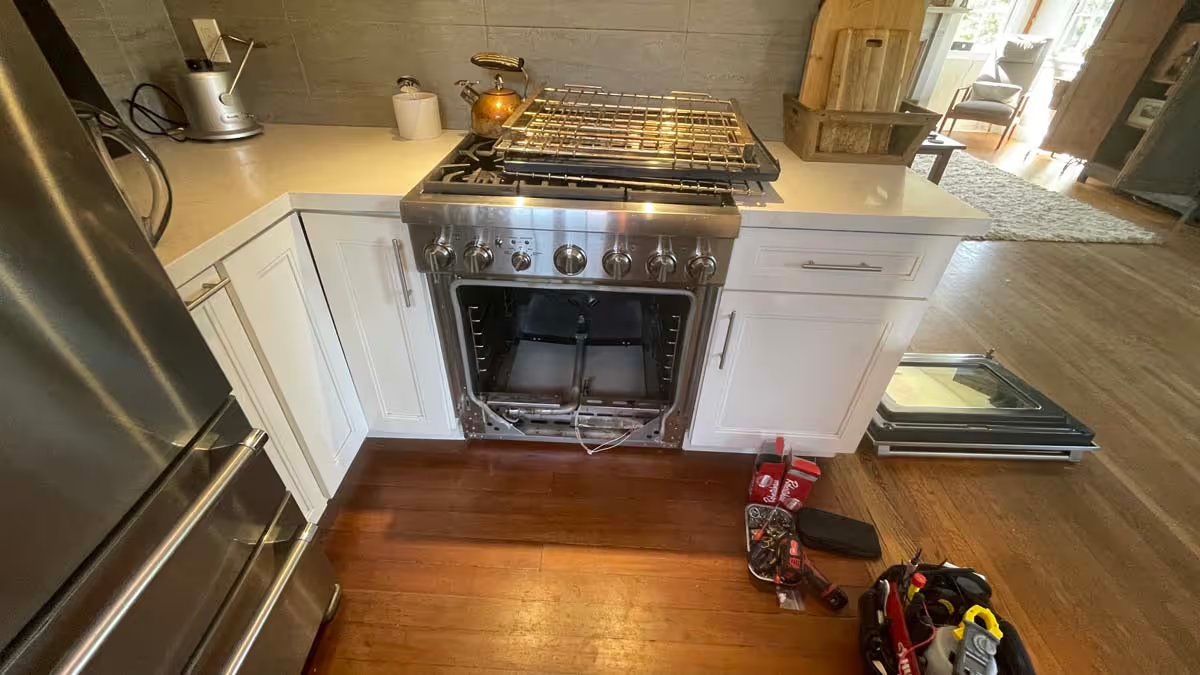
Short answer: repair it. An oven that will not heat usually needs an igniter, a bake element or a temperature sensor. Those are some of the cheapest appliance repairs there are. Gas ranges often last 15 years or more, so an older oven still has plenty of life once the part is replaced.
Ovens and ranges are some of the longest-lasting appliances in the home. That makes repair the right first step in most cases.
Why an Oven Stops Heating
The cause depends on whether your oven is gas or electric.
Gas ovens
On a gas oven, the igniter is the most common cause. It glows hot and opens the gas valve. As it wears out, it gets weaker. The oven may take a long time to heat, or it may not light at all. You might smell a little gas for a moment before it lights. A worn igniter is a small part.
Electric ovens
On an electric oven, the bake element at the bottom is the usual suspect. When it burns out, you may see a break, a blister or a dark spot on it. The oven may heat a little from the top broil element, but it will not bake well.
Both kinds
The temperature sensor is a thin rod inside the oven. It tells the oven how hot it is. When it fails, the oven may run too hot, too cold or not heat at all. This is also a low-cost part.
Repair First, Even on an Older Range
Because these parts cost little, the 50% rule almost always points to repair. Even a range that is 12 or 15 years old is often worth fixing when the problem is an igniter, an element or a sensor. Gas ranges often outlast electric ones, and many run reliably for 15 years or more.
When to Replace an Oven or Range
There are times when a new range is the better choice.
- Safety: if wires spark, or a gas leak keeps coming back after repairs, replace it. Safety comes first.
- The 50% rule: if the repair costs more than half the price of a new range, and the range is past half its life, a new one may make more sense.
- Repeat repairs: if you need a fix more than once or twice a year, the range is costing too much to keep.
If you ever smell strong gas, do not use the range. Leave the home and call your gas company first.
Count the full cost of a new range too. Delivery, install and hauling the old one away all add to the price. For a gas range, the new one also has to be hooked up to the gas line.
Cooktop and Burner Problems
Not every range problem is in the oven. On a gas cooktop, a burner that clicks but will not light often has a dirty or wet burner cap, or a worn spark igniter. On an electric cooktop, one dead burner may need a new burner or a switch. These are also small fixes. Our guide to a gas stove that won't light walks through the checks.
Built-In and High-End Ranges
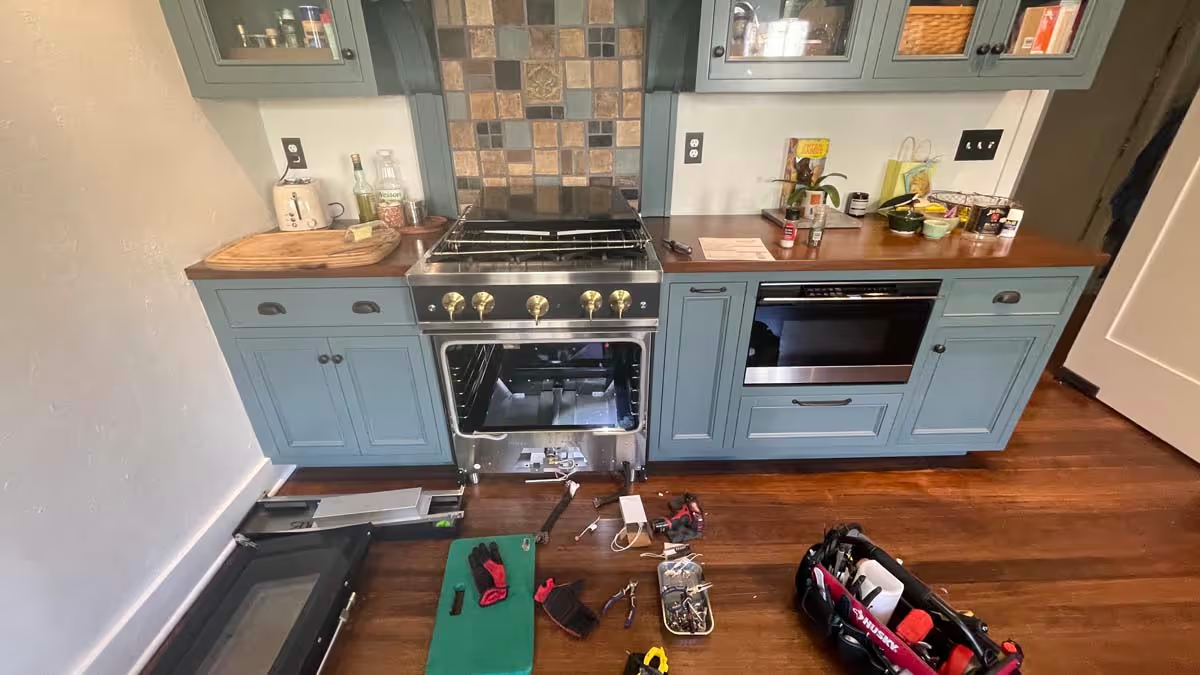
With Wolf, Viking and other built-in or high-end ranges, repair almost every time. These ranges often last 20 years or more. A new one costs far more and may need to fit a custom space. See our Wolf repair page and Viking repair page for more on these brands.
Simple Checks Before You Call
- Make sure the oven is not set to a timed or delayed cook mode by mistake.
- Check the breaker for an electric oven. Many electric ranges use a double breaker.
- On a gas oven, make sure the gas valve to the range is open.
- Use an oven thermometer to see how far off the temperature is.
For more on heat that is off, read our post on oven temperature problems.
Get the Price Before Any Work
A+ Appliance Repair and Maintenance offers oven repair, range repair and stove repair on gas and electric models. The service call runs $79 at a home, $119 for a stacked or double unit, and $149 at a business. The service call is free if you proceed with the repair. The technician finds the failed part and tells you the price before any work starts. Each repair has a 30-day repair warranty. Phones are open from 6am to 9pm, seven days a week. For other appliances, see our repair vs replace guide.