

Ice Maker Not Making Ice? Fridge and Standalone Fixes
Key Takeaways
- No ice usually means a clogged filter, a frozen or kinked water line, a bad inlet valve, or frost buildup.
- Keep the freezer at or below 0°F and change the water filter about every 6 months.
- A manual defrost clears frost jams; standalone units need a clean condenser and good water.
- If it won't produce after a filter change, defrost, and temperature check, it needs service.
- Refrigerator and ice-maker repairs start at $249, and the $79 diagnostic is waived with the repair.
Is your ice maker not making ice? Whether it's the one built into your refrigerator or a standalone unit, an ice maker that quits is a small problem with an outsized annoyance — especially when guests are coming. The good news is that most no-ice issues trace back to a few fixable causes: water supply, a clogged filter, frost buildup, or temperature. This in-depth guide explains why refrigerator and standalone ice makers stop producing, the safe checks you can do first, what repair costs, and when to call a technician.
A+ Appliance Repair & Maintenance is a family-owned appliance repair company that has served Chicago and the surrounding suburbs since 2015. We hold a 4.9-star rating across more than 1,200 customer reviews, we've helped over 10,000 homes and businesses, and our technicians repair refrigerators, freezers, and ice makers of every kind.
Why is my ice maker not making ice?
An ice maker usually stops making ice because of a clogged water filter, a frozen or kinked water line, a faulty water inlet valve, frost buildup jamming the mechanism, or a freezer that isn't cold enough. On standalone ice makers, a dirty condenser, low water, or scale buildup are common causes. Most ice-maker problems are repairable.
An ice maker is simple in principle: water flows in, freezes, and the unit harvests and drops the cubes. But that depends on a steady water supply, a clean filter, the right temperature, and a working motor and sensor. When one link breaks, production slows or stops — and identifying the link is the key to a quick fix.
Refrigerator ice makers: common causes
- Clogged or old water filter. A filter past its lifespan restricts flow, so the ice maker fills slowly or not at all. This is one of the most common and easiest fixes.
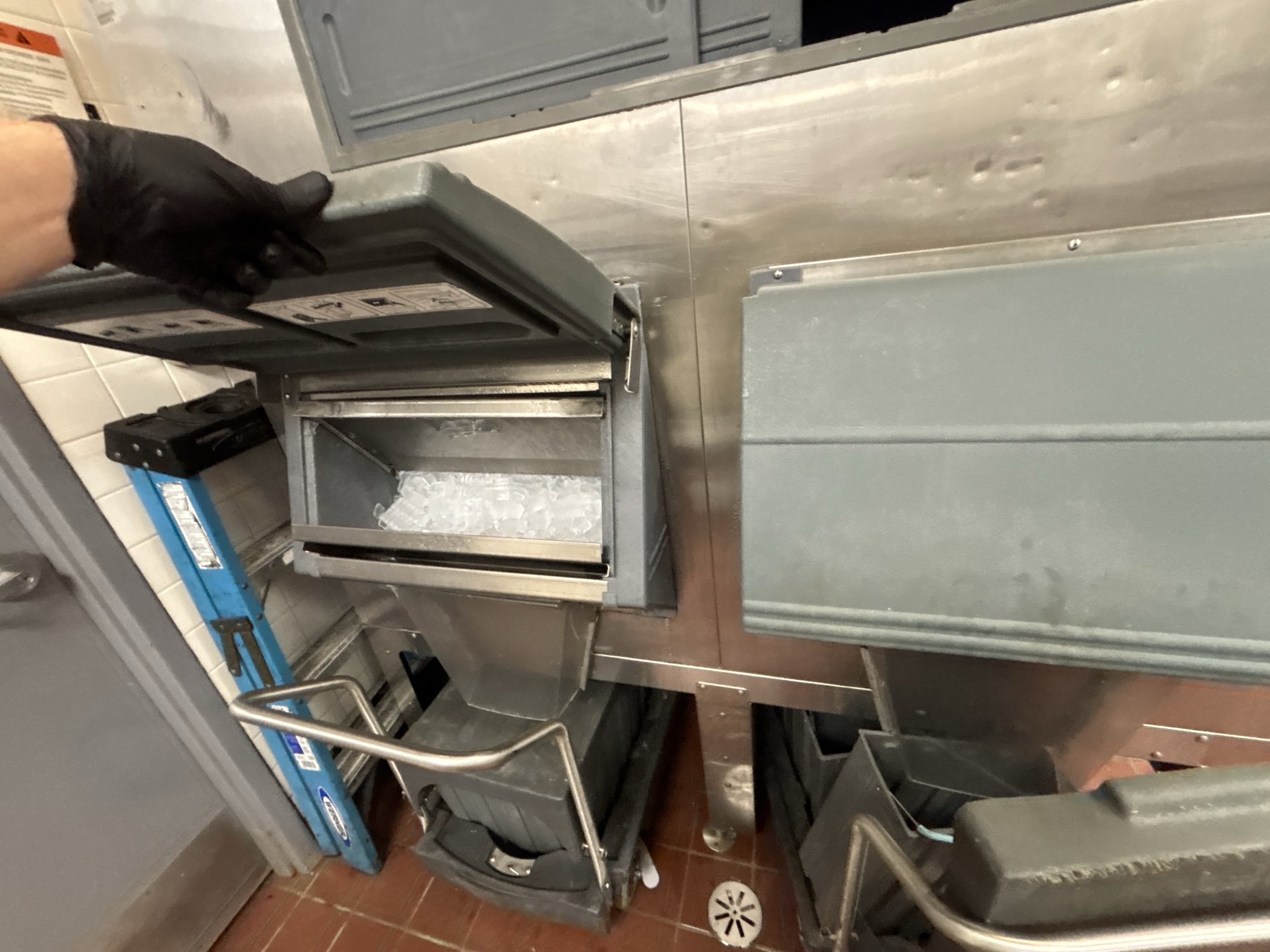
- Frozen or kinked water line. The thin supply line behind or inside the fridge can freeze or pinch, cutting off water.
- Faulty water inlet valve. If the valve fails, water never reaches the ice maker.
- Frost or ice buildup. Ice around the mechanism can jam it; a manual defrost often clears it.
- Freezer too warm. A freezer above about 0°F won't freeze ice properly. Confirm the setting.
- Ice maker switched off. The arm or control can be bumped to the off position — worth checking first.
Standalone and portable ice makers: common causes
- Low or no water. Portable units need their reservoir filled; plumbed units need an open supply line.
- Dirty condenser or poor ventilation. A standalone unit that can't shed heat won't freeze efficiently — keep vents clear.
- Scale buildup. Mineral scale slows freezing and clouds the ice, especially in hard-water areas; periodic cleaning helps.
- Room too warm. Like any refrigeration, a hot room makes the unit work harder and produce less.
- Sensor or pump faults. A failed water pump or level sensor can stop the cycle and needs service.
Safe checks you can do before calling a technician
- Confirm the ice maker is switched on and the wire arm (if present) is in the down position.
- Replace the water filter if it's been about six months.
- Set the freezer to 0°F (or slightly colder) and give it 24 hours.
- If you see frost buildup, turn the unit off and let it thaw to clear a jam.
- Check the water line for kinks and make sure the shutoff valve is fully open.
- On a standalone unit, clear the vents, clean the condenser, and refill or check the water supply.
If the ice maker still won't produce after a filter change, a defrost, and a temperature check, the inlet valve, ice-maker assembly, pump, or sensor may need a technician.
Cloudy, small, or slow ice?
Sometimes the ice maker works but the ice isn't right. Cloudy or small cubes usually point to scale buildup or a water-quality issue, while slow production often means restricted water flow (a tired filter or partly frozen line) or a freezer that isn't cold enough. A water filter change and a cleaning resolve many of these; persistent problems are worth a professional look so you're not babying the unit indefinitely.
How much does ice maker repair cost?
At A+ Appliance Repair & Maintenance, refrigerator and ice-maker repairs start at $249, and every repair is quoted as a flat, fixed price per repair before any work begins — never hourly — using the industry-standard Appliance Repair Blue Book. Our residential diagnostic fee is $79, and it's waived and applied to your repair when you proceed. every completed repair is backed by our full repair warranty.
Getting the diagnosis right matters: replacing an ice-maker assembly when the real issue is an inlet valve or a filter wastes money, so our technicians test the whole system before recommending a fix.
Why choose A+ for ice maker repair?
- Experience since 2015. A family-owned company that has served more than 10,000 homes and businesses.
- Expertise across refrigeration. Built-in fridge ice makers, standalone units, and every major brand.
- Proven track record. A 4.9-star rating across 1,200+ reviews, BBB Accredited, Angi Super Service Award in 2024 and 2025, and Thumbtack recognition.
- Licensed, insured, and background-checked. Every technician who enters your home is vetted.
- Transparent, guaranteed work. Fixed, upfront pricing and a repair warranty.
- Fast, local service. Same-day and next-day appointments, seven days a week, from 6 AM to 9 PM.
How to prevent ice maker problems
- Change the refrigerator water filter about every six months.
- Keep the freezer at or just below 0°F.
- Clear early frost before it jams the mechanism.
- Keep standalone units ventilated and the condenser clean.
- Clean and descale periodically, especially with hard water.
Ice maker repair near you
A+ Appliance Repair & Maintenance is headquartered in Chicago and serves the entire metro and surrounding Illinois suburbs, plus the Los Angeles metro, Washington D.C., Northern Virginia, and Houston, Texas. Explore our refrigerator repair service, our freezer repair page, or our Illinois service area.
Out of ice? Book online in seconds or call (800) 819-4195 for same-day ice maker repair.
Frequently asked questions
Why is my refrigerator ice maker not making ice?
The most common causes are a clogged water filter, a frozen or kinked water line, a faulty inlet valve, frost buildup, or a freezer that's too warm. Start by changing the filter, checking the temperature, and defrosting any frost.
How do I reset my ice maker?
Many refrigerator ice makers have a reset button or a wire arm you can cycle; check your model's manual. Turning the unit off and back on, or doing a manual defrost, also clears many glitches.
Why is my ice maker making cloudy or small ice?
Cloudy or small ice usually points to scale buildup or restricted water flow from an old filter or partly frozen line. A filter change and a cleaning often restore clear, full cubes.
How often should I change my refrigerator water filter?
About every six months, or sooner if ice and water flow slow down. An old filter is one of the most common reasons an ice maker underperforms.
Is ice maker repair worth it?
Usually yes. Most ice-maker issues are affordable fixes — filters, valves, assemblies — and cost far less than a new refrigerator or unit.
Do you offer same-day ice maker repair?
Yes. We offer same-day and next-day appointments, seven days a week, from 6 AM to 9 PM, across our service area.
How much does ice maker repair cost?
Refrigerator and ice-maker repairs start at $249, quoted as a flat, fixed price before work begins. The $79 residential diagnostic fee is waived when you proceed, and every completed repair is backed by our full repair warranty.


.avif)








.svg)













.avif)



.svg.avif)

.avif)
.avif)










.avif)








.avif)



.avif)



.avif)




.avif)



.avif)

.avif)





.avif)
.avif)
.avif)
.avif)
.avif)
.avif)
.avif)
.avif)
.avif)