

Whirlpool Dryer With No Heat and a Timer That Would Not Advance in Lisle, IL
A homeowner in Lisle called A+ Appliance Repair and Maintenance about a Whirlpool dryer that would tumble but never heat, with a timer that refused to advance. Those two symptoms are connected more often than people realize, because on an automatic cycle the timer only advances when the dryer reaches temperature, so a machine with no heat will tumble indefinitely and appear to have a broken timer. Our technician found a failed high limit thermostat, the safety device that cuts heat when temperatures at the heater housing climb too high. The timer was replaced as well, and with both parts installed the dryer ran its cycles properly again. Because a tripped high limit is usually a symptom of restricted airflow rather than a random failure, we also addressed the airflow side so the new thermostat would not meet the same fate.
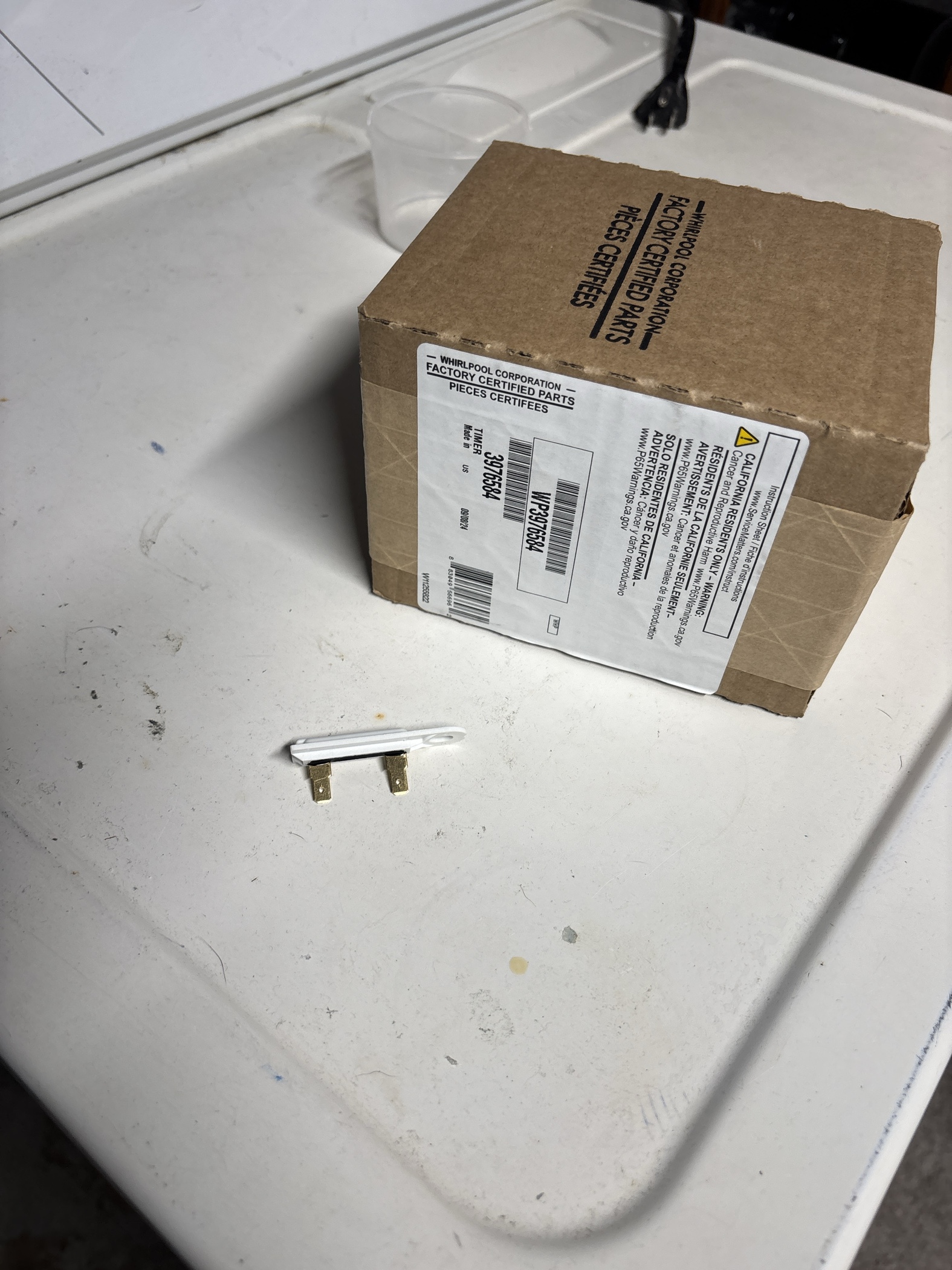
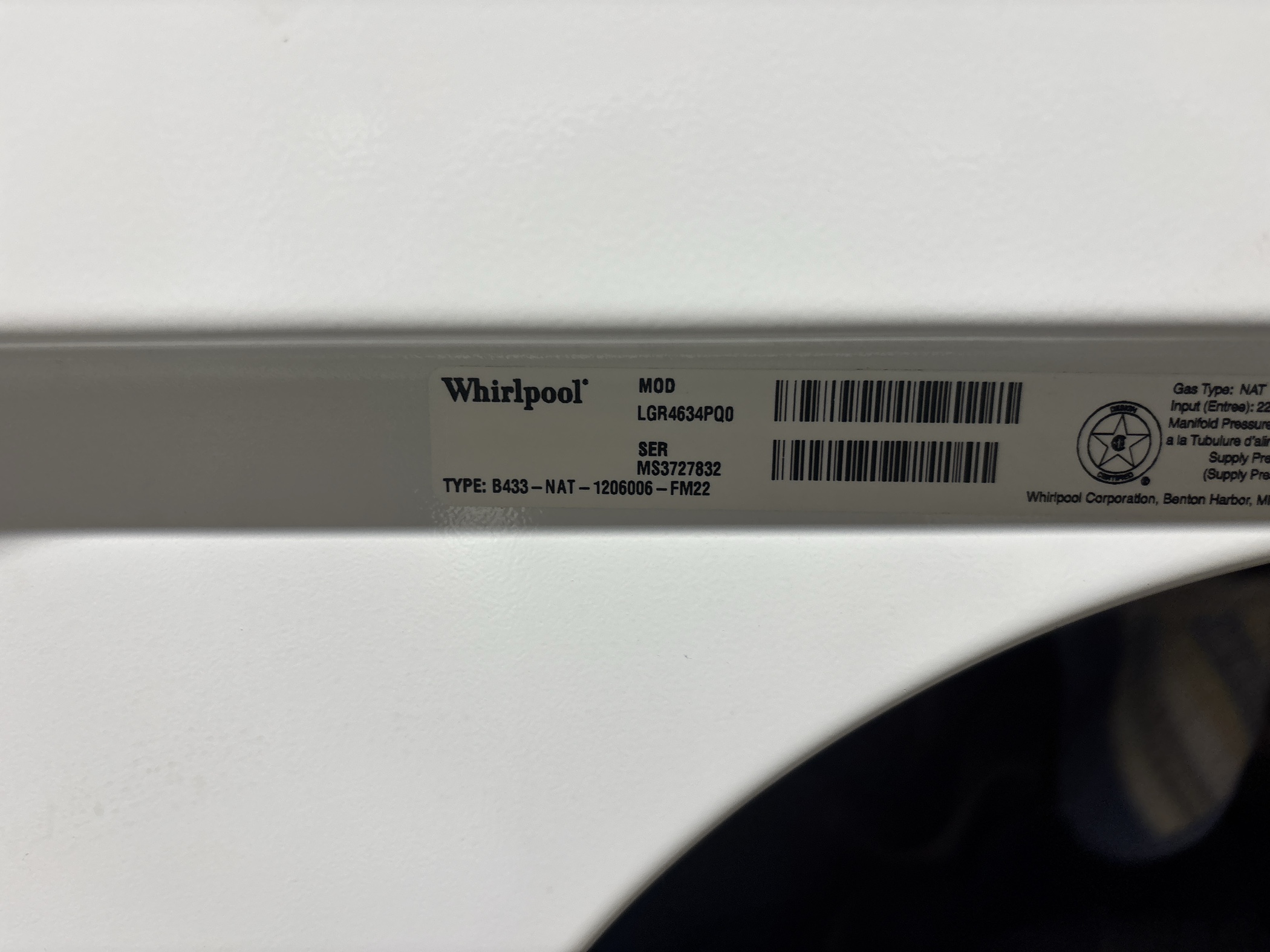
Two Faults, One Dryer: A Whirlpool Repair in Lisle
A homeowner in Lisle called A+ Appliance Repair and Maintenance with a description that had two halves to it. The dryer would run, but the timer never moved. And there was no heat.
Those sound like two separate complaints. On a dryer, they very often are not, and understanding how they connect is what separates a real diagnosis from a parts swap.
Why a stuck timer and no heat go together
Here is something most people never learn about their dryer, and it explains an enormous number of the calls we take.
On an automatic or sensor dry cycle, the timer does not advance steadily the way a clock does. It advances based on the dryer reaching temperature. When the cycling thermostat is satisfied and opens, the timer motor gets power and the dial creeps forward. When the dryer is calling for heat, the timer sits still.
That design makes sense. A load of towels should not finish on the same schedule as a load of shirts, and the machine paces itself by how the temperature behaves rather than by the clock.
But it also means that if the dryer never heats, on an automatic cycle the timer never advances either. The machine will tumble more or less forever, going nowhere, and the homeowner reasonably concludes the timer is broken. Often it is not. It is waiting for heat that is never coming.
So a no heat complaint and a timer that will not move is a very familiar pairing, and the first place to look is the heat, not the timer.
What our technician found
The high limit thermostat had failed. This is a safety device, and it is worth being clear about what it is for. It sits on the heater housing and it is designed to cut the heat if the temperature there climbs past a safe threshold. When it does its job, you lose heat and keep tumbling, which is exactly the failure this homeowner was describing.
A high limit thermostat that has tripped or failed is almost never a random event. It is usually the end result of restricted airflow. When hot air cannot get out of the dryer at the rate it should, heat backs up around the element and the high limit does what it exists to do.
That is why we do not simply replace a high limit and drive away. If something is choking the airflow, a new thermostat will trip too, and the customer is left with the same problem and a lighter wallet. The lint trap, the interior of the cabinet, the blower housing, and the vent run all matter here. A vent line packed with lint, crushed behind the machine, or running too far with too many elbows will take out thermostat after thermostat.
The timer was replaced as well on this repair. Both parts went in, and with heat restored and the timer functioning, the dryer ran its cycles properly again.
The part of this repair that protects your home
We take restricted airflow seriously for a reason that goes beyond the appliance. Dryer vent fires are not a rare or theoretical hazard. They happen every year, and lint accumulation with restricted airflow is the mechanism behind most of them.
A dryer that is overheating badly enough to trip its high limit thermostat is a dryer that is telling you something about its venting. The thermostat is the last line of defense. When you find it doing its job, the right response is to go find out what put it in that position.
Cleaning inside the cabinet and checking the vent run is part of how we handle these repairs. It is not an upsell line item. It is the difference between fixing the symptom and fixing the cause.
Signs your dryer has an airflow problem
Watch for these, because they show up well before a thermostat fails.
Loads take two cycles where they used to take one. The clothes come out very hot to the touch while still being damp, which is the classic signature of heat with no airflow to carry the moisture away. The top of the dryer gets unusually hot during a cycle. The laundry room gets humid or smells of hot lint. And outside, the vent hood flap barely moves when the dryer is running, or you cannot feel much air coming out of it.
Any of those is worth acting on. Clean the lint trap every single load, pull the machine out once a year and clean the vent run properly, and keep the exterior vent hood clear of lint and nesting.
About A+ Appliance Repair and Maintenance
We service Whirlpool, Maytag, Kenmore, LG, Samsung, GE, and every other major brand across Lisle, Naperville, Downers Grove, Woodridge, and the surrounding DuPage County communities. Our technicians are trained and carry common parts on the truck, which is why a repair like this can usually be completed on the first visit.
We quote upfront before work begins, there is no separate service call fee when you go ahead with the repair, and every completed repair carries our full repair warranty. If your dryer is tumbling without heat, taking multiple cycles to dry a load, or running hot enough to worry you, do not put it off. Airflow problems get worse, and they are not the kind of problem you want to let run.