

A Coin-Op Washer That Was Taking Money and Not Washing in Monrovia
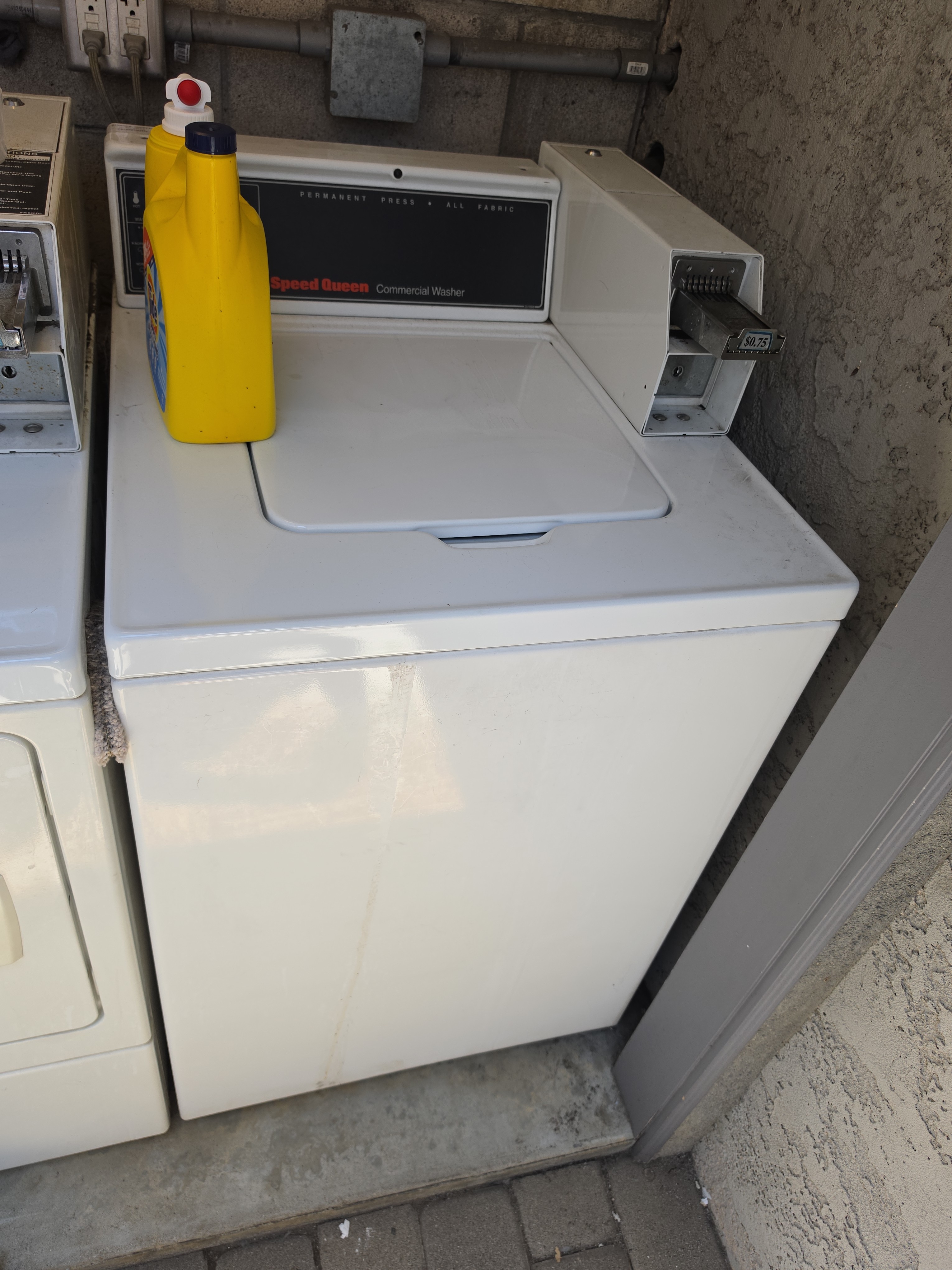
A single Speed Queen coin-operated washer in Monrovia had started taking residents' quarters without reliably starting a cycle. The washer itself was mechanically sound. The problem was the coin mechanism, which was accepting money intermittently and failing to signal the machine to run. Intermittent faults like this one are among the hardest to pin down because the machine works perfectly whenever someone is watching it. This job covers how we approached it and what property owners should know about coin-op equipment.
The complaint was about money, not laundry
Most washer calls start with a description of water or noise. This one started with quarters.
A single Speed Queen coin-operated washer in Monrovia had developed a habit that was costing residents real money. Sometimes you put your coins in and the machine started normally. Sometimes you put your coins in and nothing happened at all. The coins were gone either way. It was not doing this every time, which is exactly what made it maddening. If a machine is broken, people stop using it. If a machine is broken one time in four, people keep trying, and keep losing money, and the complaints pile up.
A+ Appliance Repair and Maintenance was called out to figure out what was going on.
Two machines in one cabinet
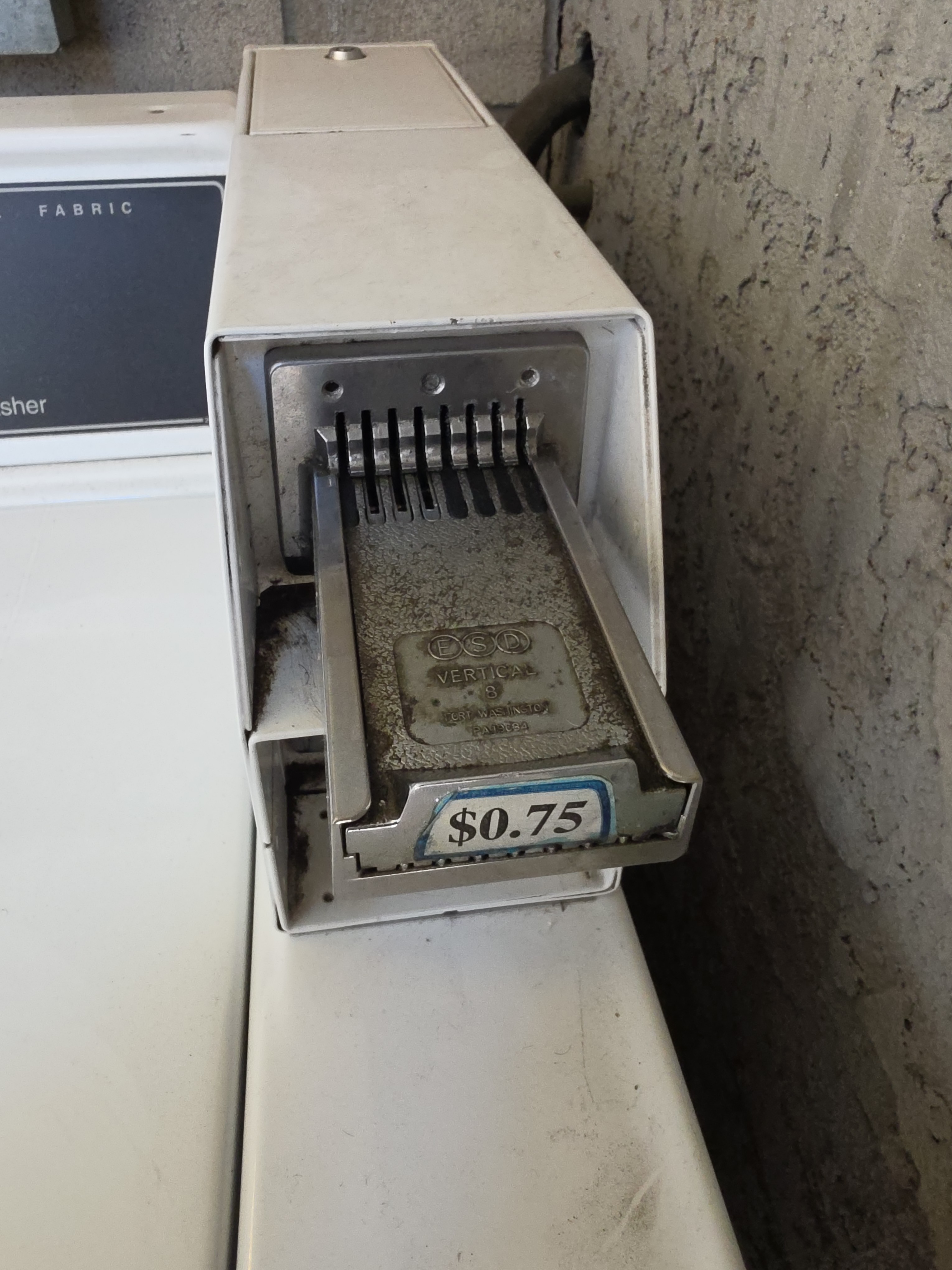
The thing worth understanding about coin-operated laundry is that you are really looking at two separate machines that happen to share a cabinet. There is the washer, with its motor, pump, valves, and control board, doing the job of washing clothes. And there is the coin mechanism, a completely separate assembly whose only job is to recognize valid coins, count them, and close a switch that tells the washer it has been paid.
When something goes wrong, the first question is always which of those two machines is at fault, and the answer changes the repair entirely. A washer that will not start could have a bad lid switch, a failed timer, a dead motor, or a control problem. Or the washer could be in perfect condition and simply never be receiving the signal that says go.
In Monrovia, the washer was fine. It filled, agitated, drained, and spun correctly whenever it got the signal. The fault was entirely on the payment side, which is genuinely good news for a property owner because it means the expensive half of the equipment is healthy.
Why intermittent faults are the hard ones
Every technician has a particular respect for the word intermittent. A machine that is dead is straightforward. You follow the power, you find where it stops, you replace what is broken. A machine that works most of the time is a different exercise entirely, because it will almost always work while you are standing in front of it.
Coin mechanisms fail intermittently for a small number of reasons, and they are worth listing because they explain the pattern residents were seeing.
The coin path itself can be dirty or obstructed. Coins are filthy objects, and they carry grit and residue into a mechanism that depends on a clean, consistent slide. Over years, that builds up and the coin no longer travels the way the mechanism expects, so it is read as valid one time and rejected or lost the next.
The switch that reports payment can be worn. It is a mechanical contact that gets actuated every single time somebody does laundry, and mechanical contacts eventually stop closing reliably. When it fails halfway, you get the exact symptom here: the coin drops, but the message never arrives.
And the mechanism can be out of alignment. If the assembly has shifted, or a coin has jammed and been forced through at some point, the path geometry changes and the acceptance rate becomes unpredictable.
The common thread is that none of these produce a clean, repeatable failure. They produce a machine that mostly works, which is the worst kind for the people relying on it.
What this costs a building
Property owners sometimes treat a flaky coin slot as a low priority because the machine still washes clothes. It is worth putting real numbers to why that is the wrong call.
Every failed transaction is money a resident paid for nothing, and residents rarely have a good way to get that back. The manager hears about it. The refund comes out of somebody's pocket, or it does not and the goodwill takes the hit instead. Meanwhile the revenue that should be coming off the machine drops, because people who have lost quarters twice start driving to a laundromat instead.
There is also the wear angle. A machine that gets used less does not necessarily last longer, because sitting idle with damp residue in the drum has its own problems. And a single-unit installation like this one has no backup. When it is unreliable, the building has no laundry, not reduced laundry.
What owners can check before calling
There are a couple of things worth looking at yourself with a coin-op unit that is behaving strangely.
Check whether the problem correlates with coin condition. If older, dirtier, or more worn coins fail more often than newer ones, that points strongly at the coin path rather than the electronics. Check whether the coin return is jammed, since a partial obstruction there can back up into the acceptance path. And look at how the machine is sitting, because a unit that has been shifted or is out of level can put the mechanism at an angle it was not designed to work at.
What is not worth doing is forcing coins through, or working the slot mechanism roughly to get it to take. That is a reliable way to turn an alignment problem into a bent component, and it converts an adjustment into a parts replacement.
Coin-op and commercial laundry service across the San Gabriel Valley
Coin-operated equipment sits in an awkward gap. Plenty of appliance companies work on residential washers and do not touch commercial or coin-op units, and plenty of laundry route operators only service machines they placed themselves. Owners of a single unit in a small building often have trouble finding anyone who will just come out and fix the thing.
We work on both sides of that line. Speed Queen and other commercial laundry equipment come apart differently than consumer machines, use different parts, and have payment hardware that a residential-only technician will not have seen before. Knowing the difference saves a lot of billable time.
Our pricing is quoted upfront before any work happens, the service call is waived when you go ahead with the repair, and everything we do carries our repair warranty. If you own or manage a property in Monrovia, Arcadia, Pasadena, or anywhere nearby with a laundry machine that is costing your residents money, we can usually get out the same day and get it working properly again.