

LG Refrigerator Ice Maker Not Dropping Ice in Chicago, IL
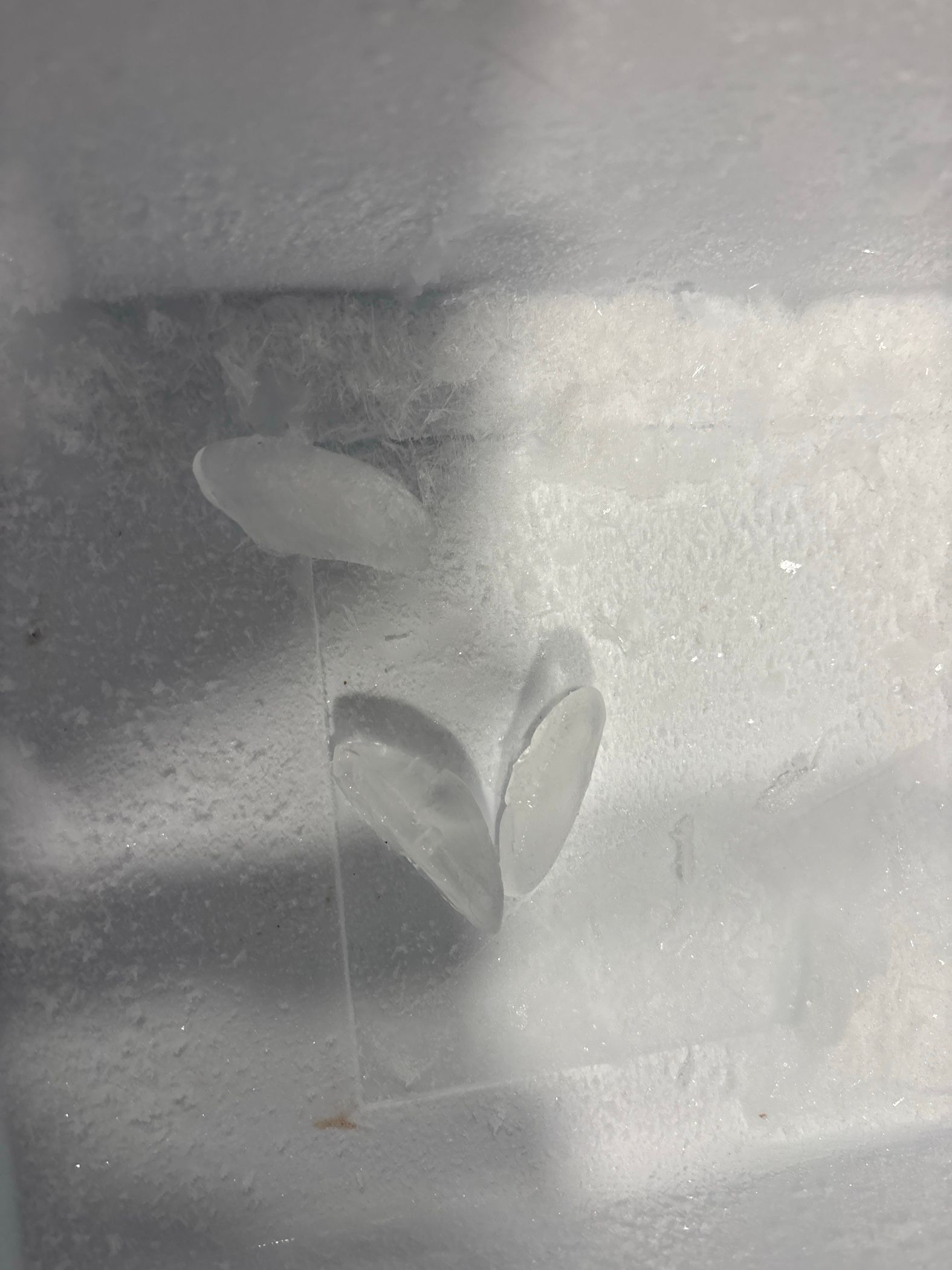
A Chicago homeowner called A+ Appliance Repair and Maintenance about an LG refrigerator ice maker that had stopped dropping ice into the bin. A new ice maker assembly had already been installed on an earlier visit, but the condition was unchanged, which told us the ice maker was never the real problem. On the return visit our technician found heavy frost and ice packed around the assembly, fed by water leaking from the freezer ceiling where the supply line enters the compartment. The ice maker was producing ice normally but could not harvest it, because the leak had frozen the mechanism in place from the outside. We documented the source of the water in detail so the homeowner could see exactly what was happening rather than replacing another part on a guess.
The Ice Maker That Was Not the Problem: An LG Refrigerator on Chicago's Southwest Side
Some repairs are straightforward. You find the failed part, you replace the failed part, the appliance works again. This one was not like that, and it is a good illustration of why a careful diagnosis matters more than a fast parts swap.
A homeowner on Chicago's southwest side called A+ Appliance Repair and Maintenance about an LG refrigerator whose ice maker had quit delivering ice. Not quit making ice. Quit delivering it. Those are two different failures with two very different causes, and the distance between them is the whole story here.
What the customer was seeing
From the front of the refrigerator, it looked like a dead ice maker. The bin sat empty. Days went by and nothing dropped. If you own a refrigerator with an automatic ice maker, you know the routine that follows. You check the bail arm. You make sure nothing is jammed in the chute. You wait another day in case it is just being slow. Then you accept that something is broken and you make the call.
The first visit, and the one thing we could not do
On the initial service call, the water supply to the refrigerator had already been shut off. That is a completely reasonable thing for a homeowner to do when they suspect a water problem, and we would much rather find a valve closed than a floor soaked. But it also meant that on that visit there was no way to run the fill cycle, no way to watch water enter the compartment, and therefore no way to see a leak that only shows itself when the line is live.
Working with what could be tested, a new ice maker assembly was installed. On the evidence available that day, that was a sound call. The ice maker is by a wide margin the most common failure point in this system, and replacing it resolves the majority of these complaints.
It did not resolve this one.
The return visit, and the sentence that changes everything
The customer reported that the condition was unchanged after the new part went in. In this trade, that sentence is a signal. When a brand new component behaves exactly like the old one it replaced, the component was never the problem. Something else in the system is producing the symptom, and it is time to stop looking at the part and start looking at what surrounds it.
So on the return visit our technician went in with a different question. Not what is wrong with this ice maker, but what is happening to this ice maker.
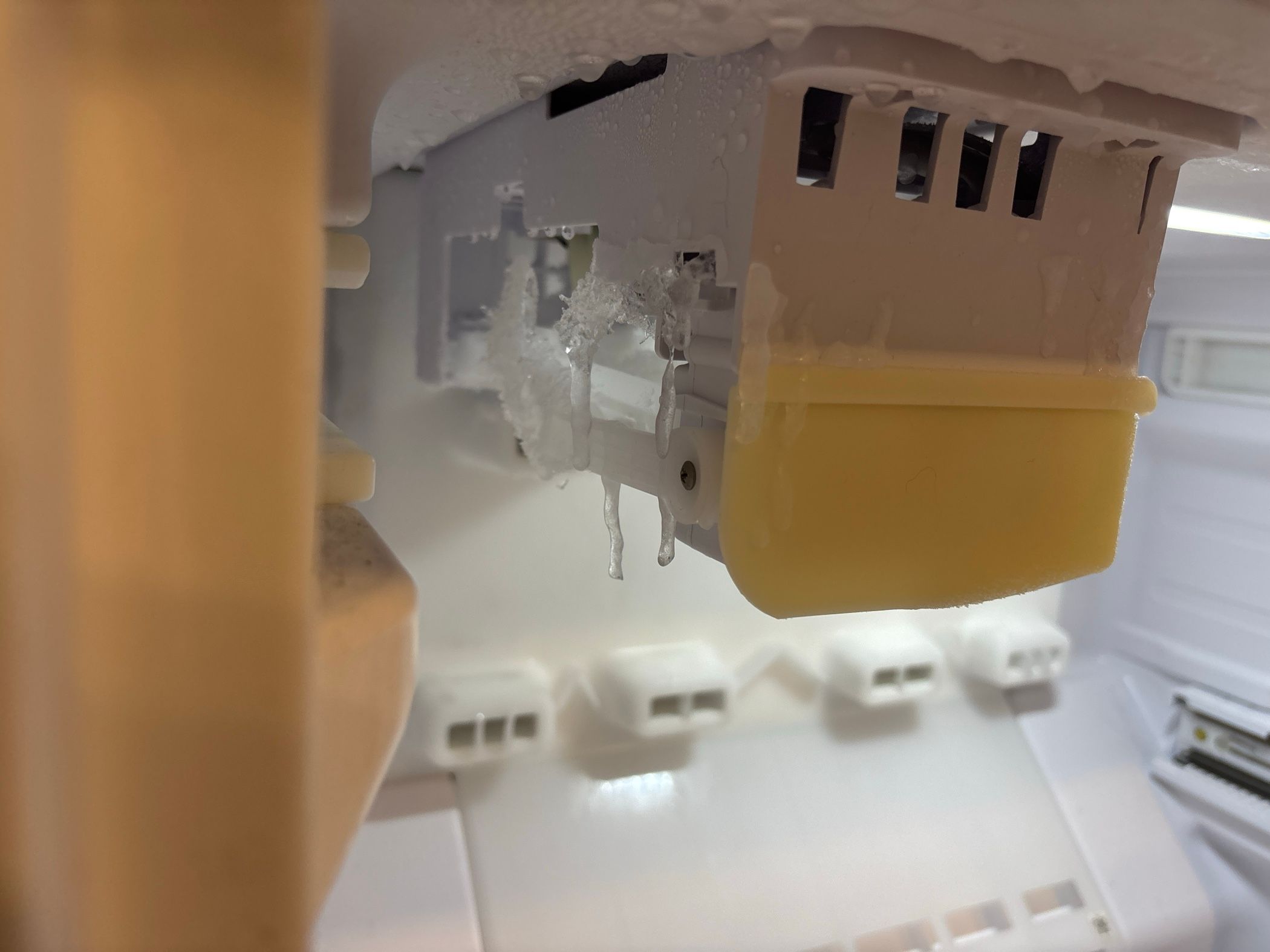
The answer was visible almost immediately. There was frost and heavy ice buildup packed around the ice maker assembly. Water was leaking from inside the freezer ceiling, in the area where the water supply line enters the ice maker compartment. That water was not making it into the mold the way it was supposed to. It was escaping upstream, running down into the compartment, and freezing solid around the outside of the unit.
Making ice, but unable to let go of it
Here is what made the symptom so convincing as an ice maker failure. The ice maker was working. It filled. It froze. There was finished ice sitting in the mold, exactly where it belonged. What it could not do was harvest, which is the part of the cycle where the ejector arms rotate and push the cubes out into the bin below.
It could not harvest because it was encased. The ice forming around the outside of the assembly from that leak had locked the mechanism in place. A small motor designed to nudge a few ounces of ice out of a tray is not going to break itself free from a block that has been building for weeks.
Put a brand new ice maker in and the new one gets encased too. Same leak, same freeze, same empty bin. That is why nothing changed after the first visit, and it is exactly why we treat an unchanged condition after a parts replacement as a diagnostic finding rather than a defective part.
What we documented
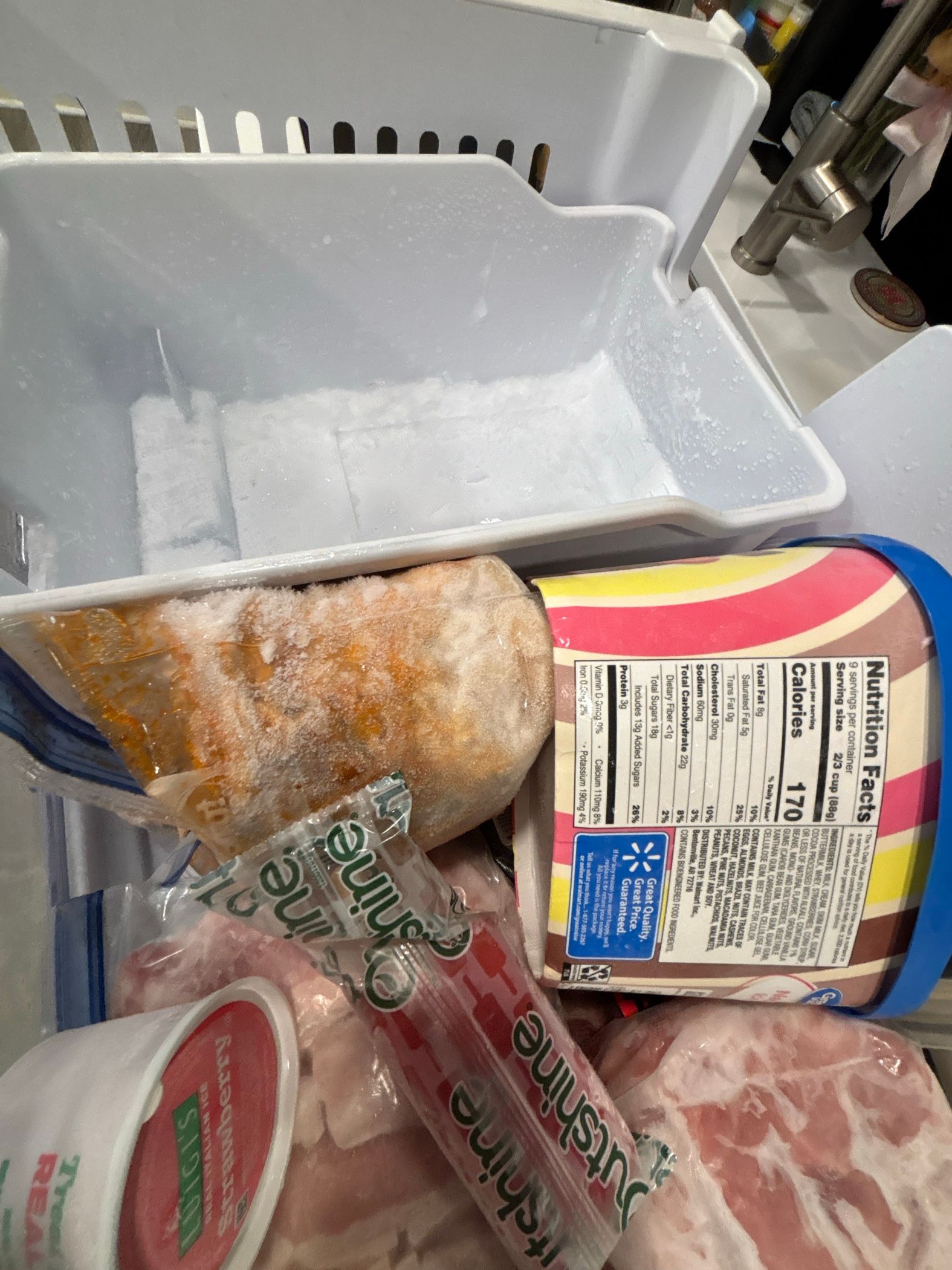
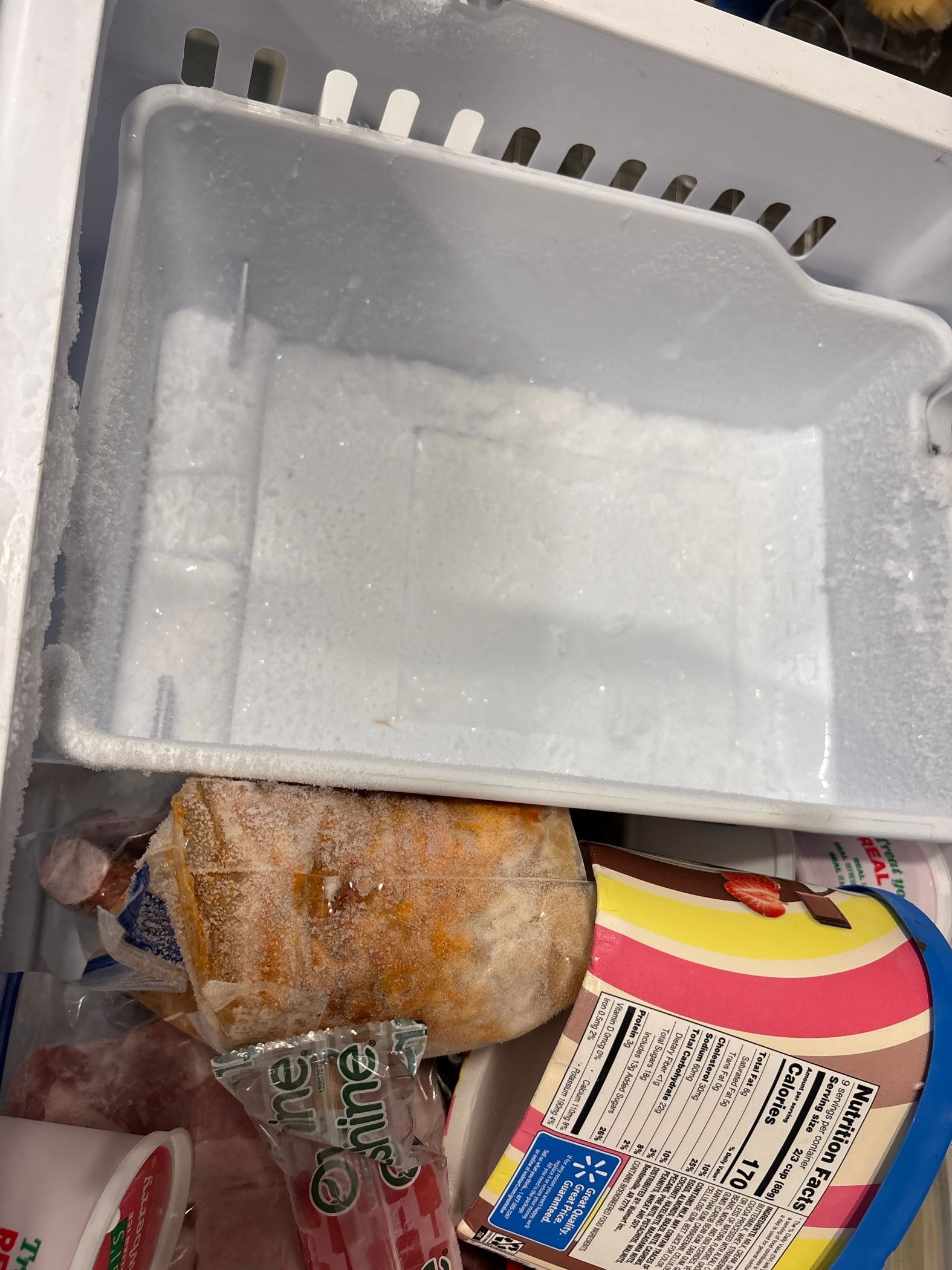
We photographed the condition thoroughly during the return visit: the ice buildup around the assembly, the area of the freezer ceiling where the supply line enters, and the state of the mold with finished ice still sitting in it. Documentation matters on a job like this. It is the difference between telling a customer there is a leak somewhere and showing them exactly where the water is coming from and what it has been doing to their appliance.
With the supply line live and the compartment accessible, the source of the water was traceable in a way it simply could not be on the first visit with the valve closed.
If your ice maker has stopped dropping ice
A few things are worth checking before you assume the ice maker itself has failed.
Open the freezer and actually look at the assembly, not just the bin. If you see frost or a shell of ice around the outside of the unit, that is your answer, and the cause is water going somewhere it should not be going. Check whether there is finished ice sitting in the mold. Ice in the mold with an empty bin points to a harvest problem rather than a fill problem, and harvest problems are frequently mechanical obstruction instead of electrical failure. Make sure the bail arm is in the down position, because it is easy to knock upward when you are digging something out of a full freezer.
And if a new ice maker has already been installed and nothing improved, stop buying parts. Something upstream is causing it.
Why we work this way
A+ Appliance Repair and Maintenance services LG, Samsung, Whirlpool, KitchenAid, and every other major brand across Chicago and the surrounding suburbs. We do not charge a separate service call fee when you move forward with the repair we recommend, we quote honestly and upfront before any work begins, and every completed repair carries our 30-day repair warranty.
More than any of that, we would rather spend the extra time finding the real cause than sell you a second part destined to fail for the same reason the first one did. Refrigerator water systems are unforgiving that way. If your ice maker, water dispenser, or freezer is behaving strangely, our licensed technicians can tell you what is actually going on inside it.