

An LG Oven Throwing F9 and Shutting Itself Off in Pasadena
A Pasadena homeowner had an LG oven that would not hold temperature, kept shutting itself off partway through cooking, and eventually displayed an F9 error code. Our technician found a weakening igniter, which is one of the least intuitive failures in a gas oven because the part still glows and still looks like it is working. It had simply lost enough strength to stop opening the gas valve reliably. Replacing the igniter restored proper heating and cleared the fault.
An oven that kept quitting in the middle of dinner
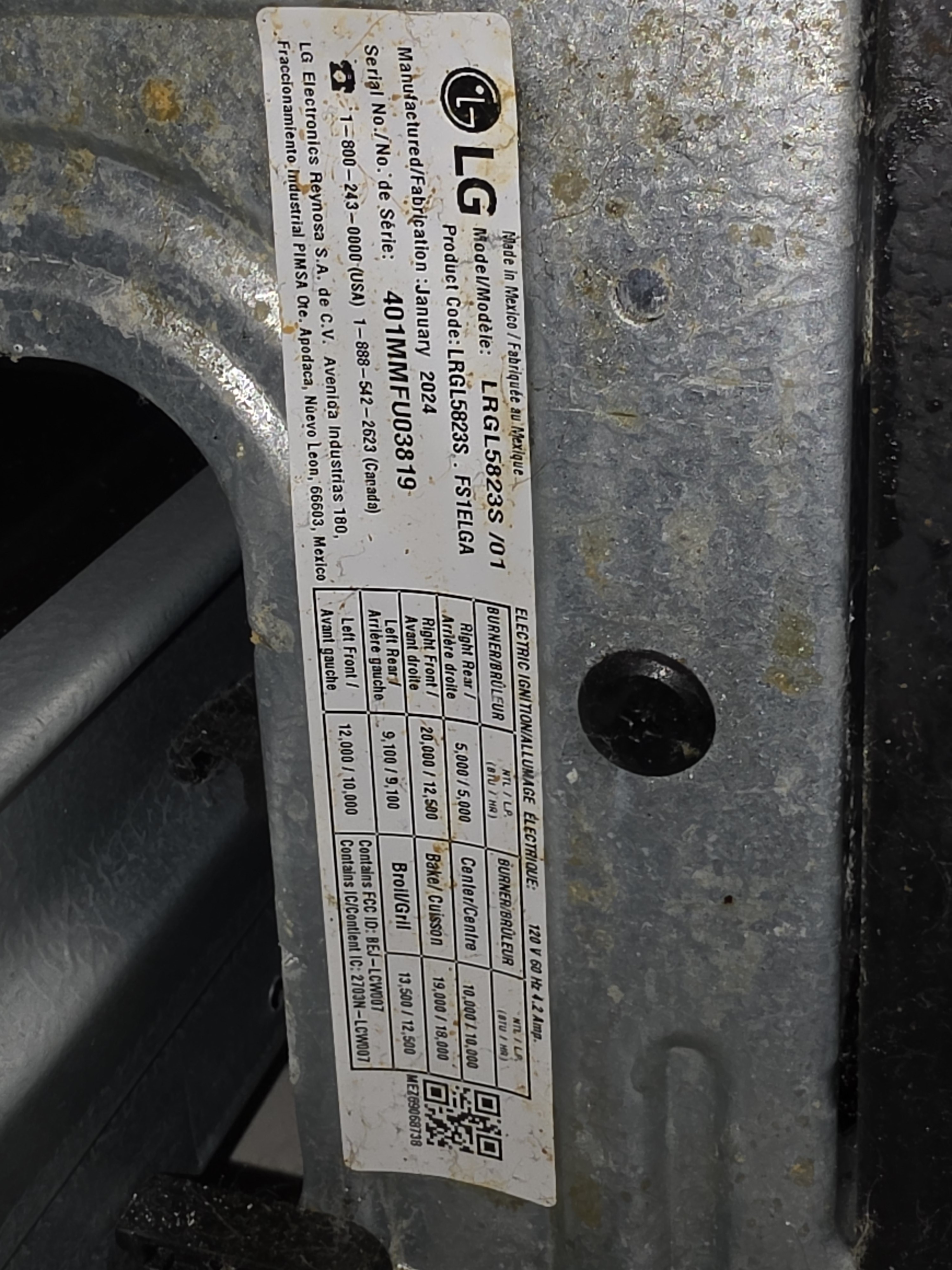
A homeowner in Pasadena called A+ Appliance Repair and Maintenance about an LG oven that had been getting steadily less trustworthy. It would light and start heating like normal. Then partway through cooking it would lose temperature, and sometimes it would simply shut itself off. Eventually the display started showing an F9 error code.
What makes this particular failure frustrating is the inconsistency. It was not a dead oven. Some things came out fine. Others came out half-cooked because the oven had quietly stopped heating somewhere in the middle and nobody knew until the timer went off. When an appliance fails all at once you adapt immediately. When it fails at random you keep planning around it and keep getting caught out.
What the F9 code actually means
An F9 on an LG oven is not a diagnosis. It is a complaint. The control board is reporting that the oven did not reach or hold its target temperature within the time it expected, so it gave up and shut the heat down.
That distinction matters because people often search the code and assume it points at a specific broken part. It does not. It tells you the oven failed to get hot, which could be an igniter, a gas supply problem, a bad temperature sensor, a failed safety valve, or a control fault. The code is the starting point of the investigation, not the end of it.
What the code does tell you is that the oven's own protection worked. An appliance that keeps calling for gas without successfully lighting is a genuinely dangerous thing, so the control watches for that condition and cuts everything off. The shutdowns the homeowner was experiencing were not the oven breaking further. They were the oven behaving correctly in response to a problem upstream.
The part that looks perfectly fine while it fails
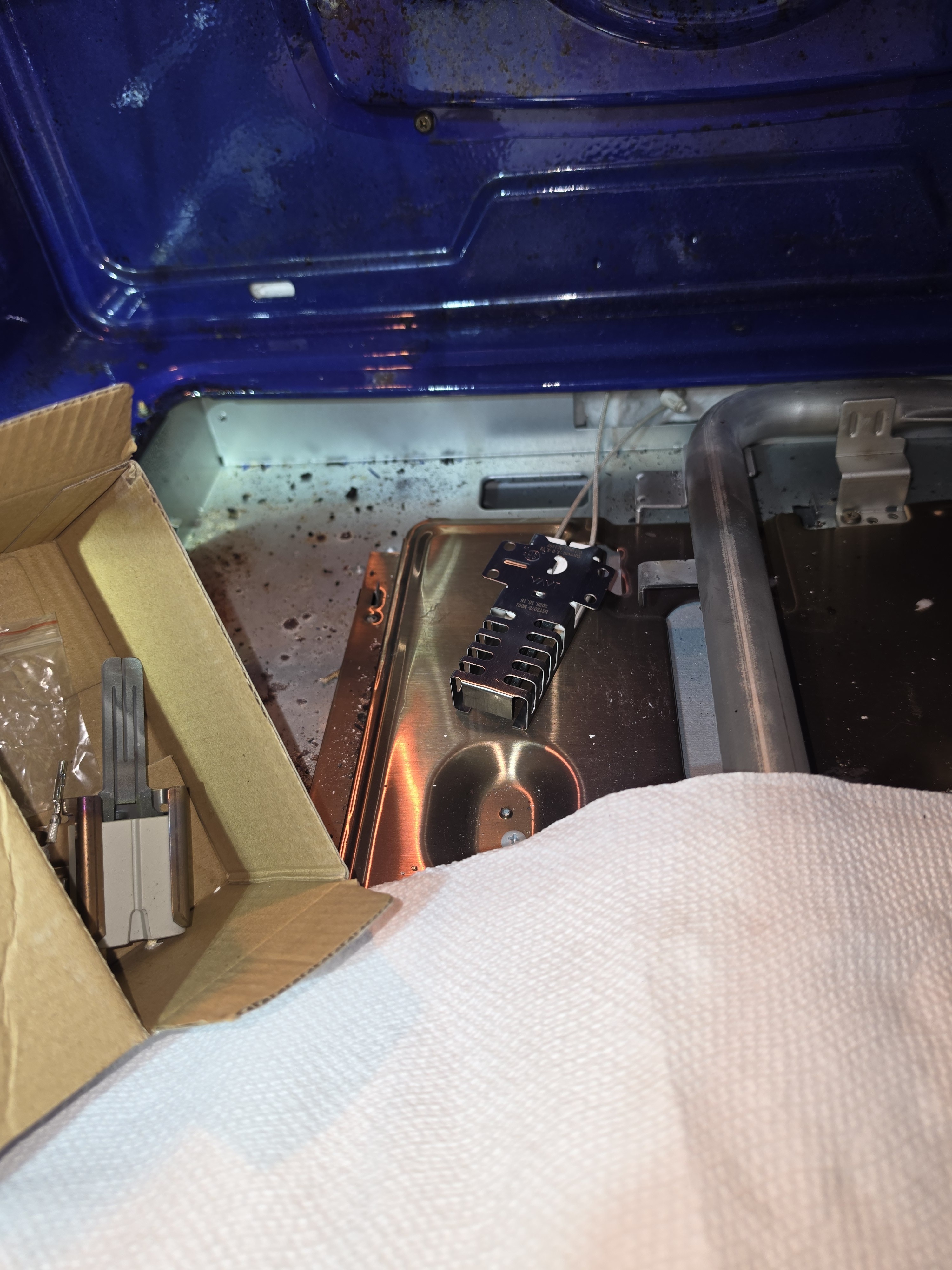
Our technician traced the fault to the oven igniter, and this is where gas ovens get genuinely counterintuitive.
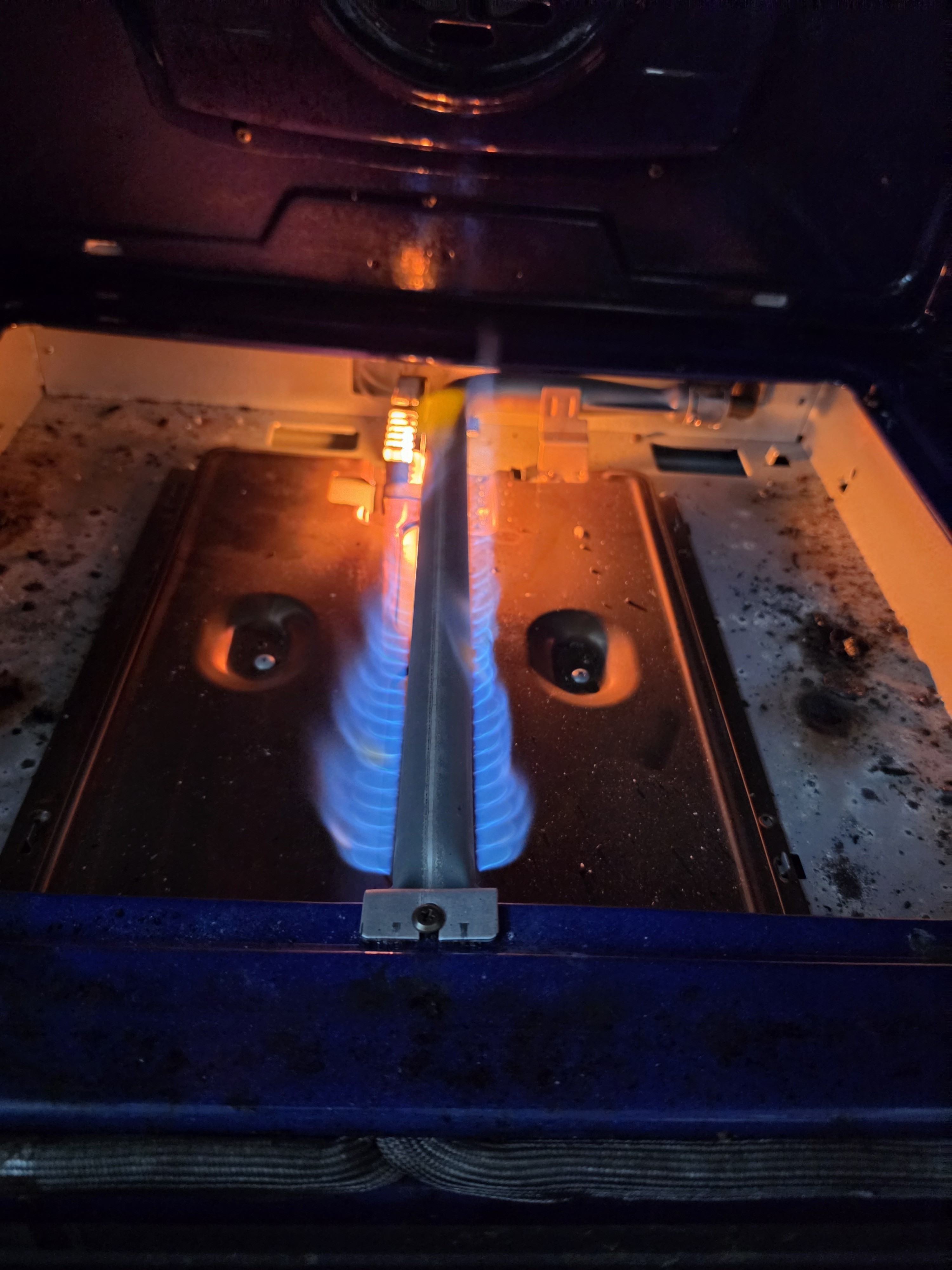
Most people assume the igniter is a spark, like a gas cooktop makes when you turn a burner. In a gas oven it is not. The igniter is a bar or coil that heats up until it glows bright orange, and it does two jobs at once. It provides the heat source that lights the gas, and it acts as the electrical gatekeeper for the gas valve.
That second job is the one that fails. The gas safety valve is designed to stay closed unless enough current is flowing through the igniter circuit. As the igniter ages, its electrical resistance rises, and the current flowing through it drops. When current falls below the threshold the valve needs, the valve stops opening. No gas, no flame, no heat.
Here is the cruel part. Throughout that entire decline, the igniter keeps glowing. A weak igniter looks exactly like a healthy one to the naked eye. Homeowners will open the oven, see the bright orange glow, and reasonably conclude the igniter is fine and the problem must be somewhere expensive. It is not fine. It is drawing too little current to do the half of its job you cannot see.
This also explains the intermittent behavior. A borderline igniter sits right at the edge of the valve's threshold. On a cold start it may just barely make it, so the oven lights. Once conditions shift slightly, it falls under and the valve stays shut, and the oven that was working ten minutes ago is now failing to hold heat. Eventually the control notices, throws F9, and shuts down.
What we did
We replaced the igniter. The oven lit promptly, came up to temperature, and held it through a full test cycle without dropping out or throwing the code again.
It is worth noting how we get to that answer rather than guessing at it. A glowing igniter cannot be evaluated by looking at it, so the check is electrical, measuring the current the circuit is actually drawing against what the valve requires. A healthy igniter and a failing one look identical and measure completely differently. That measurement is the difference between replacing the right part once and replacing several parts hoping one of them sticks.
How to tell if this is what is happening to your oven
There are some observations worth making before you call anybody, and they narrow things down considerably.
Time how long the oven takes to light from a cold start. A healthy gas oven igniter typically gets the burner lit within about half a minute to a minute. If yours has crept up to two, three, or four minutes of glowing before you hear the whoosh of gas catching, the igniter is on its way out even if the oven still works.
Watch whether the oven lights at all on a second attempt shortly after use. Notice whether the problem is worse when the oven is cold or when it has been running a while. And pay attention to whether the burner cycles off and stays off rather than relighting the way it should when the thermostat calls for more heat.
The slow light is the single most useful early warning. That symptom shows up months before the outright failures start, and replacing an igniter at that point is a scheduled repair instead of an emergency in the middle of a holiday meal. If your oven has gotten noticeably slower to light, it is telling you something.
Why not to keep running it
One thing worth being direct about: an oven that is failing to light reliably should not be run repeatedly in the hope it catches. Every failed attempt is a cycle where gas may be released before there is a flame to consume it. Modern controls are good at preventing that, which is exactly what the F9 shutdowns were doing here, but relying on a safety system as a routine part of operation is not how any of this is meant to work.
If your oven has started shutting itself off, take that seriously and stop using it until someone has looked at it. The repair is usually not expensive. Igniters are a standard wear part and they are one of the more common things we replace.
Same-day oven repair in Pasadena
We carry common parts for the brands we see most, LG among them, which is what makes a same-day fix possible on jobs like this one instead of a diagnosis on Tuesday and a repair on Friday. The service call fee was waived because this customer went ahead with the repair, and the price was quoted upfront before anything was installed. The work is backed by our repair warranty.
If you have an oven in Pasadena, Altadena, Sierra Madre, or anywhere across the San Gabriel Valley that is throwing error codes, taking too long to light, or shutting itself off mid-cook, give us a call. An error code on the display is a good reason to get it looked at now rather than after it fails completely.