

LG Oven F11 Error and No Heat in Chicago, IL
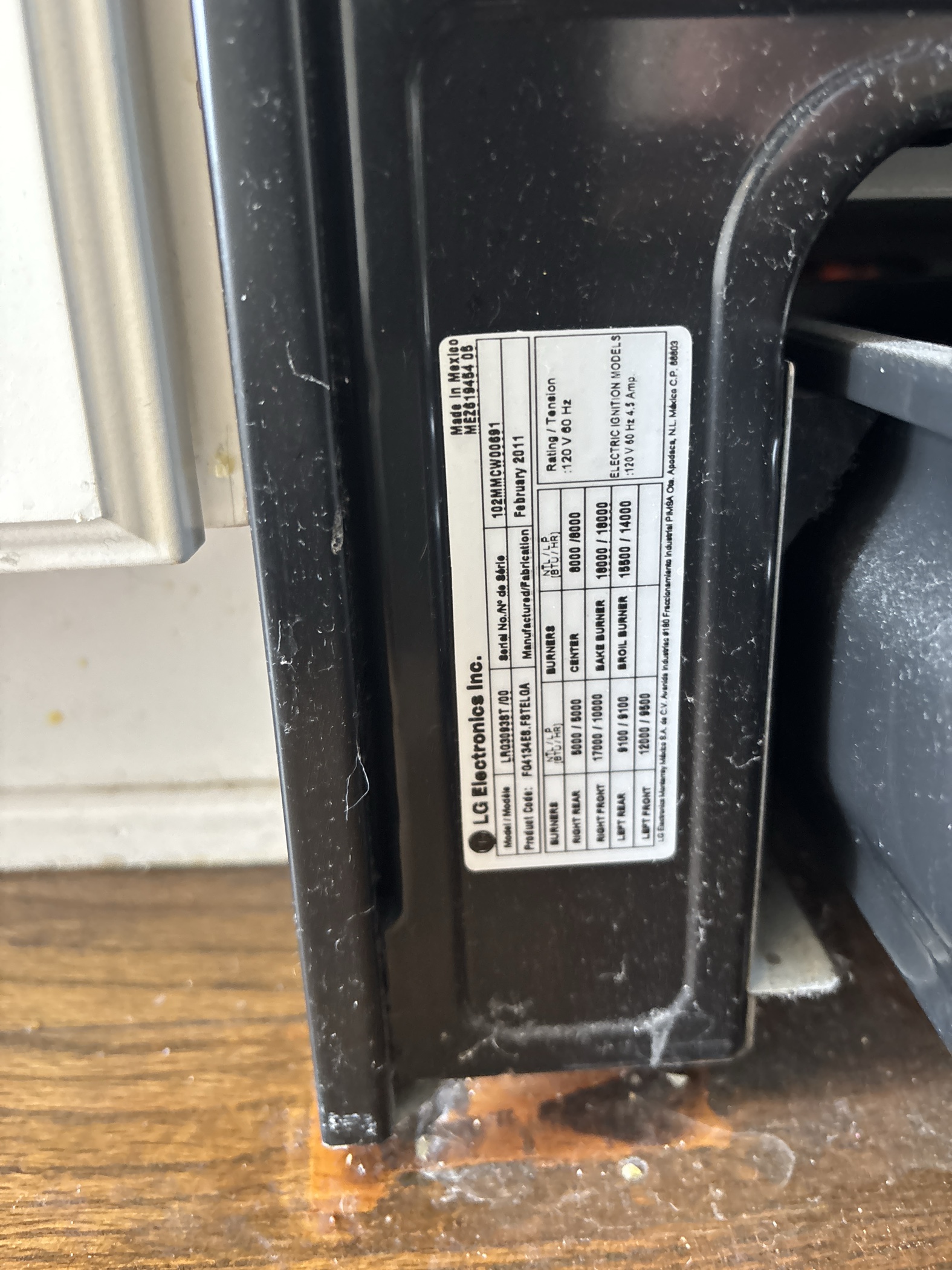
A Chicago homeowner called A+ Appliance Repair and Maintenance about an LG oven displaying an F11 warning and refusing to heat. A fault code narrows the search but rarely names the broken part, so our technician started at the burner rather than ordering parts off the display. The bake igniter had degraded to the point where it still glowed but no longer drew enough current to open the oven safety valve, which is the failure mode that convinces most homeowners the igniter must be fine. We replaced the igniter and verified the oven lit, held its setpoint, and re-lit on subsequent heat cycles rather than firing once and quitting. With the oven heating within the window the control expects, the F11 condition cleared on its own.
An LG Oven, an F11 Warning, and a Kitchen That Stopped Working
An oven that will not heat has a way of announcing itself at the worst possible moment. Nobody discovers this problem on a quiet Tuesday afternoon with nothing planned. They discover it with a pan of something sitting on the counter and people expected in two hours.
A homeowner in Chicago called A+ Appliance Repair and Maintenance about an LG oven that had thrown an F11 warning and would not heat at all. The display was doing its job. It was telling them clearly that the control had detected a problem. What it could not tell them was which problem, and that is the part we get called for.
What an error code actually tells you
There is a common assumption that a fault code identifies the broken part. It usually does not. What a code tells you is which expectation the control board had that the appliance failed to meet.
The control expected heat and did not get it, or did not get it within the window it allows. That single failed expectation could come from a dozen different places in the appliance. The code narrows the search. It does not end it. Anyone who reads a code off a display and immediately orders a part is guessing with extra steps, and the customer is the one who pays for the guess.
So our technician arrived at the Chicago residence and started where the heat is supposed to come from.
How a gas oven actually lights
Most people picture a gas oven working like a stovetop burner, with a spark that clicks and lights a flame. The oven burner does not work that way, and understanding the difference explains most no-heat calls we run.
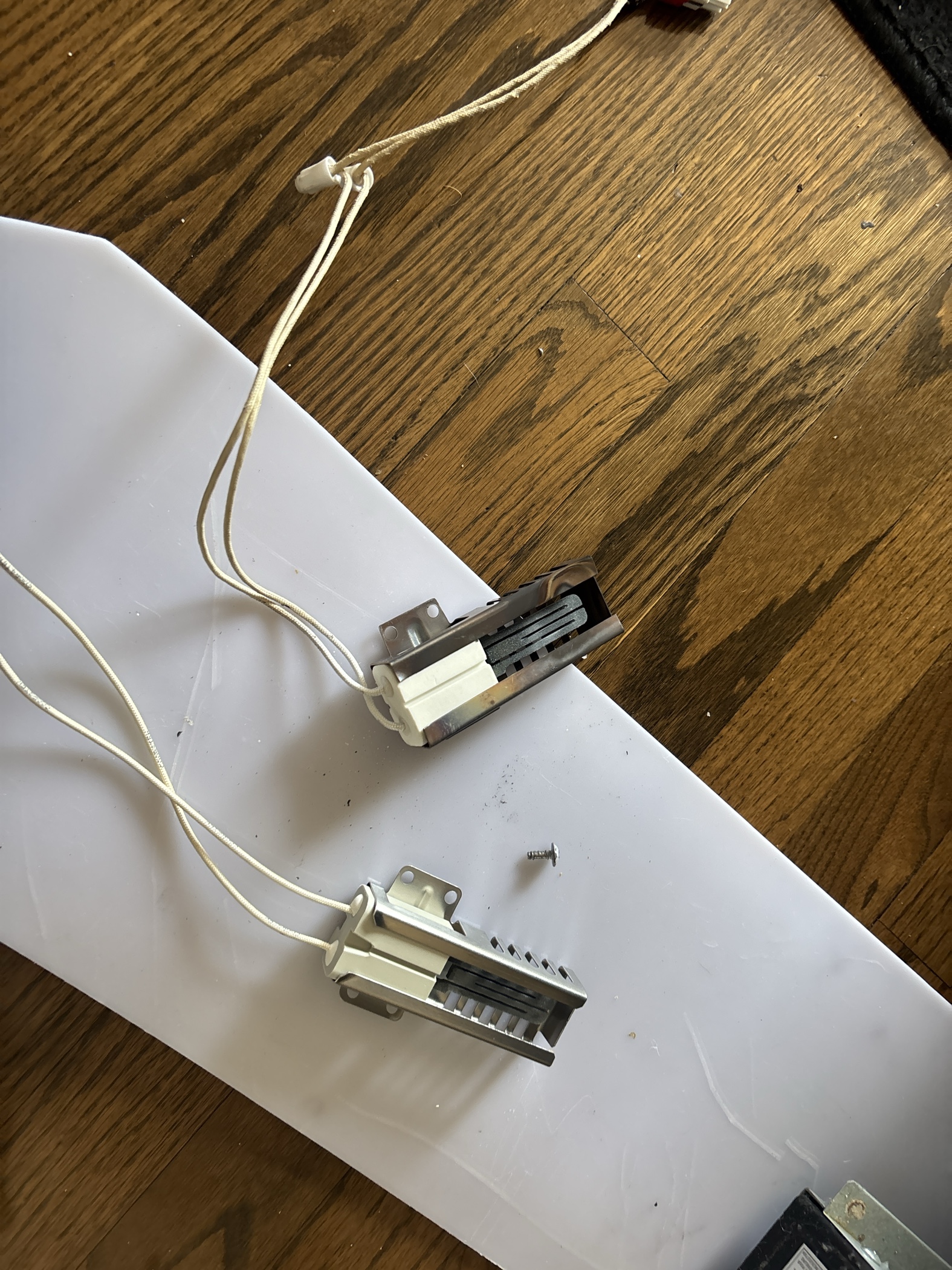
A gas oven uses a hot surface igniter. It is a fragile little component, usually a flat bar or a coil of silicon carbide, and it sits right at the mouth of the burner tube. When you call for heat, current runs through the igniter and it glows orange, then white hot.
Here is the part that surprises people. The igniter is not just a lighter. It is also the switch. The oven safety valve opens based on how much current is flowing through the igniter circuit. A healthy igniter draws enough current to pull that valve open, gas flows, and the glowing igniter lights it immediately. A weak igniter still glows, sometimes brightly enough to look completely normal, but it no longer draws enough current to open the valve.
That is the failure mode that fools people. The homeowner opens the oven door, sees the igniter glowing away, and concludes the igniter must be fine. Meanwhile the valve never opens, no gas ever arrives, no flame ever appears, and after enough time waiting for heat that never comes, the control gives up and posts a fault.
The repair
Our technician confirmed the igniter was the failure point and replaced it. Igniters are wear items. They degrade gradually over years of heating and cooling cycles, and they are the single most common cause of a gas oven that will not heat. They are also physically brittle, which is worth knowing if you ever have the bottom panel of your oven out for cleaning.
With the new igniter installed, the burner lit as it should and the oven came back up to temperature. We verified the oven cycled correctly, holding its setpoint and re-lighting when it called for heat rather than lighting once and quitting. That verification step matters. An oven that lights once in the driveway and fails on the third cycle is not a repaired oven.
Why the code cleared
Once the oven was heating within the time the control expects, the F11 condition had nothing left to report. This is the thing worth understanding about fault codes. They are symptoms. Clear the underlying fault and the code goes away on its own. Reset the code without fixing anything and it comes right back, usually within a cycle or two.
We mention this because there is plenty of advice online suggesting you unplug an appliance for a few minutes to clear a code. Sometimes that genuinely helps, when a momentary glitch has latched a fault that no longer exists. Often it just resets the messenger while the underlying problem sits there untouched.
Signs your oven igniter is on its way out
This failure gives you warning if you know what to watch for.
Preheating starts taking noticeably longer than it used to. You hear the gas valve click open later and later after you set the temperature. The oven takes several minutes to light where it used to take under a minute. Baking becomes uneven because the oven is spending too long between heat cycles. And eventually, you get no flame at all and a code on the display.
If your oven is taking longer to preheat than it did a year ago, that is worth a call before it quits entirely. It is the same repair either way, and it is a lot easier to schedule on your terms than on the oven's.
Working with A+ Appliance Repair and Maintenance
We service LG, Whirlpool, Samsung, Maytag, KitchenAid, Bosch, GE, and every other major brand across Chicago and the surrounding suburbs. Gas appliances get treated with the care they deserve, and our technicians are trained to work on them safely.
We quote honestly and upfront before any work begins, we do not charge a separate service call fee when you move ahead with the repair we recommend, and every completed repair carries our full repair warranty. If your oven is showing a code, refusing to heat, or simply taking far longer to preheat than it should, we can tell you what is actually going on inside it.