

A Noisy KitchenAid Built-In Refrigerator That Stopped Cooling in Arcadia
An Arcadia homeowner called A+ Appliance Repair and Maintenance about a KitchenAid built-in refrigerator that had grown steadily louder and was no longer keeping the fresh-food compartment cold. The two symptoms sounded unrelated, but on a modern refrigerator they usually are not. A single evaporator fan behind the freezer wall both circulates the cold air that keeps the refrigerator section cool and is one of the first parts to announce itself when its bearing begins to fail. Our technician traced the noise and the weak cooling to that fan motor, replaced it, and confirmed airflow and temperatures recovered in both compartments. This is one of the more commonly misread refrigerator faults, because the compartment that fails is not the one with the broken part.
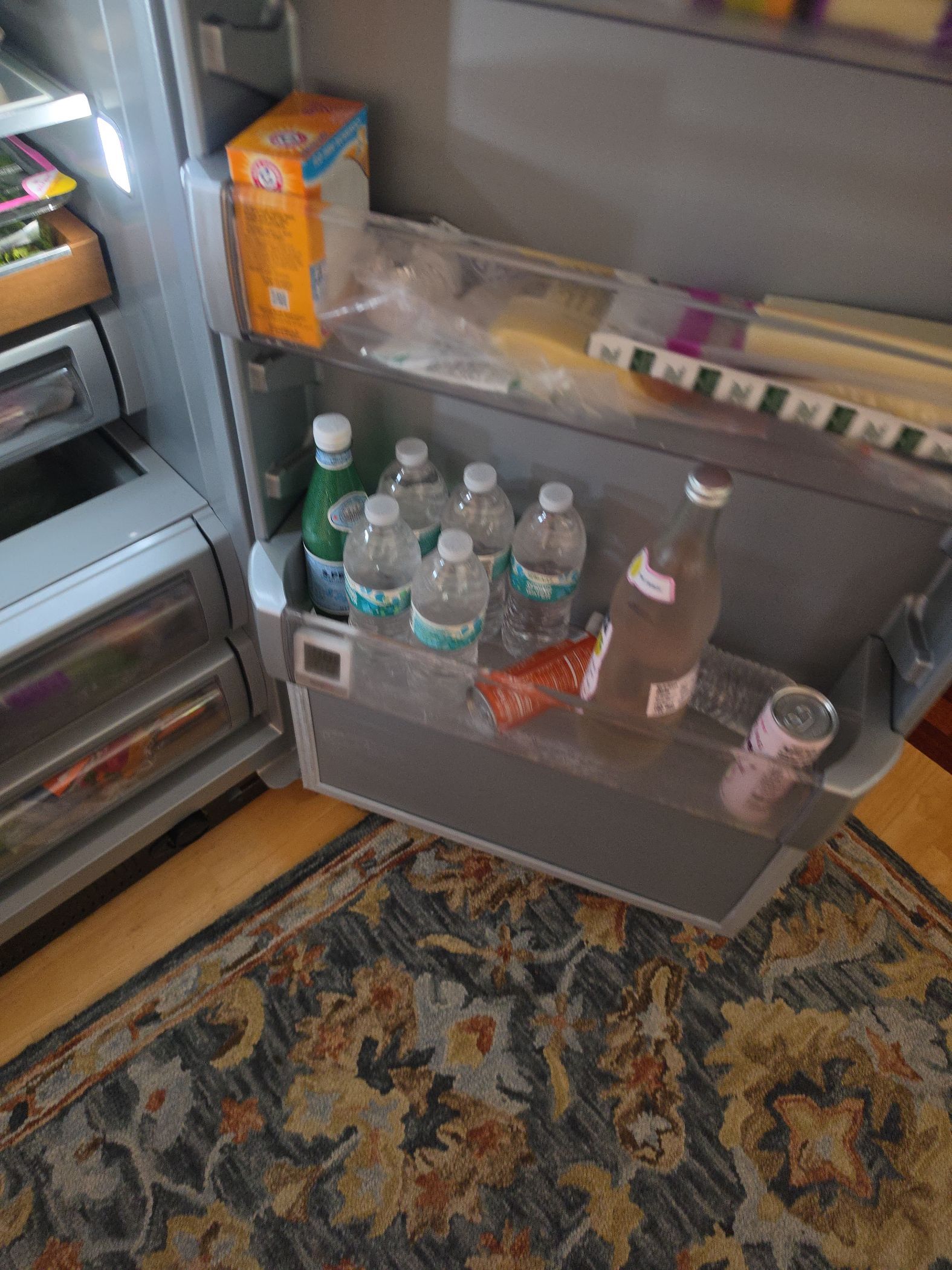
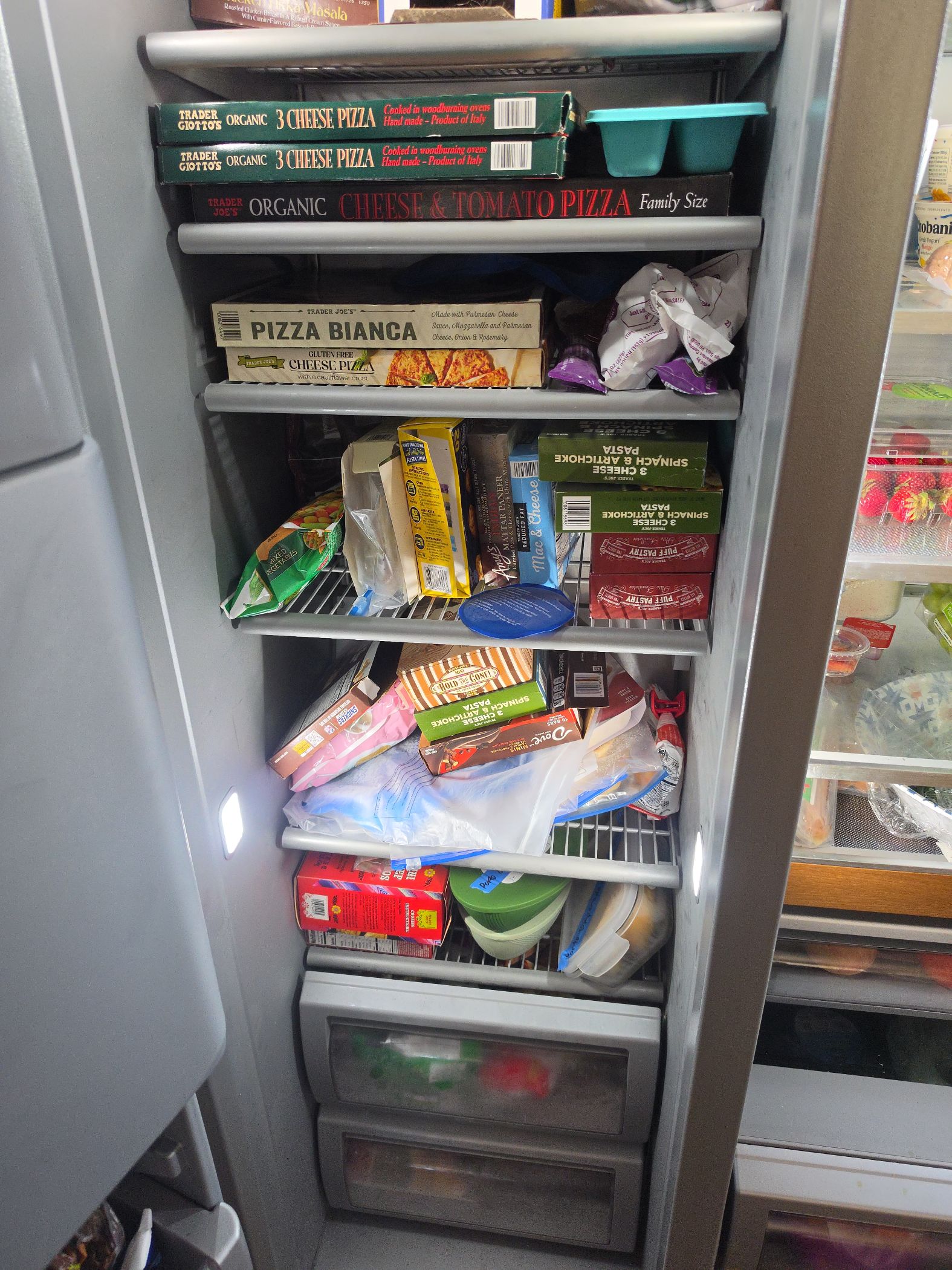
A Refrigerator That Got Loud, Then Got Warm, in Arcadia
Most refrigerator problems introduce themselves quietly. This one did the opposite. A homeowner in Arcadia called A+ Appliance Repair and Maintenance about a KitchenAid built-in refrigerator that had started making a loud noise, and then, around the same time, stopped cooling properly in the refrigerator compartment. The freezer still seemed fine. The fresh-food side was drifting warm.
Those two complaints, a noise and a warm refrigerator, sound like two separate problems. On most modern refrigerators they are the same problem, and understanding why is the whole job.
Where the cold actually comes from
People picture a refrigerator as two cooled boxes side by side, each making its own cold. That is not how a unit like this KitchenAid works. There is really only one place cold air is produced: a set of coils called the evaporator, tucked behind a panel in the freezer. A single fan, the evaporator fan, blows air across those cold coils and then pushes it where it needs to go. Some of that chilled air stays in the freezer. The rest is routed through a duct into the refrigerator compartment, and a damper controls how much.
That means the refrigerator section does not cool itself. It borrows cold air from the freezer, and the evaporator fan is what moves it there. If that fan slows down or stops, the freezer, which sits right on top of the cold source, often stays cold enough that you do not notice. The refrigerator, which depends entirely on air being actively pushed to it, is the first place to warm up.
So a warm fresh-food compartment with a still-cold freezer is not a random pattern. It is the exact signature of an airflow problem.
Why the noise and the warming arrived together
The evaporator fan motor spins continuously through the cooling cycle, in a cold, occasionally frosty environment. Over years of use the bearing inside it wears. As it does, two things happen at once. The motor gets loud, because a dry or worn bearing grinds, hums, or clatters instead of spinning smoothly. And it gets weak, because the same friction that makes the noise robs the fan of speed and the blade of the airflow it is supposed to deliver.
That is why this customer heard the machine get loud and then watched the refrigerator get warm within the same stretch of time. It was not two failures. It was one part, the evaporator fan motor, announcing its decline in both of the ways it can.
There is a useful tell that points here rather than elsewhere. On many refrigerators the evaporator fan runs while the doors are closed and pauses when you open the refrigerator door. Homeowners often report that the noise disappears the moment they open the door to investigate, then returns once it is shut. That is not the problem fixing itself. That is the door switch pausing the very fan that is making the noise, which is about as clear a confirmation of the source as you can get without opening the panel.
Working the diagnosis instead of guessing
A warm refrigerator has more than one possible cause, and a good technician rules the others out rather than assuming. Our technician checked that the condenser coils and condenser fan were clear and working, because a refrigerator starved of heat rejection at the back can also struggle to cool. He confirmed the freezer was holding temperature, which pointed away from the sealed system and the compressor and toward air distribution. He checked that the evaporator was not buried in frost, since a failed defrost system produces a similar warm-refrigerator complaint by blocking airflow with ice rather than by a dead fan.
With the freezer cold, the coils clear, and the noise tracking exactly with the fan, the evaporator fan motor was the confirmed failure. The noise and the weak cooling were the same story told twice.
The repair
We replaced the evaporator fan motor. With the new motor in place, the fan spun quietly and moved air the way it should. Our technician verified that chilled air was once again flowing through the duct into the refrigerator compartment, confirmed the temperatures in both the freezer and the fresh-food section were pulling down into their proper ranges, and made sure the new motor ran without the noise that brought us out in the first place.
On a built-in unit like this KitchenAid, that verification matters. These refrigerators are integrated into the cabinetry and expensive to replace, so confirming the fix is complete, rather than close, is the difference between one visit and a callback.
What a homeowner can watch for
This failure gives you warning if you know what it sounds and looks like.
Listen for a new noise coming from inside the refrigerator rather than from the back or bottom. An evaporator fan noise comes from behind the freezer wall and usually changes when you open and close the door. Pay attention if the noise rises and falls with the cooling cycle.
Watch the split between compartments. A freezer that is still cold while the refrigerator drifts warm is the classic airflow signature, and it is worth acting on early. A refrigerator that is losing cooling is on a clock, and the food inside it is the thing you lose first.
And keep the vents inside clear. The duct that carries cold air into the fresh-food compartment can be blocked by a tall container or a stack of items pushed against the back wall. That will not damage the fan, but it produces the same warm-refrigerator complaint and is worth ruling out before anyone gets a call.
About A+ Appliance Repair and Maintenance
We service KitchenAid, Whirlpool, Sub-Zero, LG, Samsung, GE, Bosch, Maytag, and every other major brand throughout Arcadia and the surrounding San Gabriel Valley. Built-in and high-end refrigerators are a regular part of our work, and our technicians are trained and carry common parts, which is why a diagnosis and a repair can often happen in a single visit.
We quote the price upfront before any work begins, we waive the service call fee when you move forward with the repair, and every completed repair is backed by our full repair warranty. If your refrigerator has started making a noise, or the fresh-food side is drifting warm while the freezer holds, it is worth having looked at before the food starts to go. An airflow problem that starts as a noise rarely stays just a noise.