

A Kenmore Elite Washer Showing F02 in West Hollywood
A West Hollywood homeowner called A+ Appliance Repair and Maintenance about a Kenmore Elite HE3t front-load washer displaying an F02 error. On these machines, F02 means the washer took too long to drain, and it points squarely at the drain path: a clogged pump or filter, a blocked hose, or a failed drain pump. Our technician checked the drain path and confirmed the pump itself had failed, then replaced the drain pump and ran the washer through a full drain and spin. The F02 error cleared once the water could leave the tub in the time the control expects.
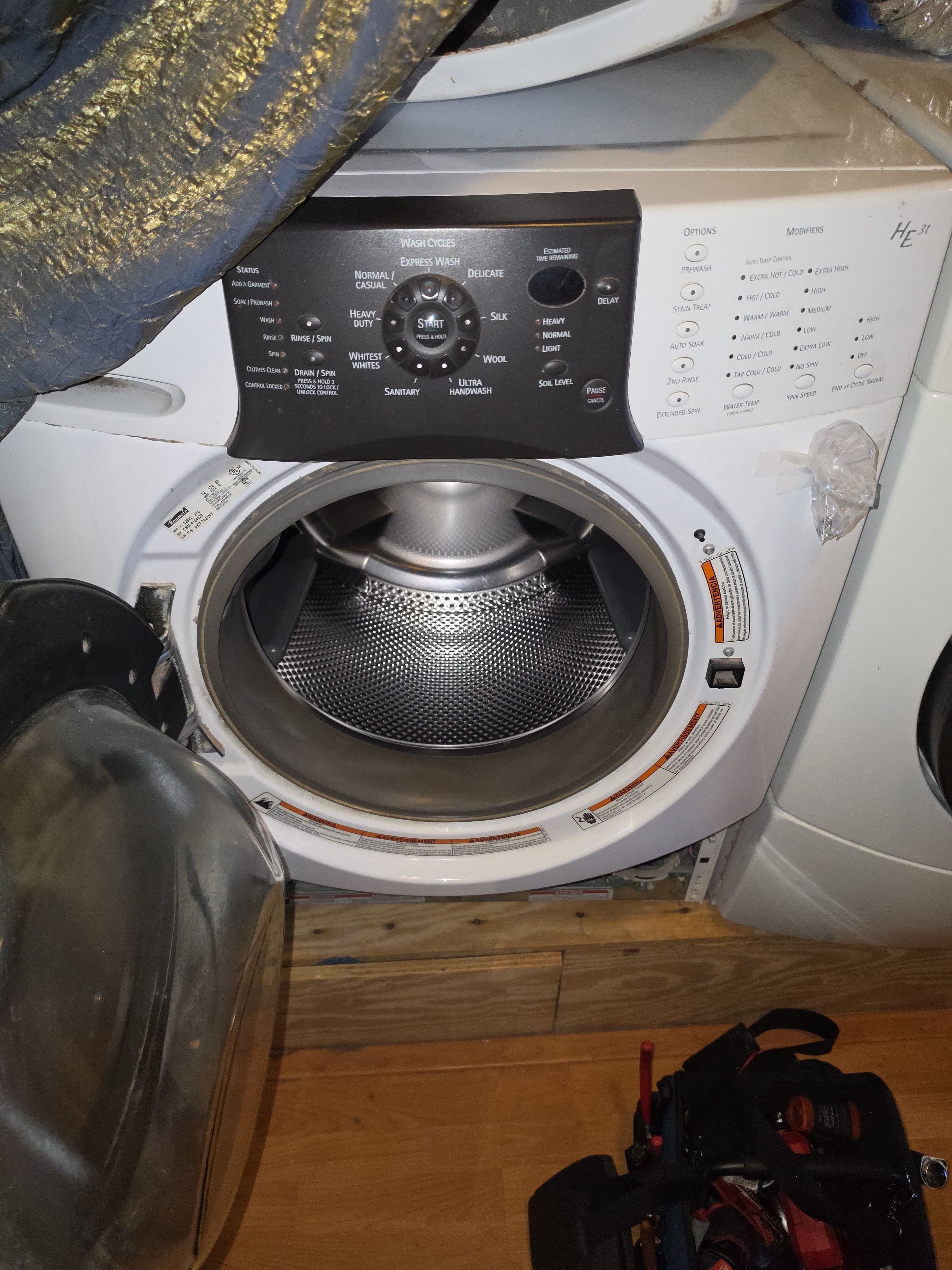
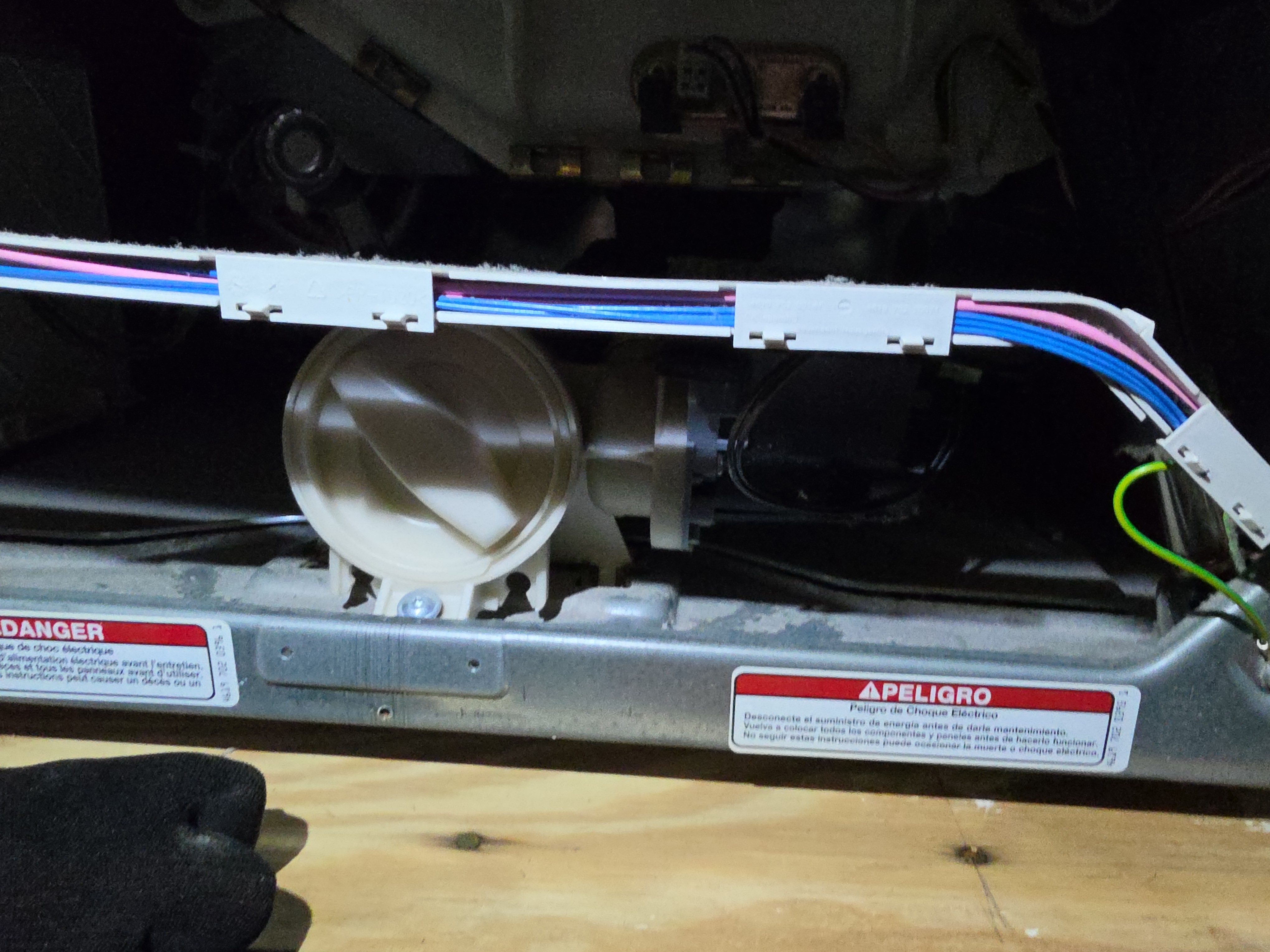
A Kenmore Elite Washer, an F02 Code, and a Tub That Would Not Drain in West Hollywood
A homeowner in West Hollywood called A+ Appliance Repair and Maintenance about a Kenmore Elite HE3t front-load washer that was throwing an F02 error. On this generation of Kenmore and Whirlpool-built front-loaders, that code has a specific meaning, and it is one of the more common washer faults we are called out for.
What F02 actually means
An F02 on an HE3t is a long-drain error. The washer expects to empty the tub within a set window of time. When the water does not leave fast enough, the control decides something is wrong with the drain and stops, posting F02 rather than moving on to spin. Like most fault codes, it does not name the broken part. It names the failed expectation: the water did not drain in time.
That is an important distinction, because it means F02 has more than one possible cause, and they are not equally expensive. The job is to find which one is actually responsible rather than assuming.
The things that cause a slow drain
Water leaving the tub travels a specific path, and a restriction anywhere along it produces the same F02. It runs out through the tub, into the drain pump, and up through the drain hose to your standpipe. On the way, it passes a filter, sometimes called the coin trap, whose entire purpose is to catch the coins, hairpins, buttons, and debris that fall out of pockets so they do not reach the pump.
That filter is the single most common culprit. When it fills with debris, water can barely trickle past, and the drain takes far longer than the control allows. The drain hose can be kinked behind the machine or clogged partway along its run. The pump itself can be jammed by a coin or a scrap of fabric caught in the impeller, which makes a healthy pump move no water. And the pump can simply fail, its motor or impeller worn out after years of service. Every one of those looks identical from the front: a tub full of water and an F02 on the display.
Diagnosing before replacing
Because the causes range from a free cleanout to a new part, our technician worked through the drain path rather than assuming the worst. He checked the filter and pump housing for the usual debris that jams an impeller and slows a drain. He verified the drain hose was not kinked or obstructed downstream. And he confirmed whether the pump was actually running and moving water when the machine called for drain, which is what separates a blocked pump from a failed one.
In this case the path was clear but the pump was not doing its job. The drain pump itself had failed. That is the honest answer only a real check can give, and it is what keeps a customer from paying for a part they did not need, or from having an old pump merely unclogged when it was actually worn out.
The repair
We replaced the drain pump. With the new pump installed, our technician ran the washer through a full drain and spin to confirm the tub emptied completely within the expected time and that the machine advanced into spin instead of stalling. He verified the F02 no longer appeared, since the code clears on its own once the underlying drain problem is gone, and checked the pump and hose connections for leaks, because a new pump that seeps is a callback waiting to happen. On a front-loader, the door also releases normally once the water is gone, which it now did.
Keeping F02 from coming back
This is one of the more preventable washer faults. Clean the drain pump filter periodically. On the HE3t it is behind a small access panel at the lower front of the machine, and a few cleanings a year clear out the lint, hair, and debris before they can slow the drain or jam the pump. Keep a shallow pan and towel handy when you open it, because water will come out. Check pockets before washing, since a single coin is the most common thing we find lodged in a pump impeller. And if you notice the washer starting to drain more slowly or leaving clothes wetter than usual, treat it as an early warning and clean the filter before it turns into an F02 and a stalled load.
About A+ Appliance Repair and Maintenance
We service Kenmore, Whirlpool, LG, Samsung, Maytag, GE, Bosch, and every other major washer brand throughout West Hollywood, Los Angeles, and the surrounding communities. Our technicians are trained and carry common parts, which is why a drain-pump repair like this one can usually be diagnosed and completed in a single visit.
We quote the price upfront before any work begins, we waive the service call fee when you move forward with the repair, and every completed repair is backed by our full repair warranty. If your washer is showing an F02, holding water, or refusing to spin, do not leave it sitting full. Standing water turns to odor and mildew in the door boot faster than most people expect, and a drain problem rarely fixes itself.