

A JennAir Oven That Was Lying About Its Own Temperature in Pasadena
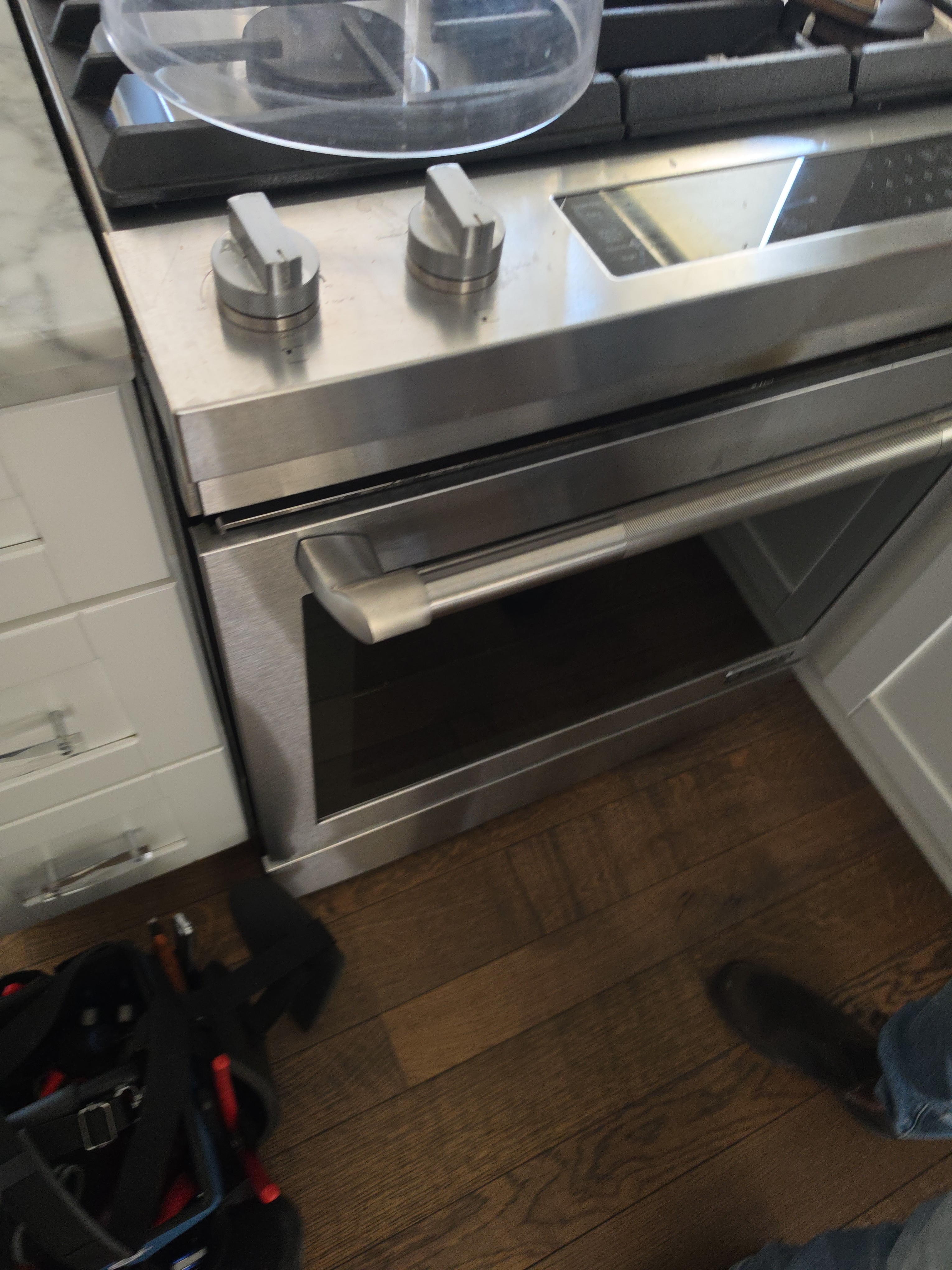
A Pasadena homeowner described their JennAir gas range as acting weird: oven temperature would not stay consistent, and setting it to 300 degrees produced an oven that badly overheated. The range was not failing to heat. It had lost the ability to measure heat accurately, which is a different problem with very different symptoms. Our technician replaced the oven temperature sensor assembly, restoring accurate temperature control. This post covers how to tell a sensor problem from the failures it is often mistaken for.
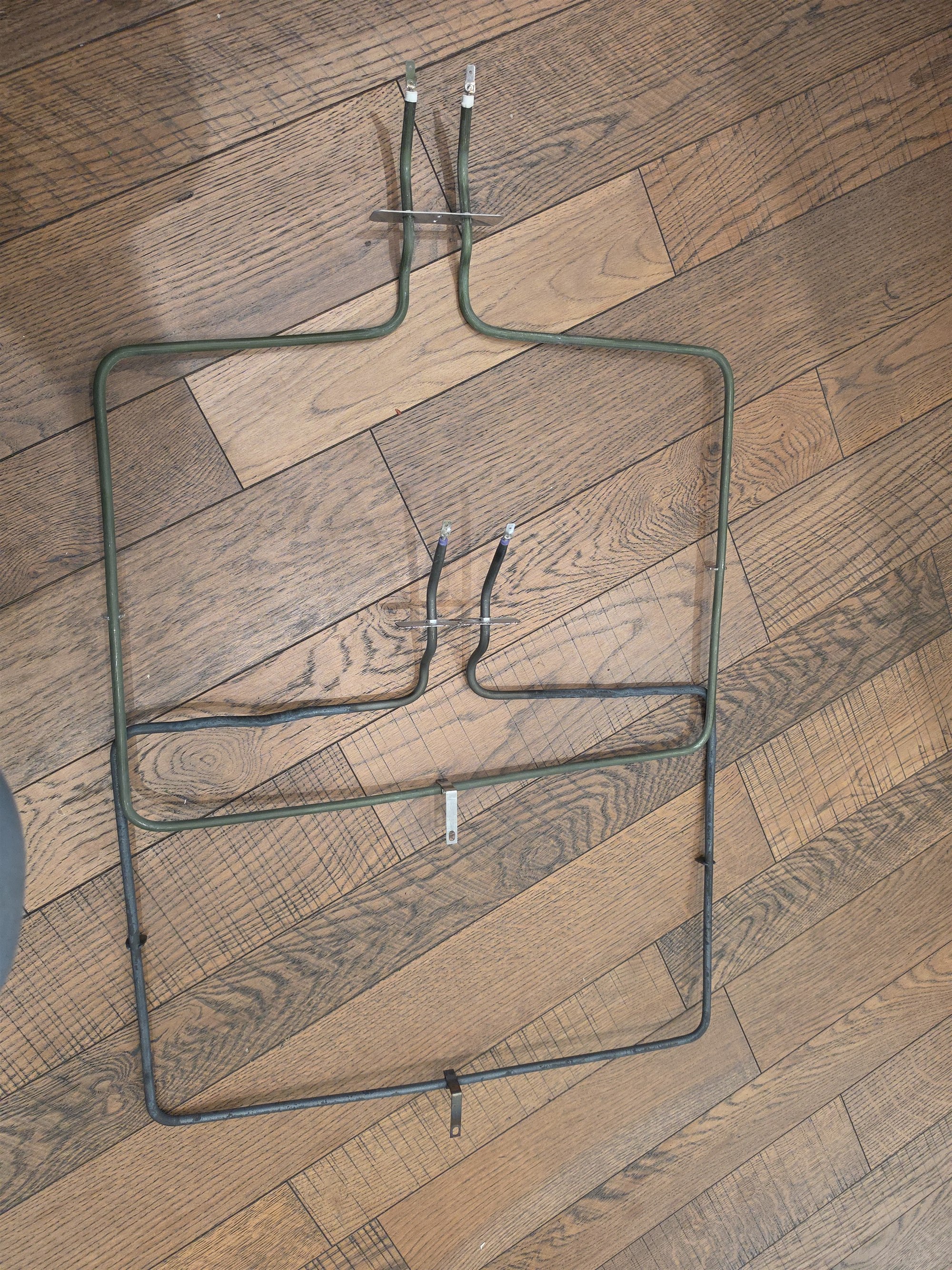
Set it to 300, get something much hotter
The homeowner's description of their JennAir gas range was that it was acting weird, which is a more useful diagnostic starting point than it sounds. The specifics were that the oven temperature would not stay consistent, and that setting it to 300 degrees produced an oven that overheated well past where it should have been.
That is a distinctive complaint. Ovens that fail usually fail toward cold. They will not light, they take forever to preheat, they cannot hold temperature on a long bake. An oven that overshoots is a different animal, and it points somewhere specific.
The homeowner called A+ Appliance Repair and Maintenance after enough ruined food to make it clear this was not user error.
The oven was not broken. It was misinformed.
Here is the way to think about this failure. Your oven does not know how hot it is. It has no direct sense of temperature. It has a sensor, and it believes whatever that sensor reports.
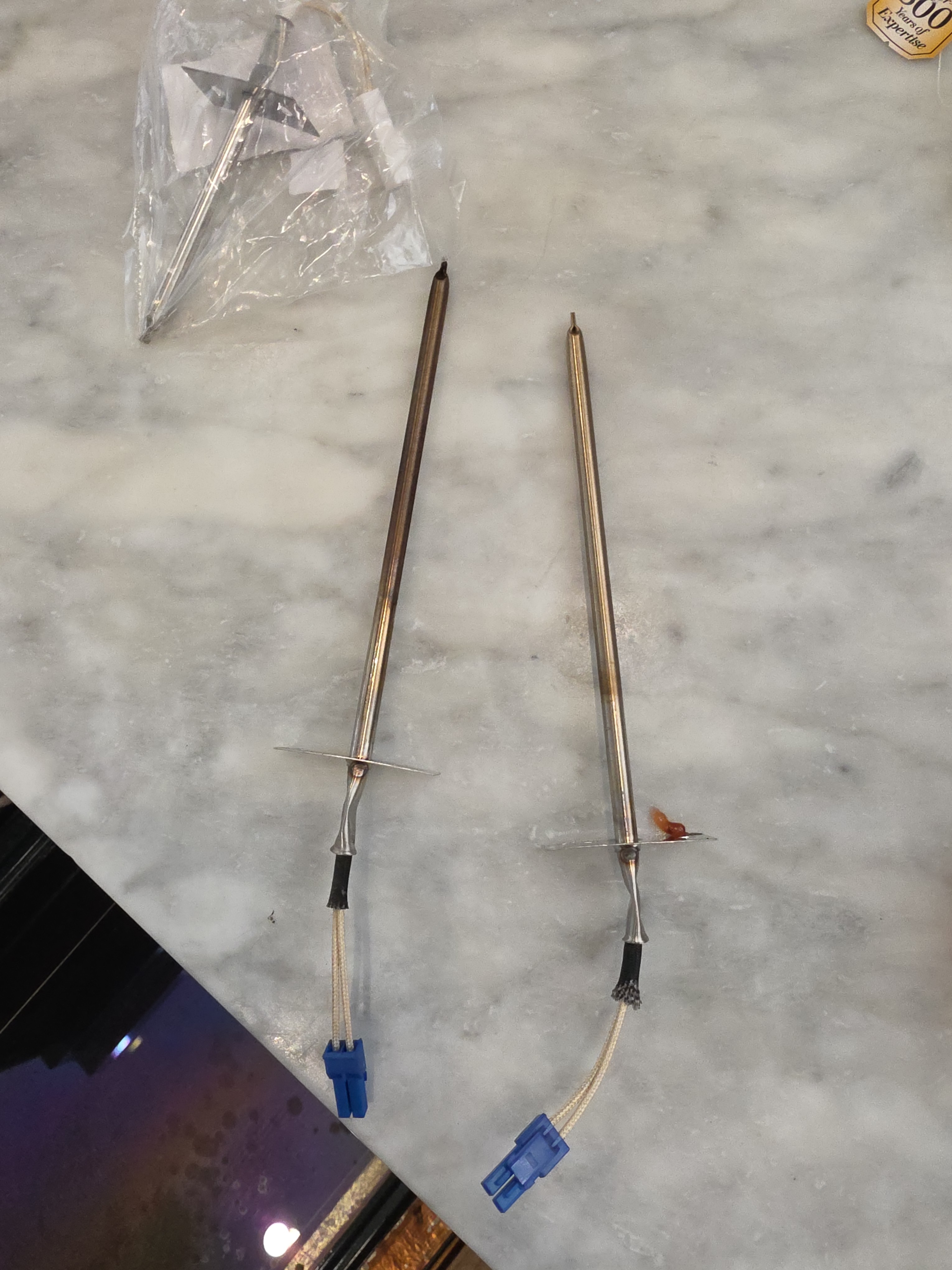
The oven temperature sensor is a thin probe mounted inside the oven cavity, usually toward the upper rear. It works on a simple principle: its electrical resistance changes predictably as it heats up. The control board sends current through it, measures the resistance coming back, converts that to a temperature, and decides whether to call for more heat or shut the burner off. That is the entire feedback loop, and everything the oven does depends on it being accurate.
When a sensor drifts out of calibration, the loop keeps running perfectly. The control board is still doing its job correctly. It is simply working from bad information. If the sensor is reading low, it tells the board the oven is at 250 when the oven is actually at 350. The board sees a shortfall and keeps the burner going. The oven climbs. The sensor keeps under-reporting. The oven keeps climbing.
That is exactly the behavior this range was showing. Set to 300, believing itself to be cooler than it was, it just kept adding heat.
Why inconsistent is the more telling symptom
A sensor that reads uniformly wrong is annoying but at least predictable, and people compensate for it without realizing. Plenty of home cooks have an oven they know runs 25 degrees hot and they simply set it lower.
What was happening here was worse, because the error was not consistent. The homeowner reported the temperature would not stay steady, which is what a sensor does when it is genuinely failing rather than just drifting. As the probe degrades, or as a connection at its terminals corrodes, the resistance it reports becomes unstable. The board sees the temperature apparently jumping around and responds by cycling the burner on and off in ways that make the real oven temperature swing.
For anything forgiving, like a roast, you might not notice. For baking, it is ruinous. Cakes and breads depend on a specific, steady temperature during the period when structure sets, and an oven whose real temperature is oscillating will produce results that make no sense from one attempt to the next. That inconsistency is often what finally makes someone call, because they have started to doubt their own recipes.
What we replaced
Our technician replaced the oven temperature sensor assembly. With an accurate sensor in place, the control board had good data to work from, and the oven came back to holding its set temperature properly.
Worth mentioning why this is diagnosed by measurement rather than inspection. A failed temperature sensor generally looks completely normal. There is nothing burned, nothing broken, nothing visibly out of place. You confirm it by measuring the sensor's resistance and comparing it against the specification for that temperature, and by checking the actual cavity temperature against what the oven believes. Both readings together tell you whether the sensor or the control board is at fault, and that distinction matters a great deal, because one of those is an inexpensive part and the other is not.
How to check your own oven
There is a genuinely useful test any homeowner can run, and it costs almost nothing. Buy a standalone oven thermometer, the kind that hangs from a rack.
Put it in the center of the oven, set the oven to 350, and let it fully preheat. Then wait another fifteen or twenty minutes, because ovens overshoot and settle during the first cycles and an early reading will mislead you. Now compare. A gap of ten or fifteen degrees is within the range of normal for a domestic oven. A gap of fifty degrees is a real problem.
Then leave the thermometer in there and check it several times over the next half hour. This second part is the one people skip and it is the more informative half. A reading that stays put means your oven holds temperature, even if it holds it at the wrong number. A reading that wanders up and down by a large margin means the control loop is unstable, and that points at the sensor or its wiring.
Many ovens also have a calibration offset in the settings menu that lets you nudge the reported temperature by a set number of degrees. That is a reasonable fix for an oven that is consistently off by a small amount. It is not a fix for an oven that is swinging around, because you cannot offset your way out of unstable data.
What else produces similar symptoms
Not every temperature complaint is the sensor, and it is worth knowing the alternatives. Uneven cooking with accurate average temperature often points at a bad door seal letting heat escape, or at a convection fan not circulating properly. An oven that runs cold rather than hot is more likely an igniter or gas supply issue. And an oven that will not respond to the controls at all is a different investigation entirely.
The overheating pattern this JennAir showed, combined with instability, is what makes the sensor the prime suspect rather than one guess among many.
Range and oven repair in Pasadena
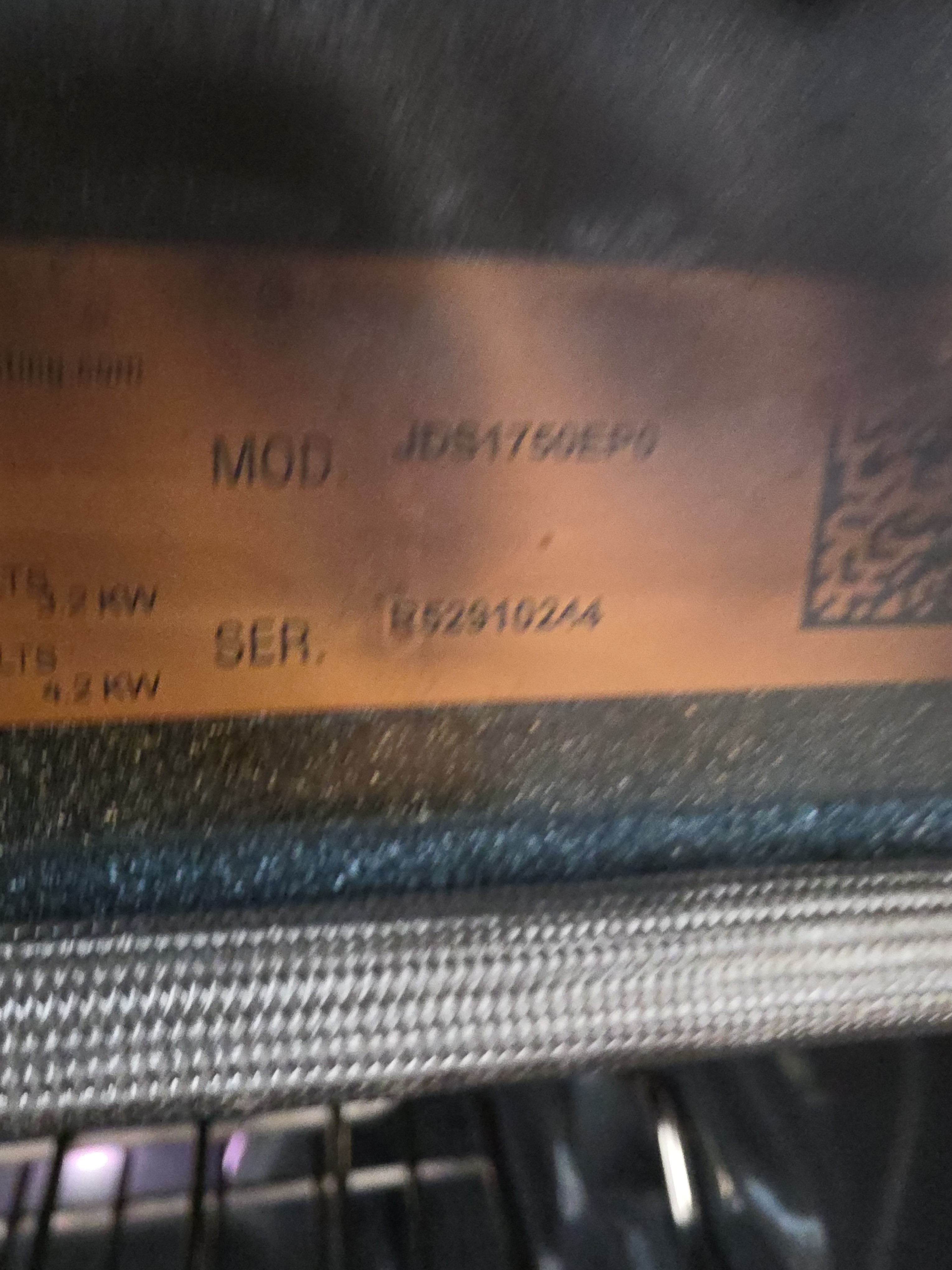
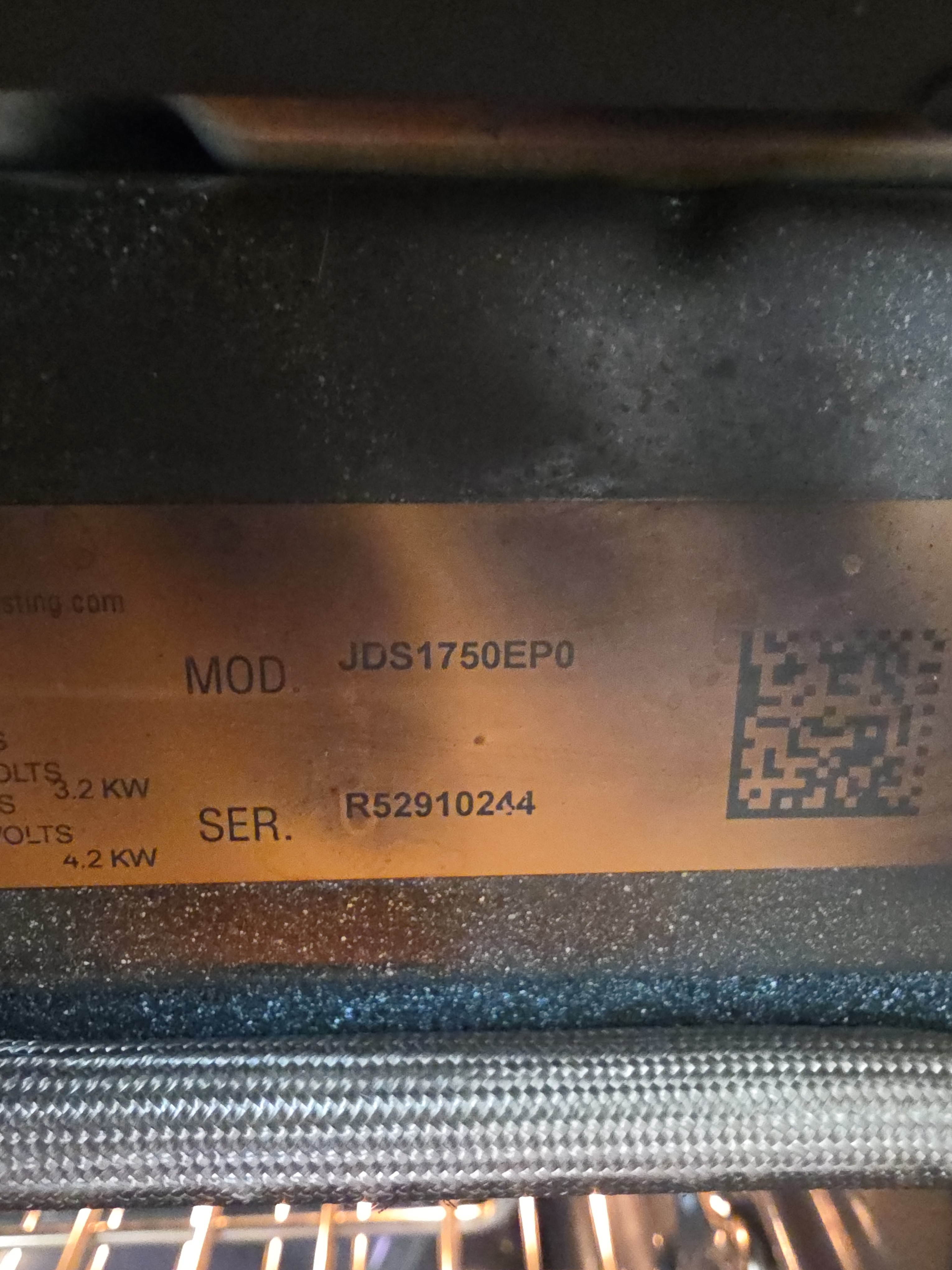
JennAir is a higher-end line and the parts and layout differ from mass-market brands, which is worth having someone familiar with when the range comes apart. We work on JennAir, Thermador, Viking, Wolf, and Sub-Zero alongside the mainstream brands.
The service call fee was waived on this job because the customer proceeded with the repair, and the price was quoted before any parts went in. Everything we do is covered by our repair warranty.
If your oven in Pasadena, San Marino, South Pasadena, or Sierra Madre has been giving you results that do not match the dial, run the thermometer test first. If the numbers are off, give us a call. We can usually get out the same day, and an inaccurate oven is a much smaller repair than most people expect.