

The Commercial Dryer Nobody Wanted to Use in Arcadia
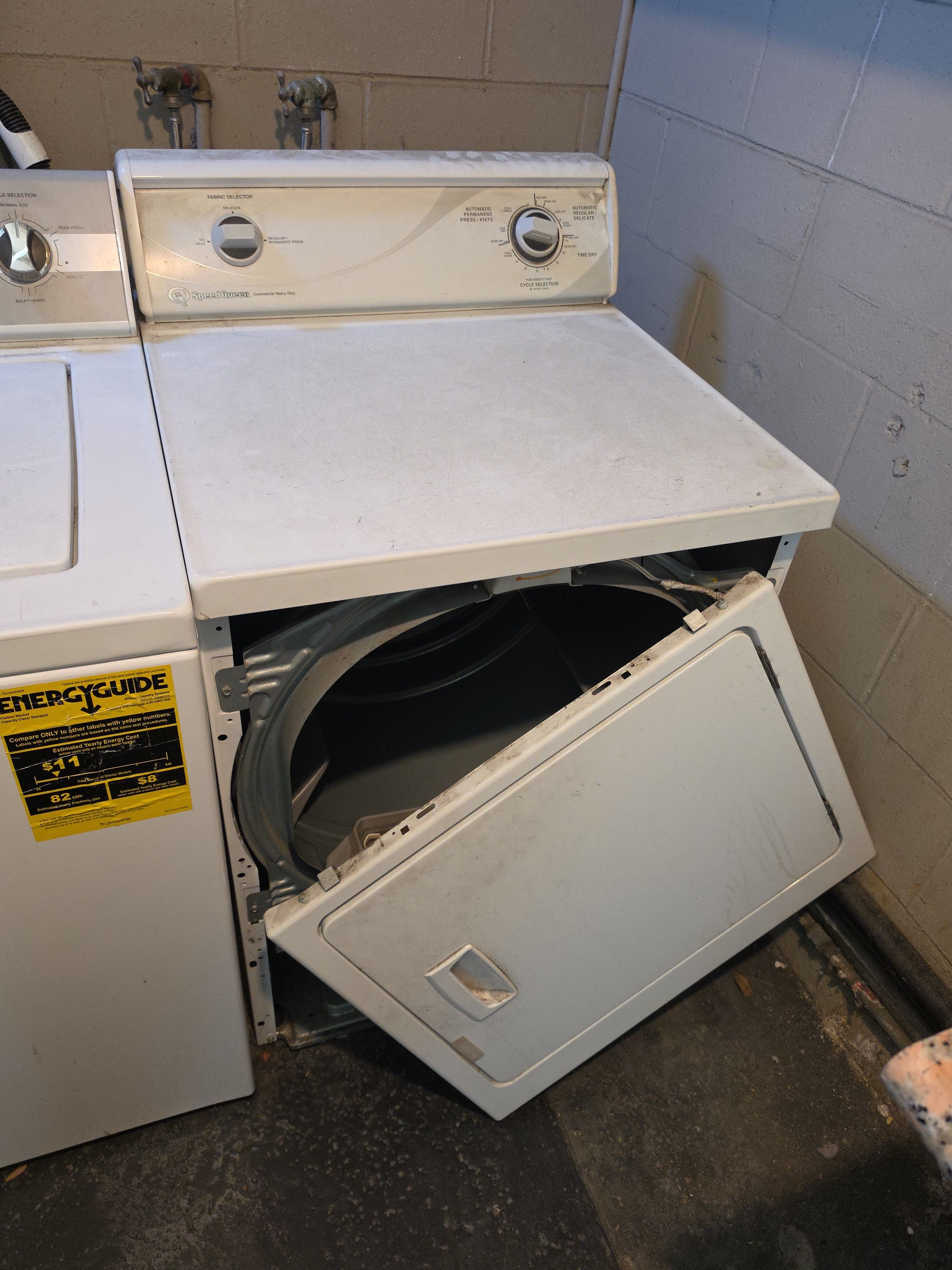
A Speed Queen commercial heavy duty dryer in an Arcadia residential complex had developed a screech loud enough that residents were skipping it and waiting for the other machine. Our technician traced the noise to a worn idler pulley and its mounting bracket, both of which had given up under the workload a shared machine carries. We replaced the pulley and the mount and the dryer went back to running quietly. This job is a good look at why commercial-grade laundry equipment in apartment buildings wears differently than the dryer in a single-family home.
The machine everyone in the building walked past
Shared laundry rooms develop a pecking order. There is the machine everybody likes, the one that runs a little hot, and then there is the one people quietly avoid. In a residential complex in Arcadia, one of the two dryers had become that last machine.
It still ran. It still dried clothes. But it announced itself the entire cycle with a rising metallic screech that carried down the hallway, and residents had started loading the other unit and waiting their turn rather than deal with the noise. When a shared laundry room effectively loses half its capacity, the complaints follow quickly. The property reached out to A+ Appliance Repair and Maintenance to get it handled before the dryer stopped altogether.
A commercial machine doing genuinely commercial work
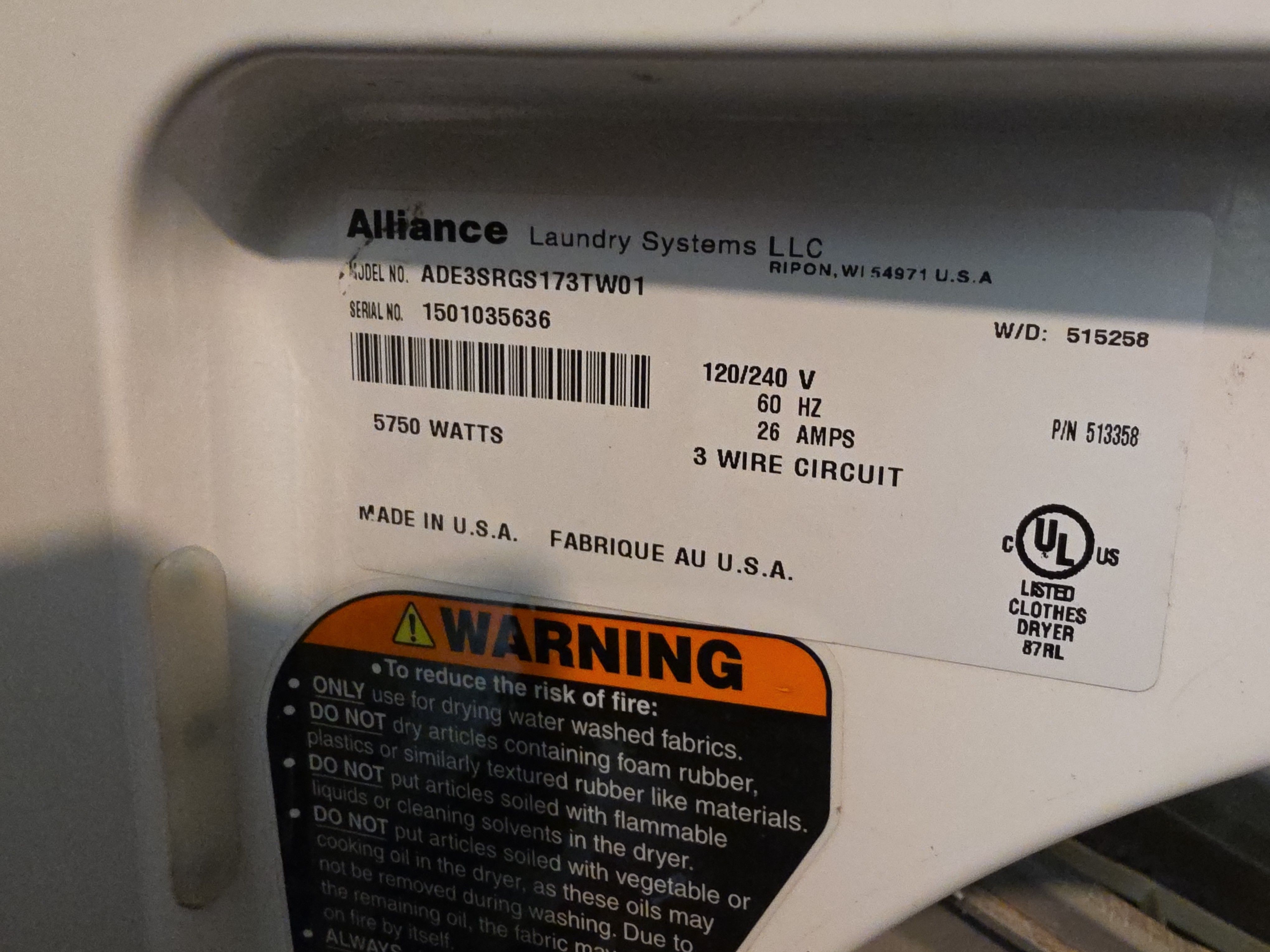
The unit was a Speed Queen commercial heavy duty electric dryer built by Alliance Laundry Systems. It sat side by side with its matching washer against the concrete block wall of the laundry room, not stacked, which turned out to be a small piece of good luck for the repair.
That detail matters more than it sounds. Stacked laundry units in tight closets have to be pulled, separated, and often partly dismantled before anyone can get to the drive components, and that alone can add an hour to a job. A side-by-side installation with clearance around it means the technician can open the cabinet, get a light on the drum, and actually see what is happening while the parts are still in place.
The other thing worth understanding about this machine is the duty cycle. A dryer in a single-family home might run six or eight loads in a week. A dryer in a shared laundry room can run that many in a day. Speed Queen builds these units for exactly that, with heavier bearings and a stouter frame than a residential model, but no amount of engineering makes a wear part immortal. It just moves the timeline. A component that would take fifteen years to fail in a house can be finished in three or four years in a building.
What we found inside the cabinet
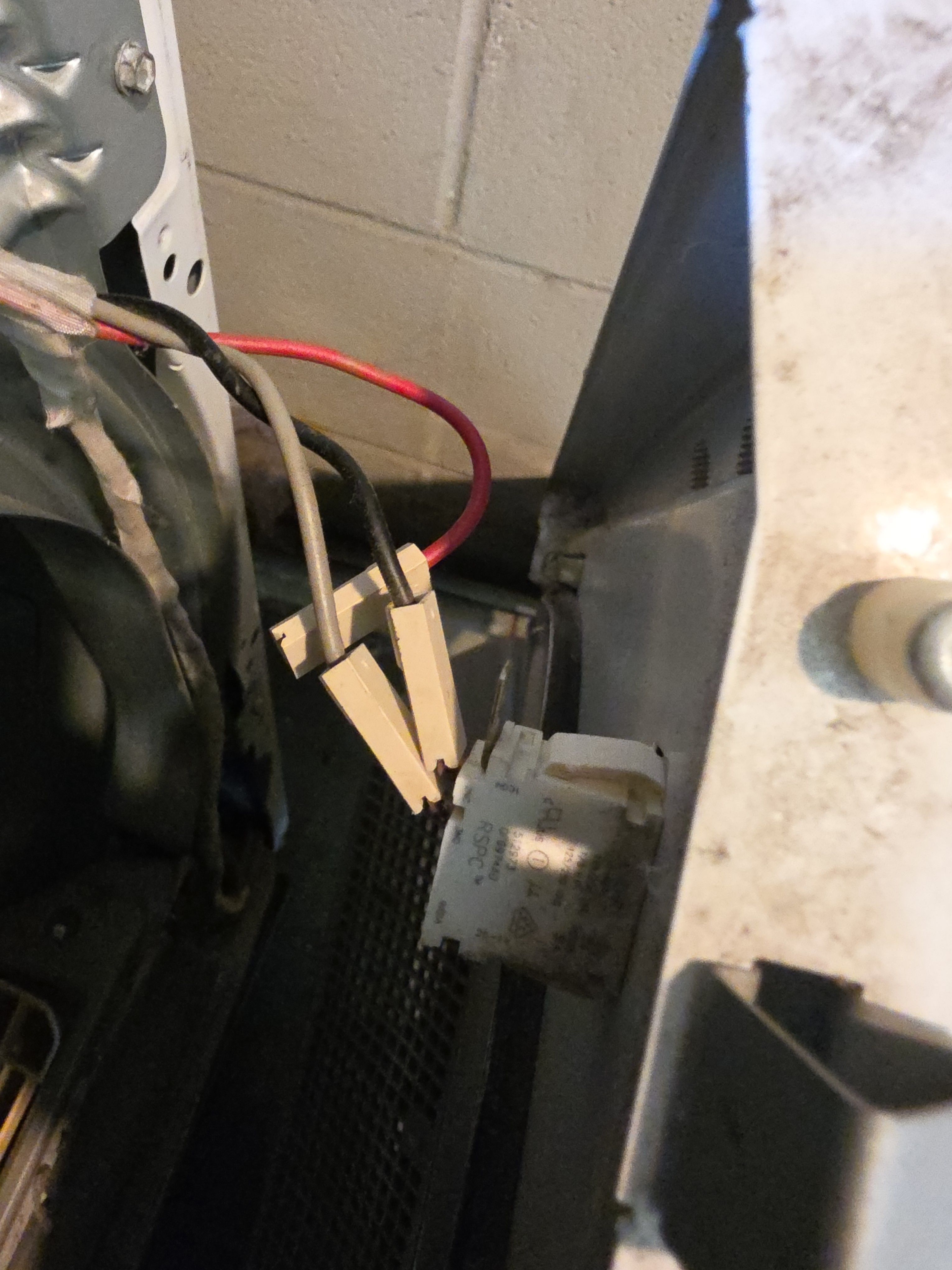
Our technician opened the machine and turned the drum by hand. The noise was immediate and obvious once the panels were off: the idler pulley had worn out, and the mount holding it had gone along with it.
The idler pulley is a small wheel that rides against the drive belt and keeps it under constant tension. It is not glamorous hardware. It is a wheel, a shaft, and a bracket. But it spins every second the drum turns, and it does so under load, which means it is one of the first things in a dryer to wear out. When the bearing inside it starts to go, the pulley stops spinning freely and starts scrubbing. That is the screech. It is metal telling you it is being dragged rather than rolled.
The mount was the part that made this job more than a five-minute swap. Once a pulley starts binding, it puts side load on the bracket that holds it. Over enough cycles that bracket wears at the pivot, and then the pulley no longer sits square against the belt. At that point you have two problems feeding each other: a bad pulley chewing up its mount, and a sloppy mount letting the pulley track crooked. Replacing only the pulley would have felt like a fix for a few weeks, and then the new pulley would have started wearing the same way in the same worn bracket.
We replaced the pulley and the mount together. The drum came back to a smooth, quiet rotation, the belt sat properly tensioned across the pulley face, and the screech was gone.
Why belts and pulleys give out early in shared laundry rooms
If you manage a building or an HOA, the pattern is worth knowing. Drive components fail early in shared laundry not because the machines are cheap but because of how they get used.
Loads in a shared room tend to be heavier. Residents are paying per cycle, so they pack the drum, and a heavy drum puts more strain on the belt and everything tensioning it. Machines also run back to back with no cooling-off time, so bearings that would normally shed heat between loads never get the chance. And nobody in a shared room is listening for early symptoms the way an owner does at home. In a house, a faint new noise gets noticed on day one. In a laundry room, it gets noticed when it becomes loud enough to complain about, which is usually months later.
What to listen for before it gets to this point
The good news is that a failing idler pulley gives plenty of warning if anyone is paying attention. It starts as a light chirp during the first minute of the cycle, often only when the drum is cold, and it fades once things warm up. That intermittent early chirp is the cheapest moment to fix the problem.
From there it becomes a steady squeal through the whole cycle, then the screech this Arcadia machine had reached. If you let it go past that, the belt itself eventually gives out, and a snapped belt in a commercial dryer means the drum stops turning entirely and the machine is out of service until someone can get to it. Fixing a pulley on your schedule costs less than fixing a belt on the machine's schedule.
One more thing worth doing in any shared laundry room: keep the lint filters clean and get the exhaust ducting checked periodically. Restricted airflow makes a dryer run longer to finish the same load, and longer cycles mean more rotations, more heat, and more wear on exactly the parts that failed here.
Getting a building's laundry back to full capacity
The repair on this Arcadia unit was straightforward once we could see it, and the diagnostic fee was waived because the property moved ahead with the work. That is standard for us. We would rather earn the job than charge for the look.
We handle commercial laundry equipment as well as residential, which matters for a machine like this one. Speed Queen and Alliance units are built differently from consumer models, use different parts, and come apart differently, and a technician who only works on home laundry will spend a lot of billable time figuring that out. Our pricing is given upfront before anything is installed, and the work is backed by our 30-day repair warranty.
If you have a laundry room in Arcadia, Monrovia, Pasadena, or anywhere across the San Gabriel Valley with a machine your residents have started avoiding, that noise is a part asking to be replaced while it is still cheap. We can usually get out the same day and put the unit back in service.